

6 Best Payment Processing for Healthcare & Medical Providers


Healthcare providers have enough to manage without their billing system making things harder. Between insurance claims, patient copays, deductibles, and self-pay accounts, the financial side of running a practice is genuinely complex. And yet, a surprising number of practices still rely on payment processors that were never designed with any of that in mind.
Payment processing for healthcare is different from retail. The compliance requirements are more demanding, the billing scenarios are more varied, and your patients are often navigating confusing statements during stressful moments in their lives. The processor you choose has a real impact on collections, compliance, and the patient experience.
This guide is for practice administrators, office managers, and providers who want a clear look at what makes a great healthcare payment processor, which options are worth considering, and how to make a decision that actually fits your practice.
What to Look for in Payment Processing for Medical Practices
Before looking at specific products, it helps to understand what separates a solid payment processing solution from one that barely works. Medical practices have requirements that most general payment processors simply weren’t built to handle.
HIPAA compliance. Any payment processing solution that touches patient data needs to align with The Health Insurance Portability and Accountability Act (HIPAA). That means the vendor should be willing to sign a Business Associate Agreement (BAA), and the system should handle protected health information in a way that limits exposure. Not every processor offers this, and the ones that don’t are a liability worth avoiding.
PCI compliance. Separate from HIPAA, Payment Card Industry (PCI) compliance governs how card data is stored, transmitted, and protected. A processor operating in a medical environment needs to take this seriously and make it easy for your practice to stay within those standards without extra effort on your end.
EHR and practice management integrations. Payment processing for medical providers that doesn’t connect to your existing systems creates double work. When payments sync automatically into your billing or EHR software, you eliminate manual reconciliation and reduce errors significantly.
Support for how patients actually pay. Medical billing isn’t a single transaction type. You’re handling copays at the front desk, invoices after insurance processes, payment plans for larger balances, and self-pay patients who need flexibility. Any payment solution for healthcare practices worth using needs to handle all of this cleanly, and the best ones make it feel effortless for both staff and patients.
Transparent payment processing fees. Processors that bury fees in fine print are common. Medical offices handle high transaction volumes, and even small differences in rate structures add up over a year. Know exactly what you’re paying before committing.
EBizCharge — Best Overall Payment Processing for Healthcare & Medical Providers
EBizCharge is the strongest option available for medical payment processing, and the reasons are practical. It was built for businesses with complex billing environments, and healthcare practices fit that profile well.
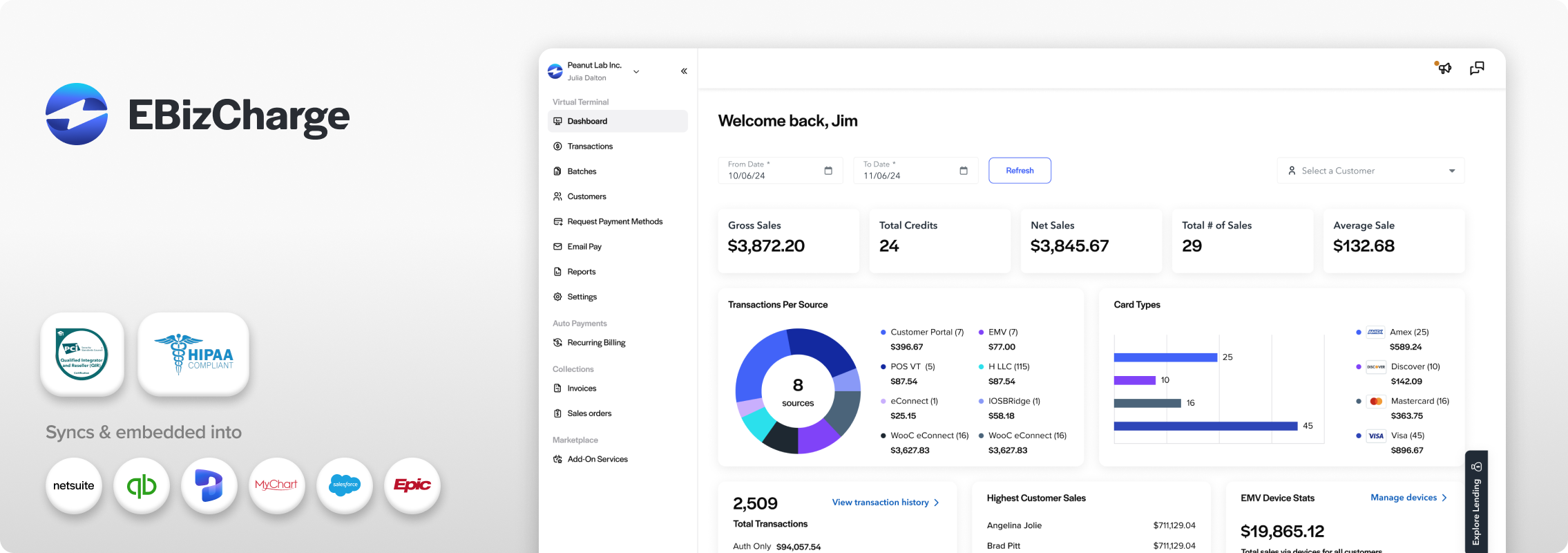
Secure, HIPAA-conscious infrastructure. EBizCharge is designed to protect sensitive information at every point in the transaction. The vendor is prepared to work with healthcare organizations on the compliance requirements that come with handling patient data.
PCI compliance, built in. EBizCharge maintains full PCI compliance across its platform, which means your practice isn’t left to manage card data security independently.
Integrations with healthcare platforms. EBizCharge connects with EHR systems, practice management platforms, and accounting tools like QuickBooks. Payments post automatically, and your billing workflow stays clean without manual entry.
Flexible patient payment options. The platform supports credit card processing, ACH bank transfers, and recurring billing for payment plans. Patients can pay online through a secure portal, over the phone, or at the point of care. That kind of flexibility matters in a healthcare setting.
Transparent fees. EBizCharge’s pricing is competitive and clear. For practices managing high transaction volumes, the absence of hidden fees makes budgeting straightforward.
Reporting and reconciliation. Detailed visibility into payment activity, outstanding balances, and transaction history. For a busy medical office, that level of reporting earns its keep.
EBizCharge works across practice sizes and specialties. If you’re serious about upgrading your merchant services for medical offices, this is where to start. And for practices that have outgrown basic tools, EBizCharge represents a real step up in what merchant services for medical offices can look like.
Other Payment Processing Options for Healthcare Providers
EBizCharge leads, but the market has other options worth knowing about. Depending on your practice size, specialty, and existing systems, one of these might fit.
| Feature |  |
 |
 |
 |
 |
 |
|---|---|---|---|---|---|---|
| Email Pay |  |
 |
|
|
Must sign BAA |  |
| ACH/eCheck | |
|
|
 |
|
|
| Accounting integration | |
|
|
|
|
|
| G2 review (out of 5) | 4.8 | 2.7 | 4.3 | 4.9 | 4.5 | 4.2 |
Scroll to compare 
= partial or varies
InstaMed
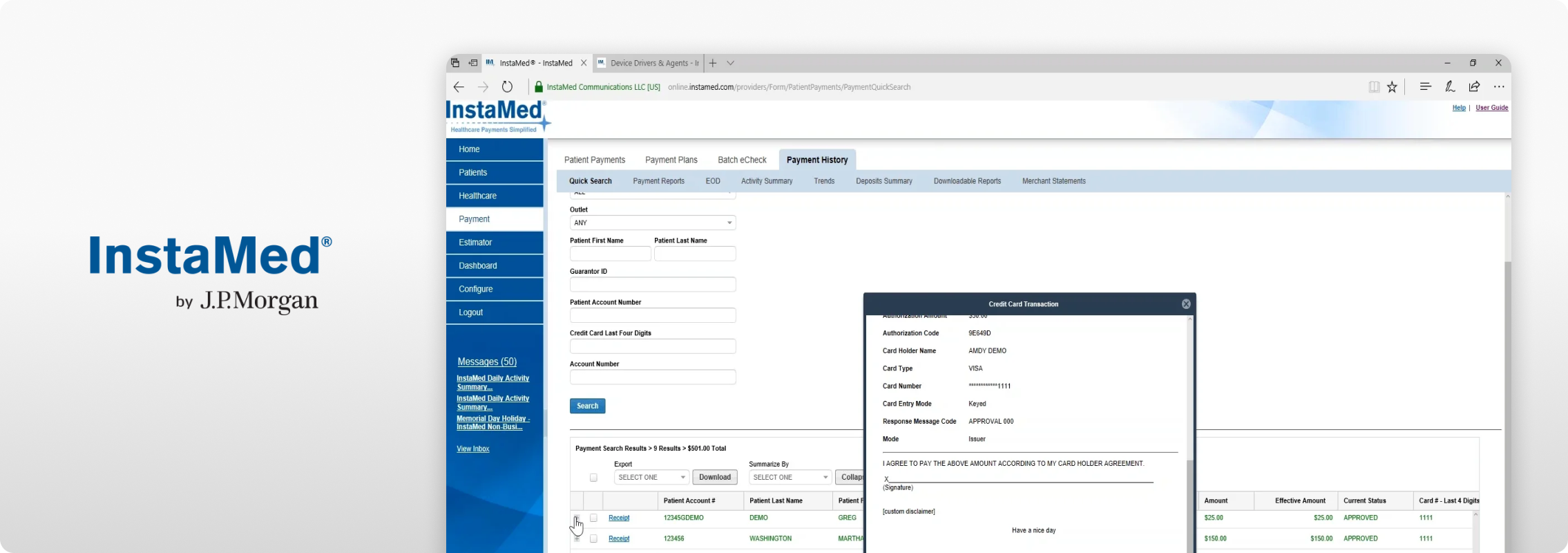
InstaMed screen via instamed.com
InstaMed. One of the more recognized medical payment processing companies in the space, InstaM ed handles both insurance and patient payments on a single platform. It’s a solid choice for larger organizations, though pricing and implementation can be a barrier for smaller practices.
PaySimple
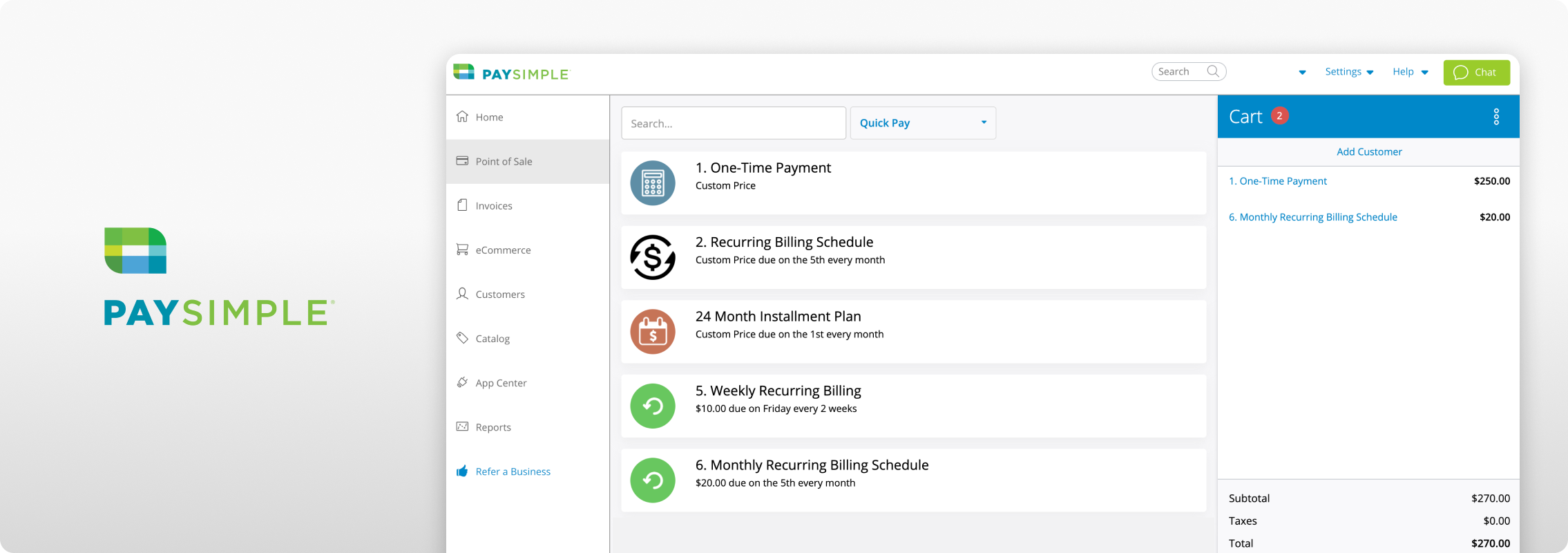
PaySimple screen via trustradius.com
PaySimple. A reasonable payment processing solution for smaller healthcare practices that need straightforward recurring billing and online payments. Integration depth is more limited, and it wasn’t built specifically for healthcare, so HIPAA considerations require more attention from your side.
Stax
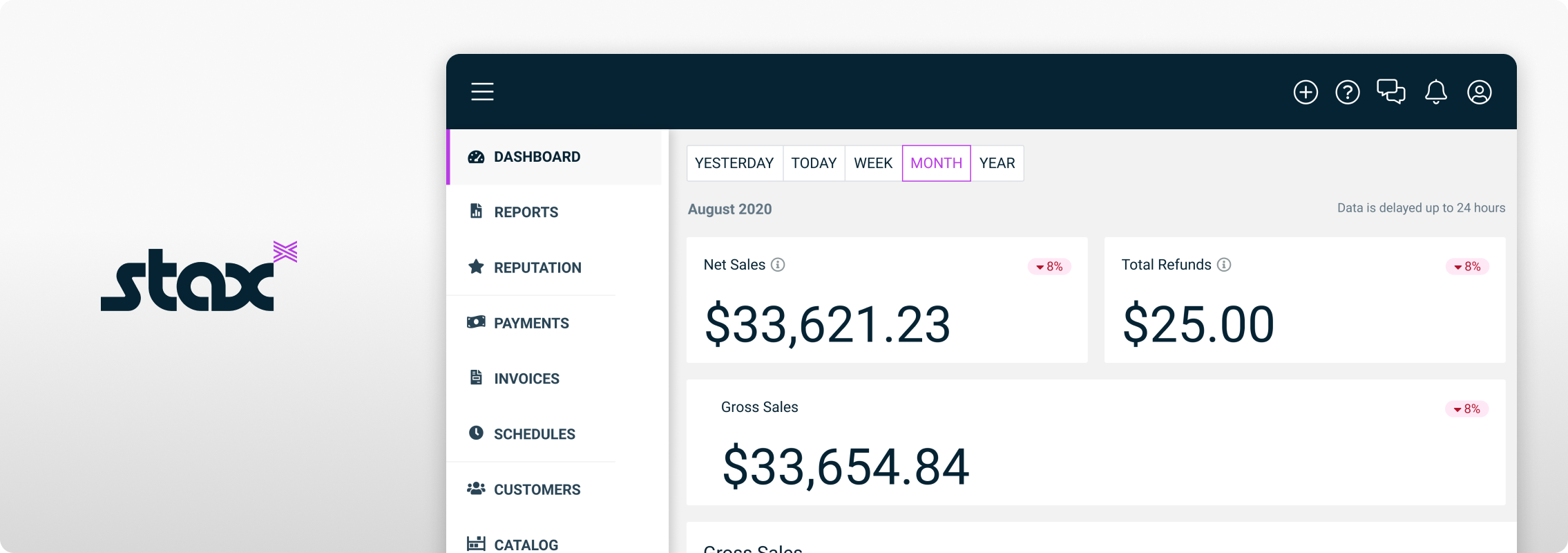
Stax screen via G2
Stax. A subscription-based model that can benefit high-volume practices by reducing per-transaction costs. Not healthcare-specific, so compliance alignment requires verification, but the reporting tools are solid.
Stripe and Square
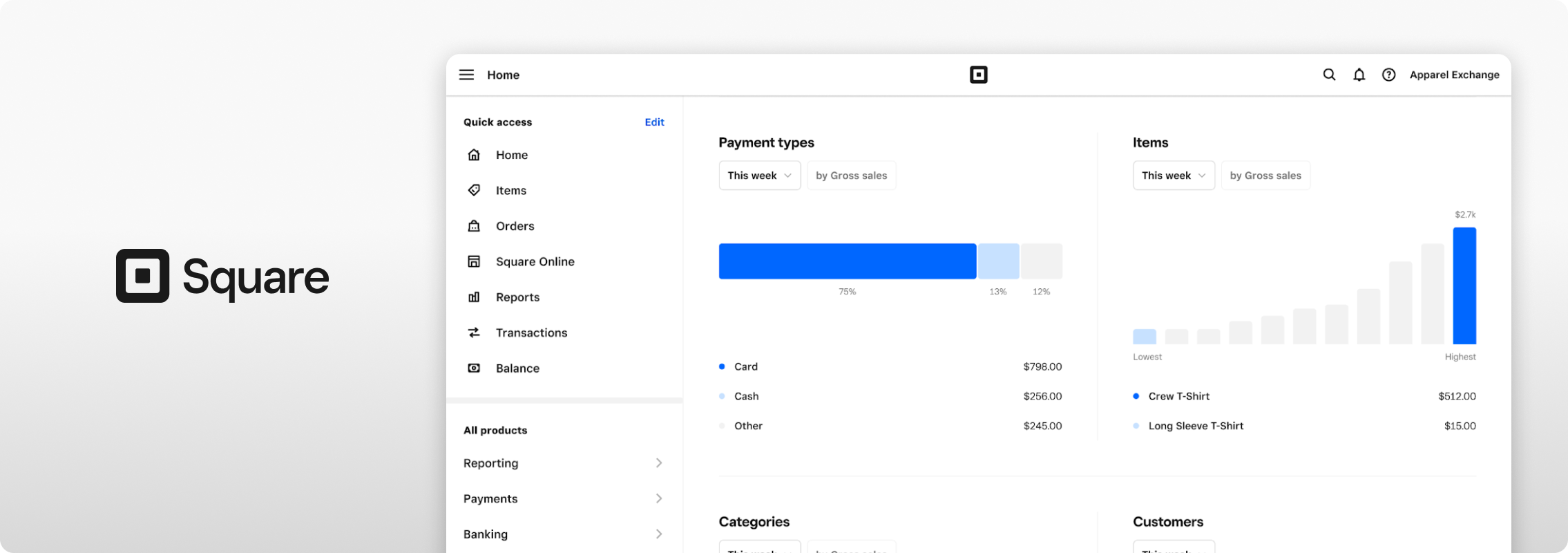
Square screen via squareup.com
Stripe and Square. Both work as general payment processors but require significant configuration in a healthcare context. Neither is optimized for payment processing for medical practices, and both leave much of the compliance work to you. They’re workarounds, not purpose-built solutions.
How to Choose the Right Payment Processor for Your Practice
Choosing a payment processor can seem like a daunting task. Start with compliance. Confirm that any processor you’re evaluating will sign a BAA and that their security practices actually align with HIPAA. Ask specific questions and get documentation before signing anything.
Then evaluate integration. A payment processor that doesn’t connect to your EHR or billing software will cost you staff time every single month.
Think about your patient mix, too. High proportions of self-pay patients or large out-of-pocket balances make recurring billing and payment plan support important features. Payment processing for medical providers in those settings needs to flex with how real patients pay.
Look at total cost. Payment processing fees vary significantly, and the cheapest upfront option isn’t always the most cost-effective over time. Factor in monthly fees, per-transaction rates, and any setup or integration costs.
Why EBizCharge Is the Right Fit for Healthcare & Medical Payment Processing
Healthcare providers carry one of the heavier compliance burdens when it comes to accepting payments. You need a payment processing solution that understands data security, integrates with your clinical and billing systems, and works as a genuine payment solution for healthcare practices, not just a generic tool that happens to accept cards.
EBizCharge delivers on all of it. The security infrastructure supports HIPAA-conscious operations and full PCI compliance. The integrations with EHR and practice management platforms eliminate manual reconciliation. The flexible payment options, including recurring billing and online portals, make it easier for patients to pay and for your staff to collect. And the straightforward pricing keeps budgeting predictable.
There are other medical payment processing companies worth knowing. Instamed is a reasonable option for larger organizations. PaySimple works for smaller offices with simpler needs. But for a payment processing solution that covers the full range of what healthcare providers actually require, EBizCharge is the most well-rounded option in the market.
Frequently Asked Questions
Do healthcare providers need a HIPAA-compliant payment processor?
Yes, if the system touches or stores any protected health information. Always confirm BAA availability before committing to a processor.
What is PCI compliance and why does it matter for medical practices?
PCI compliance governs how businesses handle card data. A fully PCI compliant processor manages much of this on your behalf, reducing your practice’s exposure.
Can healthcare providers use Stripe or Square?
Technically, yes, but neither is optimized for medical payment processing out of the box. Both require the practice to manage more of the compliance configuration independently.
How do payment processing fees affect a practice’s revenue?
Credit card processing typically runs between 2% and 3.5% per transaction, with ACH running lower. At medical practice volumes, even a small rate difference adds up meaningfully over a year.
Get paid faster with less work.
Get paid faster with less work.
3-minute product overview