
Blog > Complete Guide to SAP ECC: Which Modules Need Payment Integration?
Complete Guide to SAP ECC: Which Modules Need Payment Integration?

For years, SAP ECC has been the system of choice for enterprises looking to bring order and integration to complex operations. Its wide set of modules allowed businesses to connect finance, logistics, and human resources into one environment. But as business needs evolve, so does the need for smarter financial workflows—especially when it comes to payments. Integrating a solid payment processing solution into the right modules can mean faster cash flow, fewer errors, and a smoother experience for both employees and customers.
This guide takes a closer look at the key SAP ECC modules, how they work, and which ones benefit most from SAP ECC payment processing integrations. By the end, you’ll have a clearer picture of where payments fit into your ERP strategy and why choosing the right payment processor matters.
Understanding SAP ECC Modules
SAP ECC is organized into functional modules, each covering a different area of business operations. There are more than 25 modules in SAP ECC in total, though most organizations build their implementation around a core set covering finance, sales, procurement, and HR. Each SAP module runs on a shared database, which means data flows between them automatically. A sales order created in SD, for example, triggers updates in FI and inventory without any manual handoff between systems.
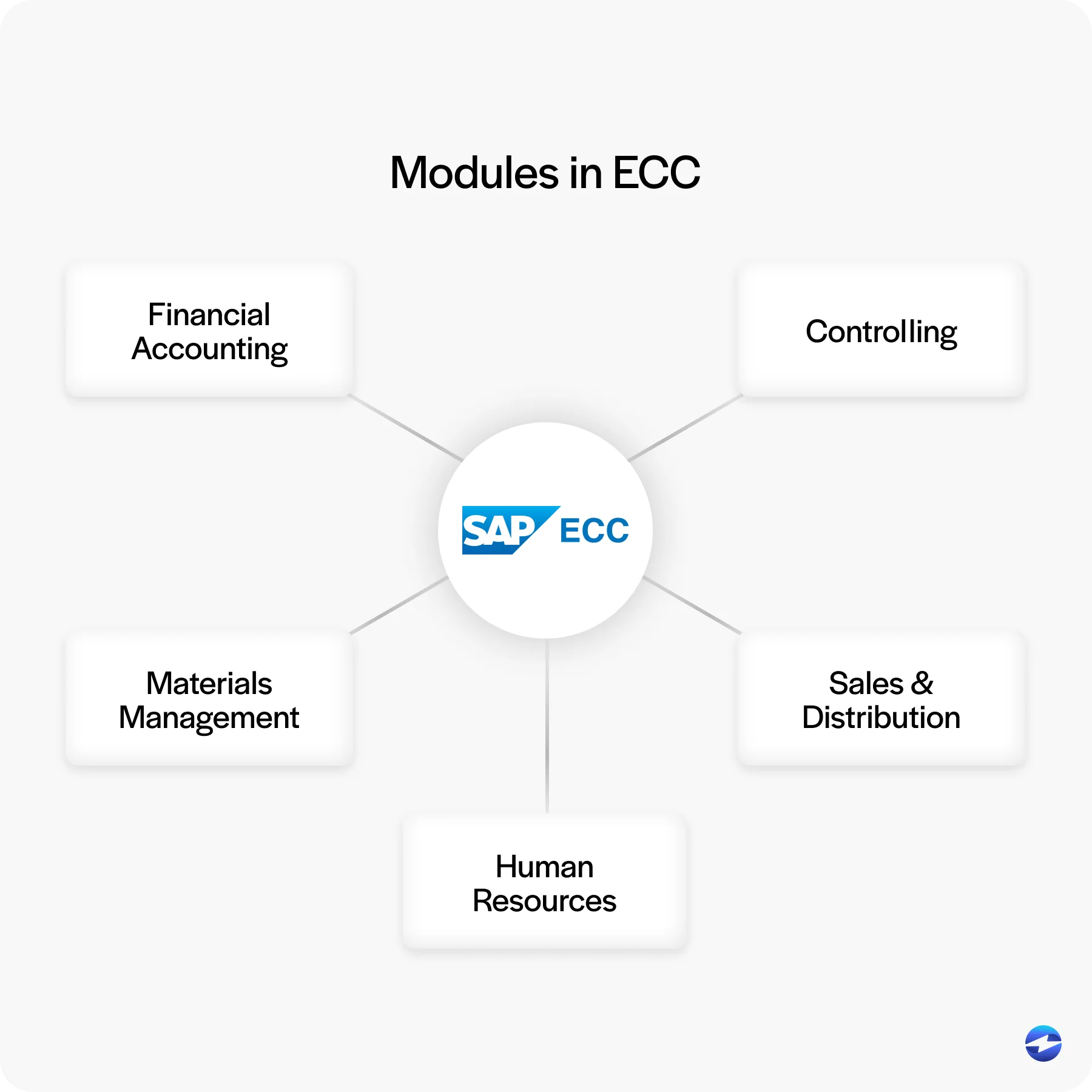
Most SAP ECC implementations are built on a core set of functional modules:
| Module | Full Name | What it Handles |
|---|---|---|
| FI | Financial Accounting | General ledger, accounts payable, accounts receivable, asset accounting |
| CO | Controlling | Internal cost tracking, profitability analysis, budgeting |
| MM | Materials Management | Procurement, purchase orders, inventory, goods receipts |
| SD | Sales and Distribution | Sales orders, pricing, shipping, customer invoicing |
| HR | Human Resources | Payroll, time tracking, employee master data |
| PP | Production Planning | Manufacturing orders, capacity planning, shop floor control |
| PM | Plant Maintenance | Equipment maintenance, work orders, asset tracking |
| QM | Quality Management | Inspections, quality notifications, compliance tracking |
| PS | Project System | Project planning, budgeting, milestone billing |
| WM | Warehouse Management | Storage locations, transfer orders, inventory movements |
| SM | Service Management | Service orders, contracts, customer service billing |
This modular approach is one of the reasons SAP software became so popular. Instead of running disconnected systems for accounting, supply chain, and HR, businesses could finally operate from one integrated platform. But when it comes to payments, not every module carries the same weight, so integration needs to be targeted.
Core Financial Modules and Payment Integration
The FI (Financial Accounting) module is at the heart of most payment activity. It manages accounts receivable, accounts payable, and general ledger postings. Without FI, your SAP billing process wouldn’t connect to the rest of your financial data.
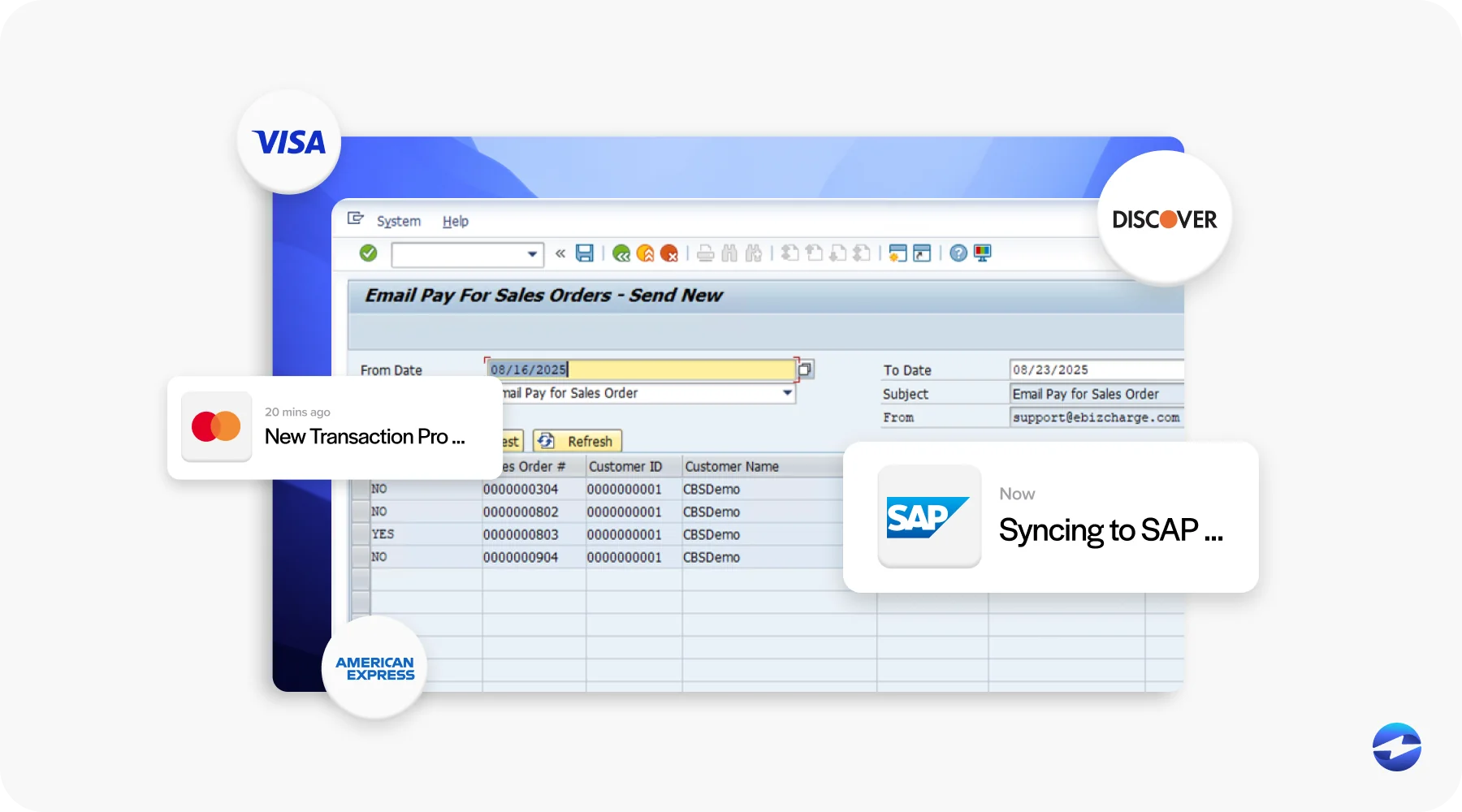
This is the most critical area to connect with a payment processor. By tying payments directly into SAP billing software, businesses can automatically post transactions, speed up reconciliation, and keep their books accurate in real time. It reduces manual entry, lowers the risk of errors, and frees up your finance team to focus on analysis instead of data entry. For most organizations, FI is the first place to start when considering a payment processing solution.
Sales and Distribution (SD) Module
The SD module handles everything from customer orders to deliveries to invoicing. Because it sits so close to the customer experience, it’s also a prime candidate for payment integration. Linking SD with a payment processor ensures payments can be captured at the point of sale or alongside invoicing, making collections faster and more reliable.
For example, when a customer places an order, their credit card or ACH payment can be processed immediately and tied to the invoice within the SAP system. This not only improves cash flow but also creates a better experience for the customer, who can see their payments reflected instantly. In a world where speed matters, connecting payments to SD makes a noticeable difference.
Materials Management (MM) and Vendor Payments
MM focuses on procurement and vendor-related processes. While it’s not customer-facing, payments play a big role here too. Businesses rely on MM to manage supplier invoices and track what they owe vendors. Integrating MM with a third-party payment processor allows supplier payments to be processed more efficiently, cutting down on manual steps and ensuring vendors are paid on time.
This has ripple effects. Faster vendor payments strengthen supplier relationships, leading to better terms and smoother supply chains. For companies that handle a large volume of procurement, bringing a payment processing solution into MM is a practical way to reduce back-office workload.
Order-to-Cash and Procure-to-Pay in SAP ECC
Most payment activity in SAP ECC runs through one of two end-to-end processes. Understanding both helps clarify where payment integration has the most impact.
Order-to-Cash (O2C)
The Order-to-Cash process covers everything from a customer placing an order to the payment clearing in your books. In SAP ECC it spans two modules:
- SD: Customer order is created, priced, and invoiced
- FI: Invoice posts to accounts receivable; payment is applied and the AR balance is cleared
Without payment integration, the collection step is manual. Automating it reduces days sales outstanding and eliminates posting errors.
Procure-to-Pay (P2P)
The Procure-to-Pay process covers purchasing from a vendor through to paying them. In SAP ECC it runs through:
- MM: Purchase order is created, goods are received, and the vendor invoice is matched against the PO and receipt
- FI: Vendor invoice posts to accounts payable and is paid according to configured payment terms
Payment terms in SAP ECC are configured at the customer or vendor master level and control invoice due dates, early payment discounts, and payment run scheduling. Getting these set up correctly is a prerequisite for any payment automation to work reliably.
Human Resources (HR) and Payroll Considerations
The HR module isn’t usually top of mind for payment integration, but it does intersect with payroll and reimbursements. Employees expect timely, accurate payments just as much as customers or suppliers. While not as central as FI or SD, HR workflows can benefit from a link to the right SAP solutions.
In practice, this could mean integrating payroll disbursements with finance so that employee payments are posted to the general ledger automatically. It’s a smaller piece of the puzzle, but in large organizations, even incremental efficiency gains add up.
Choosing the Right Payment Integration for ECC
SAP ECC includes basic tools for managing payments natively, but it was not built to handle the full range of payment methods, compliance requirements, and automation that modern businesses need.
What SAP ECC handles natively
- AR and AP posting in FI
- Vendor payment runs
- Basic bank reconciliation
- Payment terms configuration
What it does not handle out of the box
- Credit and debit card processing
- PCI DSS compliance for cardholder data
- ACH and eCheck processing with automated posting
- Customer-facing payment portals
Filling that gap requires a third-party payment integration. There are three common approaches:
Direct connector: A pre-built integration between the payment processor and SAP ECC that handles data mapping, posting, and reconciliation automatically. Fastest to implement and lowest risk for most organizations.
Middleware integration: A middleware layer such as MuleSoft or Dell Boomi translates data between the payment gateway and SAP ECC. More flexible but requires more configuration and ongoing maintenance.
Custom API integration: A development team builds a direct connection between the payment gateway API and SAP ECC. Maximum control at the highest cost and longest implementation timeline.
When evaluating any option, the key criteria are:
- Security and compliance: The processor must support PCI compliance and strong encryption
- Compatibility: Integration should work with your existing SAP configuration without heavy customization
- Scalability: It should handle increased transaction volumes as your business grows
For most organizations, a direct connector is the right starting point. EBizCharge offers a pre-built SAP ECC payment integration covering credit card, ACH, and eCheck processing with automatic posting to FI accounts receivable, a customer-facing payment portal, and PCI compliance built in.
Best Practices for Integrating Payments in ECC
Integration isn’t just about flipping a switch. To get the most out of your investment, consider these practices:
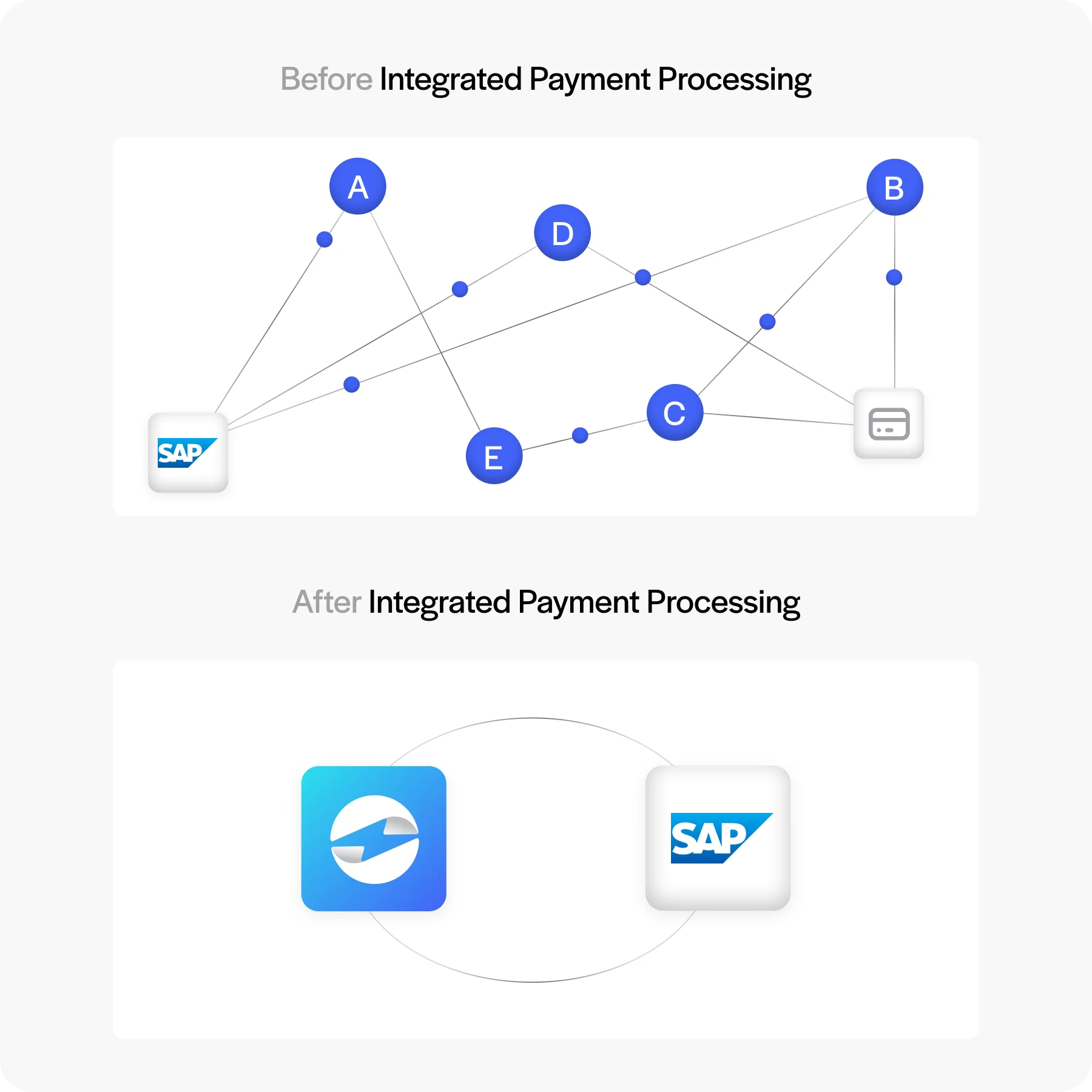
- Clean up your data first. Inconsistent records can create major issues once payments start flowing automatically.
- Test everything end-to-end. Run sample transactions to confirm that postings hit accounts receivable and the general ledger accurately.
- Train your team. Both finance and IT staff should understand not just how to use the system, but why the integration matters.
- Monitor and adjust. Collect feedback from employees and customers and use reporting tools to track performance.
By taking these steps, businesses ensure their SAP billing software and payment workflows work together smoothly, without surprises.
Why EBizCharge is a Strong Integration Choice for SAP ECC
There are plenty of third-party payment processors out there, but the EBizCharge payment solution stands out for businesses running SAP ECC. It integrates directly with SAP ECC within the FI and SD modules, automating postings into accounts receivable and the general ledger. This saves time, reduces manual entry, and keeps records accurate.
EBizCharge also adds customer-facing features that ECC doesn’t natively offer, like secure online payment portals. Customers can pay invoices on their own schedule, and those payments flow straight into the SAP system. Built-in PCI-compliant security gives peace of mind, while advanced reporting tools help finance teams track trends and performance.
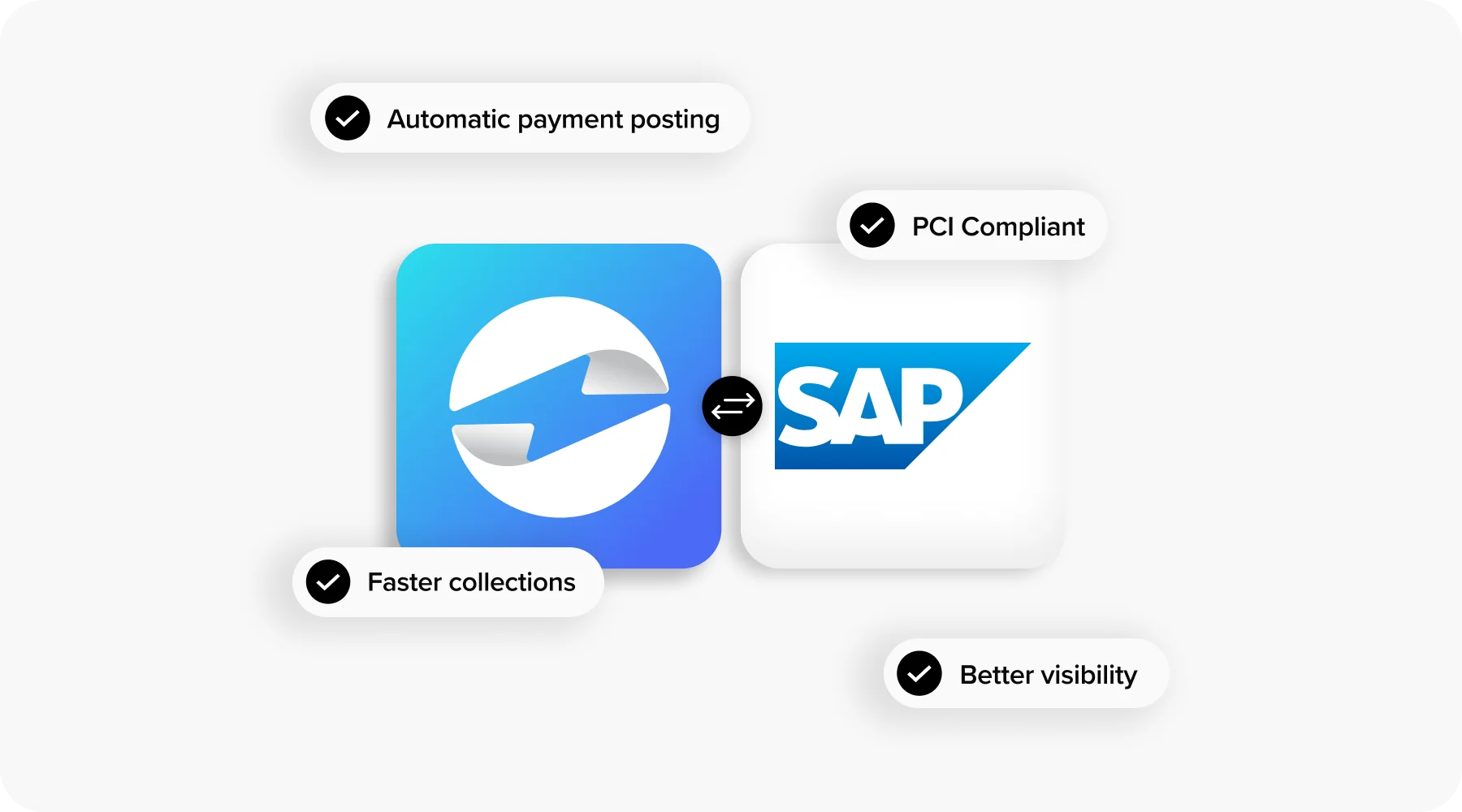
Most importantly, EBizCharge scales. As transaction volumes grow, it grows with you, making it a dependable, long-term choice. For businesses that want to modernize SAP billing while still using ECC, pairing with EBizCharge creates a smoother, more efficient way to handle payments.