

Blog > Finding The Cheapest Ways to Accept In-Person Card Payments
Finding The Cheapest Ways to Accept In-Person Card Payments

Every business owner who has ever looked closely at a merchant statement has asked some version of the same question. What’s the cheapest way to accept credit cards without quietly bleeding money every month? It’s a fair question, and honestly, it deserves a more straightforward answer than most providers are willing to give. Oddly enough, the cheapest way to accept credit cards isn’t a single trick or a single provider; it’s a combination of a few smart decisions stacked together.
Before getting into hardware, POS systems, or processor comparisons, there’s one strategy worth understanding first. Surcharging. It’s one of the most effective, most underused tools available for cutting the cost of accepting card payments, and it deserves a spot near the top of this conversation rather than an afterthought at the end.
This article breaks down where the real costs of credit card processing actually hide, walks through the most affordable ways to accept payments in person, and explains how surcharging fits into a smarter overall approach toward choosing a payment processing solution. Anyone running a small business, a retail counter, or a service company that takes in-person card payments will likely recognize a few of these cost traps immediately.
What Card Payments Actually Cost a Business
Nobody enjoys reading a merchant statement. The pricing structure can often be a bit confusing. But fortunately, breaking it down into its actual parts makes the whole thing a lot less mysterious.
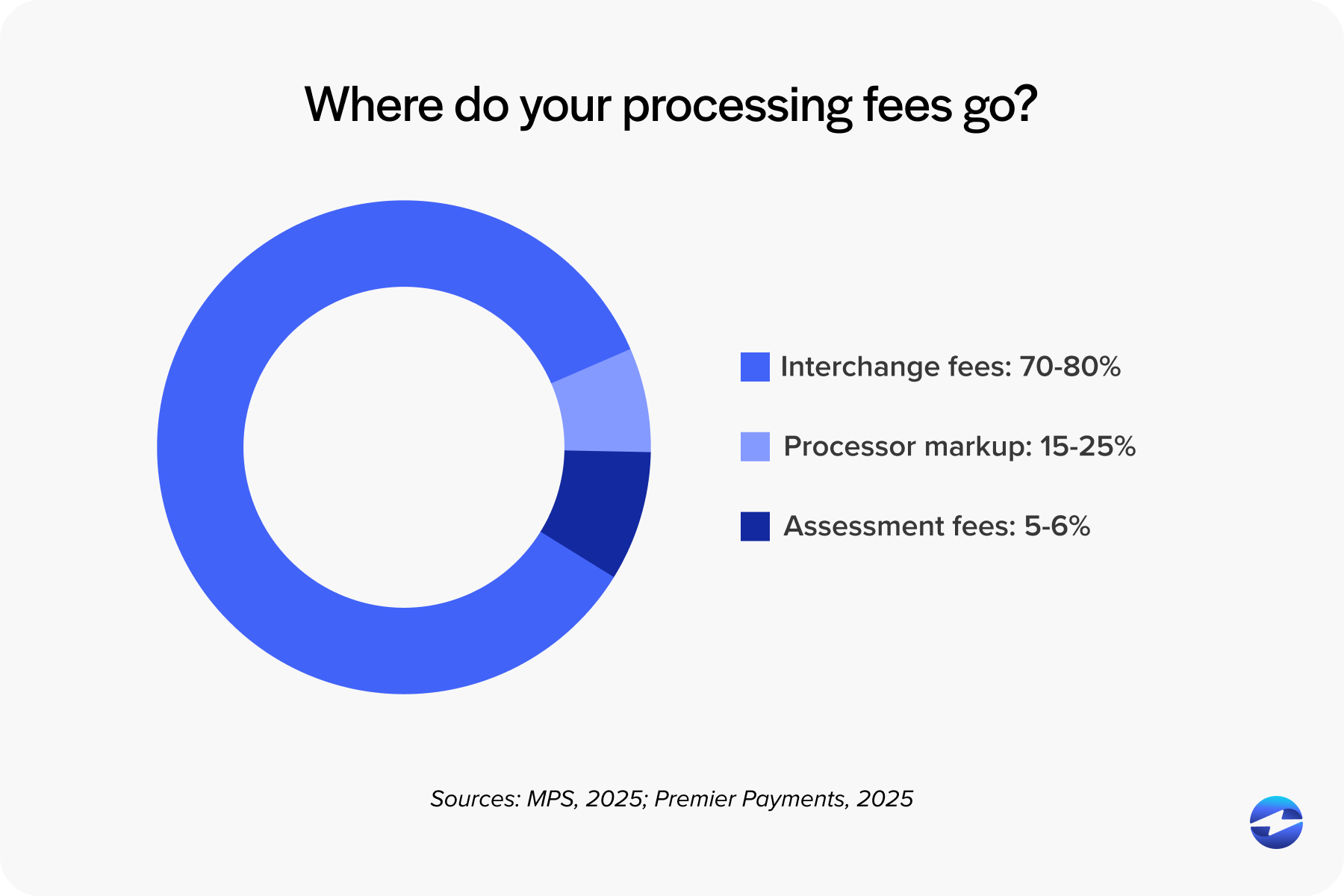
Interchange fees sit at the base of everything. These are set by the card networks themselves, not by the payment processor, and they’re essentially non-negotiable. Every transaction gets hit with some version of this fee, and it varies depending on the type of card, the transaction method, and a handful of other factors.
Then there are processor markups, and this is where pricing starts to differ wildly from one provider to the next. Some processors keep markups reasonable and transparent. Others bury them inside confusing tiered pricing models that make it nearly impossible to tell what’s actually being charged. This is usually where most of the unnecessary payment processing fees hide, and it’s the piece most business owners overlook until they compare statements side by side.
On top of that, there are monthly fees, PCI compliance fees, statement fees, and a long list of smaller charges that add up more than people expect. None of these are dramatic on their own. Together, though, they can quietly inflate the real cost of accepting payments well beyond what a business owner assumed they signed up for.
The goal, really, boils down to two things. Keep the processor markup as low as it can reasonably go, and eliminate the surprise charges entirely.
The Most Affordable Ways to Accept Card Payments in Person
With the cost structure out of the way, here’s where the actual comparison begins. These are the most common and realistically affordable options for accepting in-person payments.
- Mobile card readers. These small devices plug into or pair with a smartphone or tablet and work well for low-volume businesses, mobile vendors, or anyone who doesn’t need a full countertop setup. They’re inexpensive to start with, though rates can vary quite a bit depending on the provider.
- POS systems with transparent pricing. A modern point-of-sale system that lays out its pricing clearly, rather than hiding it behind vague tiers, tends to be one of the more balanced options available. It combines hardware, software, and payment processing into one place without pretending the fees don’t exist.
- Bank-issued or merchant account terminals. This is the more traditional route, and it can work fine, though pricing here is sometimes higher than businesses expect, especially for smaller operations that don’t have much leverage to negotiate.
- Cash discount and surcharge programs. This is where things start to get genuinely interesting, because unlike the first three options, this approach directly reduces what a business pays out of pocket rather than just shopping around for a slightly better rate.
Surcharging: The Best-Kept Secret for Lowering Costs
Surcharging deserves its own section, mostly because it tends to get treated as a footnote when it should really be part of the main conversation.
In simple terms, surcharging allows a business to add a small additional fee to transactions paid by credit card, effectively passing some or all of the credit card processing fees onto the customer choosing that payment method. Customers paying with cash, debit, or other methods typically aren’t affected. It’s a legal, well-established practice, and it directly addresses one of the biggest sources of ongoing cost for any business that accepts cards regularly.
Here’s the part worth sitting with for a second. Chasing a slightly cheaper payment processor might shave a fraction of a percent off processing costs. Surcharging, done properly, can offset a much larger chunk of those costs altogether, sometimes close to the entire amount. That’s a meaningfully different outcome, and it’s why surcharging tends to outperform simply hunting for the next cheapest provider.
There are some ground rules to know before implementing it. Surcharge percentages are capped, usually somewhere around three to four percent depending on the card network. Certain states restrict or regulate surcharging differently, so it’s worth checking local requirements. Clear disclosure to customers, both at the point of sale and on the receipt, is required as well. None of this is complicated, but it does need to be set up correctly to stay compliant.
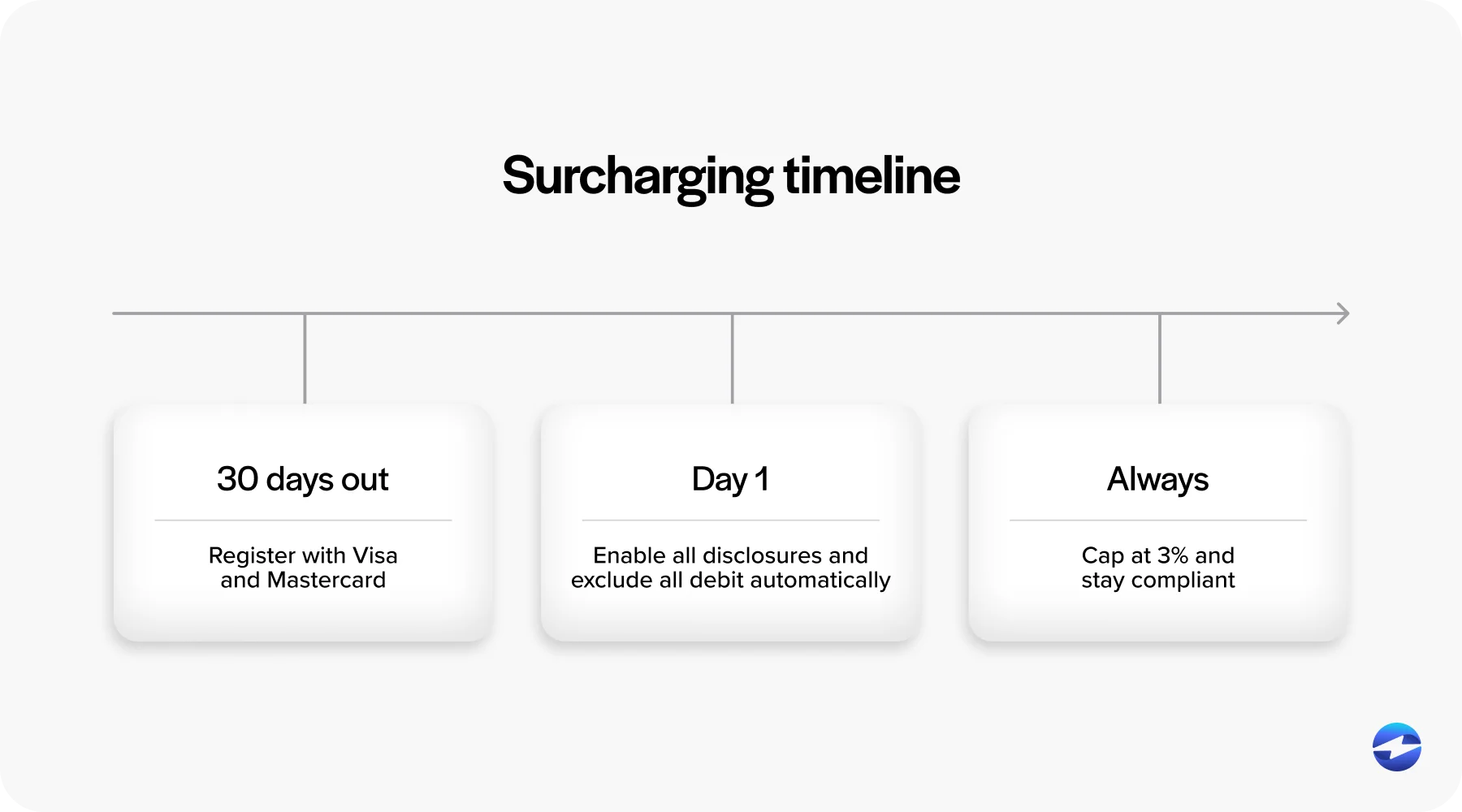
Done right, surcharging is arguably the single highest-impact move a business can make to lower the real cost of accepting cards, and it’s the reason it gets top billing in this article rather than being buried near the end.
So, What’s the Cheapest Way to Accept Payments in Person?
Pulling everything together, here’s the honest answer. The cheapest way to take credit card payments combines a transparent, interchange-plus payment processor with an all-in-one POS system or mobile card reader, free of extra monthly junk fees or hidden compliance charges. Pair that with a properly implemented surcharge program, and the actual out-of-pocket cost drops even further. Whichever combination a business lands on, the underlying goal stays the same: the cheapest way to take credit card payments is really just the setup that keeps payment processing fees as close to zero as legally and practically possible.
There’s a noticeable shift happening across small and mid-sized businesses right now, moving away from older, opaque processors and toward a modern payment processing solution that offers honest pricing, fast setup, and tools that actually grow with the business instead of getting in its way. The businesses making that switch tend to see credit card processing fees drop noticeably within the first billing cycle, which is usually enough to convince anyone still on the fence.
How EBizCharge Keeps Costs Down
EBizCharge approaches this problem from a few different angles at once, rather than relying on a single gimmick to look competitive.
Pricing runs on a transparent model which means no confusing tiers and no mystery charges buried in the fine print. There aren’t stacks of hidden monthly junk fees tacked onto the statement either, which is more common among processors than most business owners realize until they actually go looking.
Built-in surcharging tools come standard, and they’re designed to stay compliant without requiring a legal team to sort through the details. Aside from surcharging, Level 2 and Level 3 processing support also helps lower rates automatically on qualifying transactions, which matters quite a bit for B2B and higher-ticket purchases, and it’s one more lever that keeps payment processing fees trending downward instead of creeping up over time.
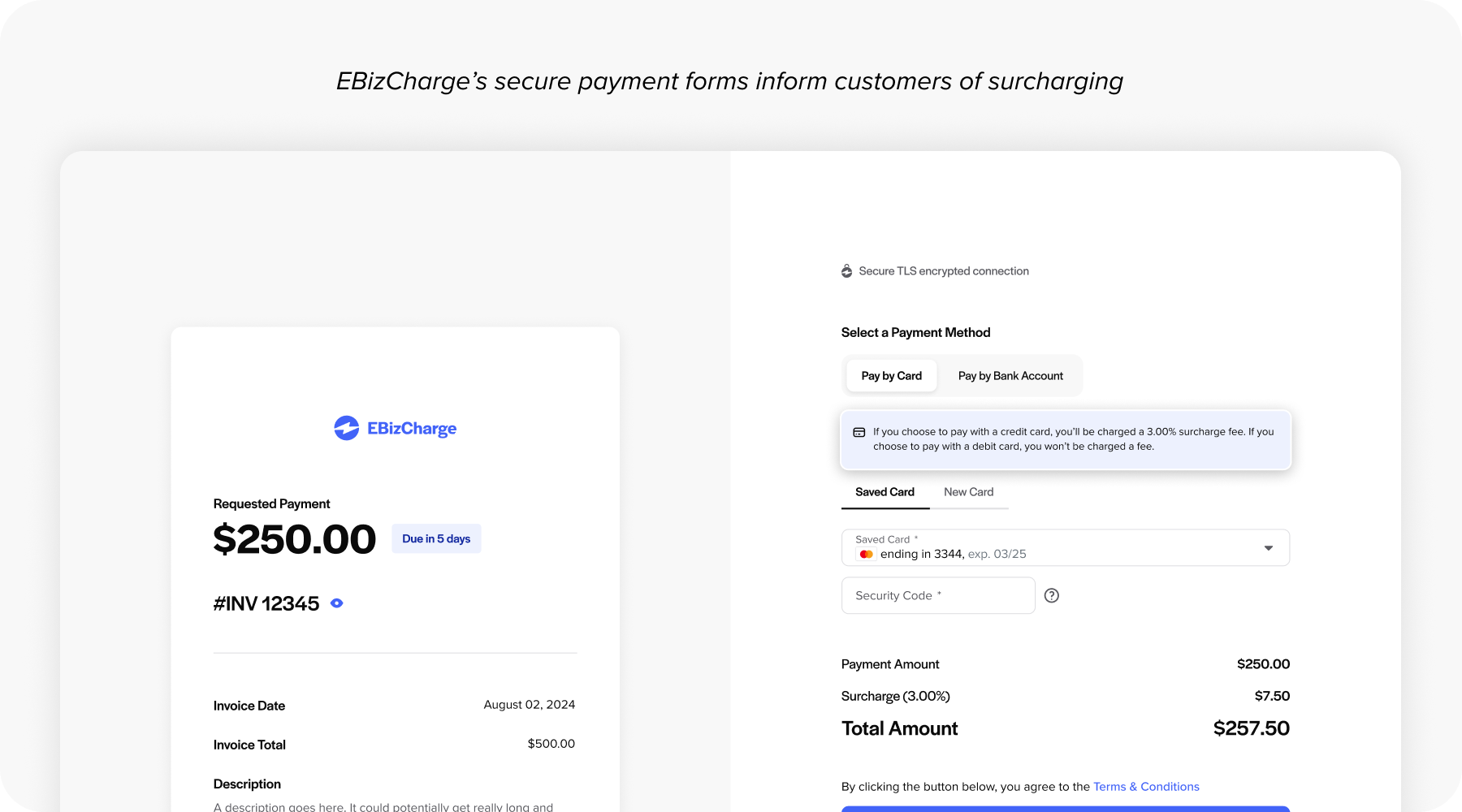
Everything runs through one platform, whether payments come in person, online, or through an invoice, which cuts down on the need to juggle multiple providers or reconcile numbers across separate systems.
The cheapest option on paper isn’t always the cheapest option in practice. The real answer tends to be the platform that keeps base costs low while also giving a business the tools to actively reduce them further, and that combination is exactly what EBizCharge was built around.