

The 6 Best Payment Processing Platforms for Restaurants in 2026


If you run a restaurant, you already know that the food and service are only half the battle. The other half happens at the register, or these days, at the tableside tablet or the online ordering checkout. How your restaurant handles payments quietly shapes almost everything else, from how fast tables turn over to how much of your revenue actually stays in your pocket after fees are taken out.
For restaurant owners and managers, that’s exactly why picking the right payment processor matters so much. It’s not the most exciting decision you’ll make this year, but it’s one of the more consequential ones. A clunky payment solution slows down your line during the Friday dinner rush. A processor with hidden fees eats into margins that are already thin in the restaurant industry.
So, we put together this guide for restaurant owners, general managers, and anyone in the restaurant industry who’s tired of guessing whether they’re paying too much for payment processing fees. Below are six solid options, ranked, with the strengths and trade-offs of each laid out plainly. No fluff, no sales pitches, just what you actually need to know.
What to Look for in a Restaurant Payment Solution
Before we get into the list, it helps to know what actually separates a good payment processing solution from a mediocre one in this industry.
At a minimum, you want a merchant services provider that supports EMV chip cards, contactless and mobile wallet payments, and reliable online card payment processing for restaurants that also do delivery or takeout through a website or app. Beyond that, look closely at credit card processing fees (flat-rate versus interchange-plus can make a real difference over a year), how well the system integrates with your POS or accounting software, and how responsive support actually is when something breaks at 7 p.m. on a Saturday.
With that in mind, here’s how the six stack up.
Side-by-Side Comparison
| ERP integration | POS integration | Email pay | Surcharging | G2 rating | Best for | |
|---|---|---|---|---|---|---|
 |
 |
 |
|
 |
4.6 | Small + new restaurants |
 |
|
|
|
|
4.3 | Multi-location restaurants |
 |
|
|
|
|
3.9 | Restaurants looking for app ecosystem |
|
Dev required | Dev required | |
Dev required | 4.2 | Restaurants with developer resources |
 |
|
|
|
|
n/a | Restaurants already working with Chase banking |
 |
 |
|
|
|
4.8 | Restaurants using any major ERP |
= partial or varies
Scroll to compare 
1. EBizCharge
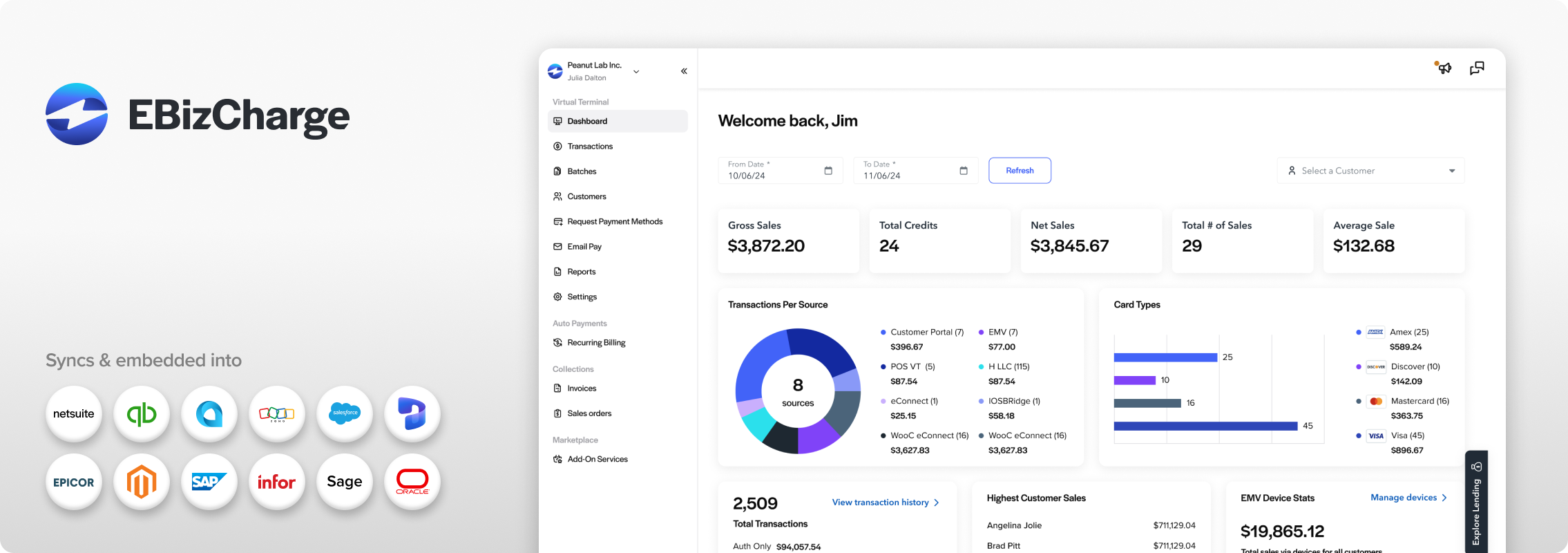
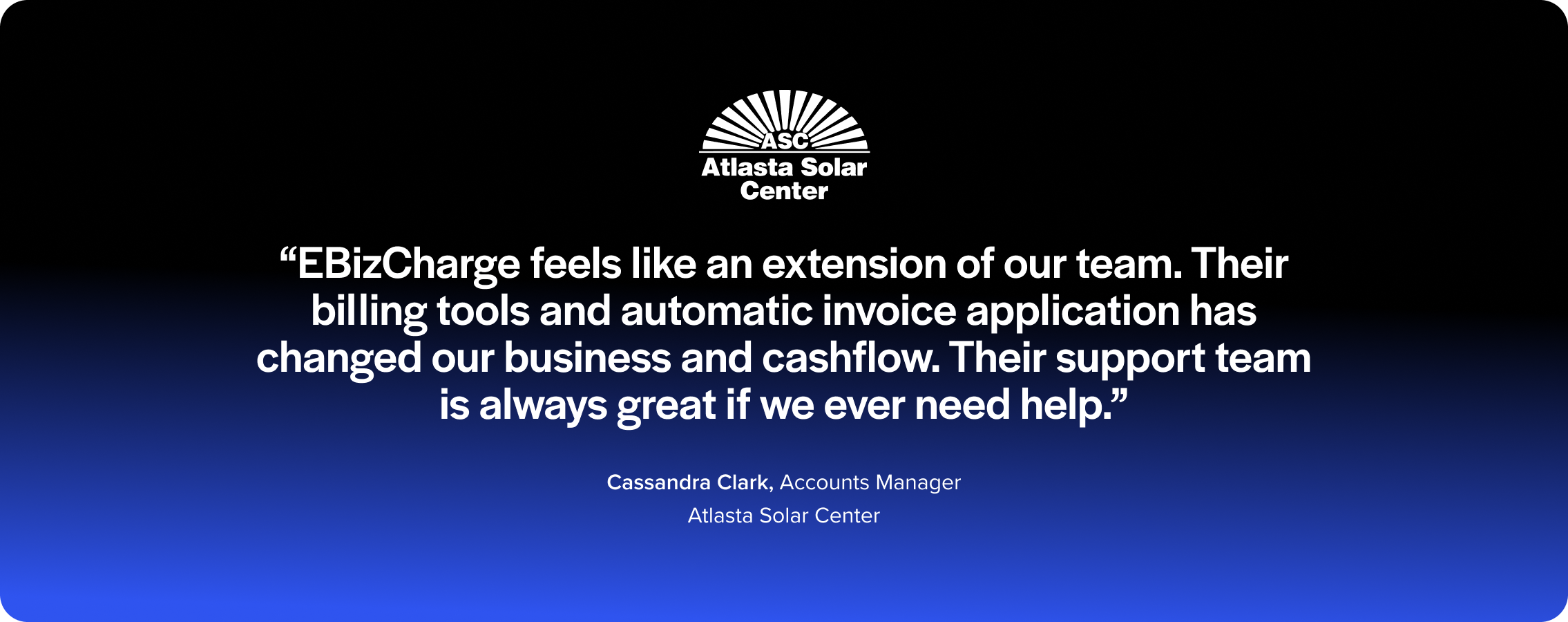
EBizCharge lands at the top of this list, and for good reason. While many processors treat restaurants as an afterthought, EBizCharge’s restaurant credit card processing was built with an eye toward businesses that need their processing to actually talk to the rest of their operation, not just sit off to the side.
The standout feature here is integration. EBizCharge connects directly with accounting and ERP platforms like QuickBooks and Sage, which means transactions sync automatically rather than being entered twice by someone on your team who has better things to do. For a restaurant group running multiple locations, that kind of automation saves real hours every month.
EBizCharge also supports Level 2 and Level 3 processing, which is a fancy way of saying it can qualify certain transactions for lower interchange rates. Many restaurants never even hear about this, but this can shave a noticeable amount off your monthly credit card processing fees if your setup qualifies. On top of that, you get PCI-compliant tokenization to keep customer card data secure, recurring billing for things like catering contracts or subscription meal programs, and mobile processing for staff who need to take payments away from a fixed terminal.
Best for: Multi-location restaurants, catering businesses, and any restaurant already using QuickBooks or a similar accounting system that wants its payment processing solution to sync automatically instead of creating extra manual work.
2. Square for Restaurants
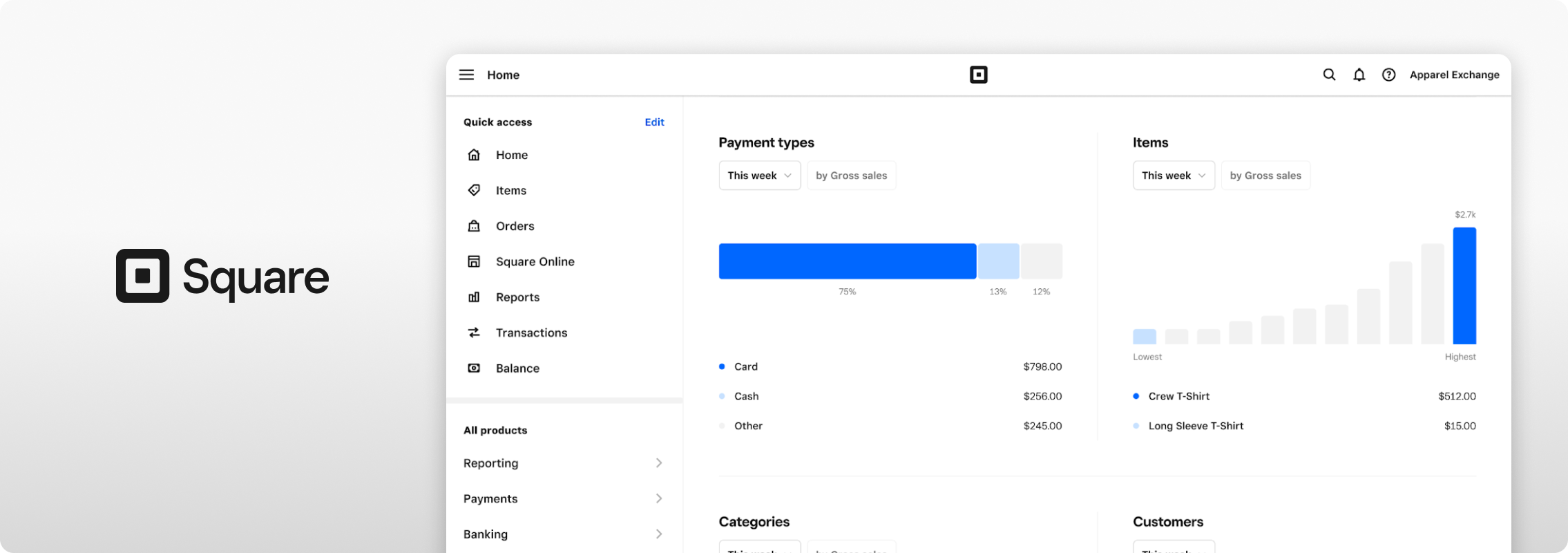
Square screen via squareup.com
Square has built a reputation as the easy button of restaurant merchant services, and it mostly lives up to that. You can sign up, get a card reader, and start to accept payments within a day or two, which makes it a favorite among food trucks, pop-ups, and small independent spots.
Pricing is flat-rate, so there are no surprises buried in a statement full of jargon. The trade-off is that flat-rate pricing tends to cost more than interchange-plus once your transaction volume grows.
Best for: Small or new restaurants, food trucks, and owners who want simplicity over customization.
3. Toast
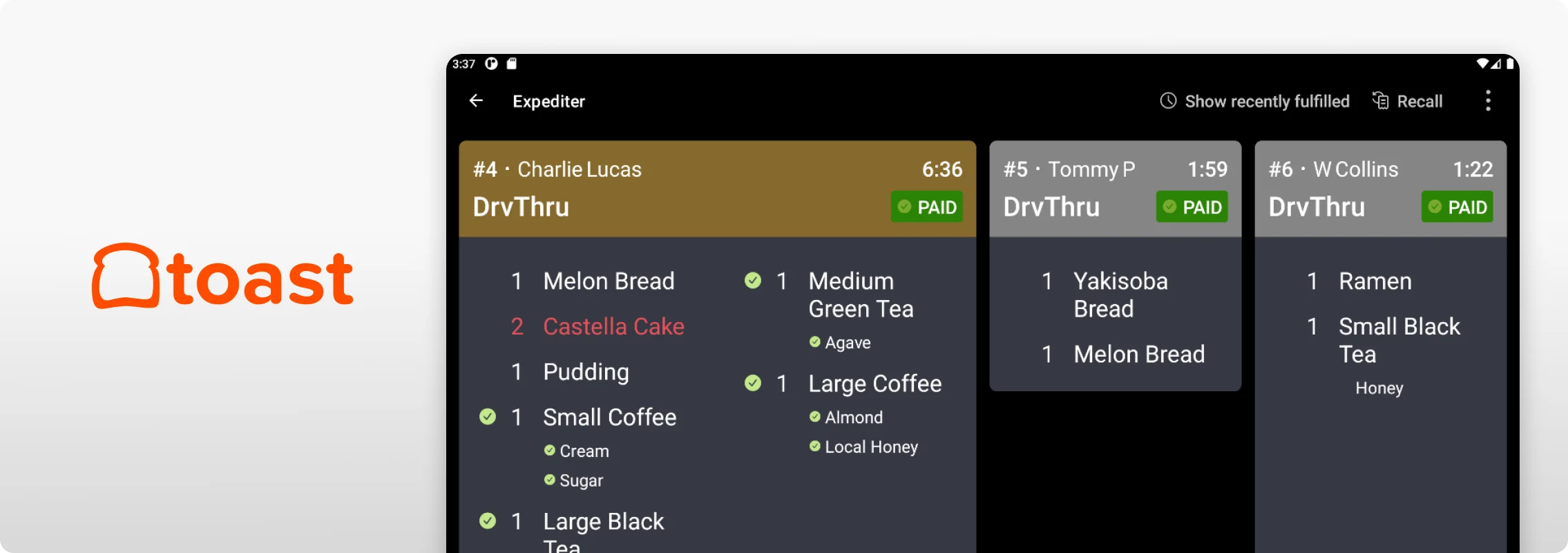
Toast screen via toasttab.com
Toast was designed from the ground up specifically for restaurants. The platform bundles point of sale, kitchen display systems, and online ordering into one ecosystem, which is appealing if you’d rather not stitch together five different vendors.
Because Toast leans so heavily into hardware and an all-in-one restaurant operating system, it tends to work best for full-service restaurants that want everything under one roof. The catch is that switching away from Toast later can be more involved than with a lighter-weight processor.
Best for: Full-service restaurants wanting integrated ordering, kitchen displays, and payments in a single system.
4. Clover
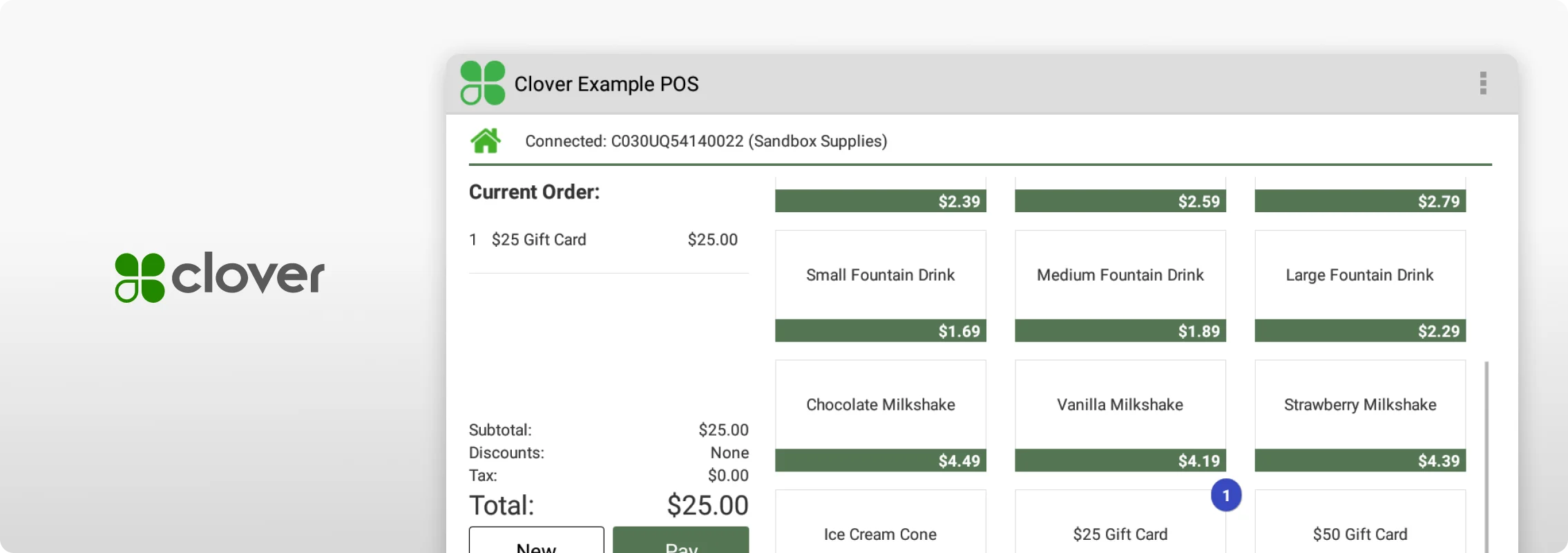
Clover screen via docs.clover.com
Clover takes a modular approach. Instead of one fixed setup, you pick and choose hardware and software add-ons through an app marketplace, which gives you more flexibility to build a system around how your restaurant actually operates rather than forcing you into a one-size-fits-all mold.
That flexibility is a real asset for restaurants with unusual workflows, like a bar with a separate patio POS or a bakery counter that needs different reporting than the dining room.
Best for: Restaurants that want customizable hardware and software rather than a fixed package.
5. Stripe
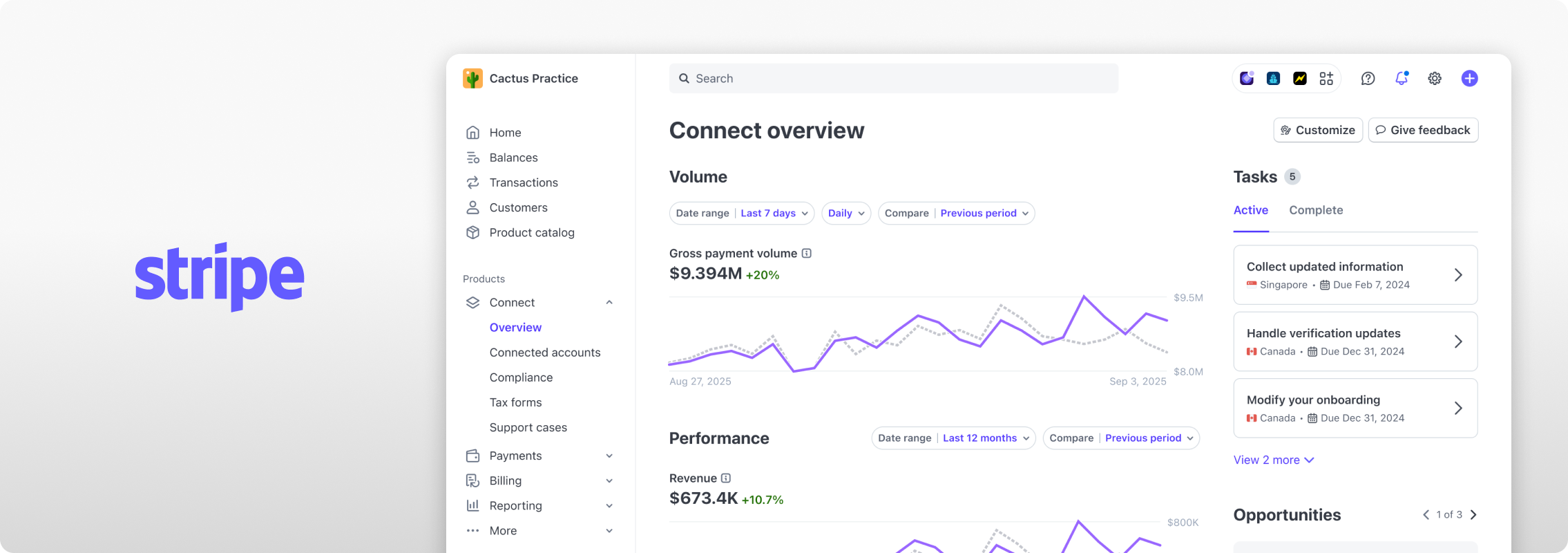
Stripe screen via stripe.com
Stripe isn’t restaurant-specific in the way Toast or Clover are, but it’s a strong payment processor for restaurants that lean heavily on online ordering, delivery integrations, or a custom-built website. If your developer wants to build something unique for your ordering flow, Stripe’s tools make that far easier than most competitors on this list.
The trade-off is that Stripe assumes a bit more technical comfort than some of the other options here. It’s less about walking up to a terminal and more about powering the backend of your online card payment processing for restaurants doing a lot of business through their website or app.
Best for: Restaurants with a strong online ordering or delivery presence, especially those with in-house developers or a custom website.
6. Chase Payment Solutions
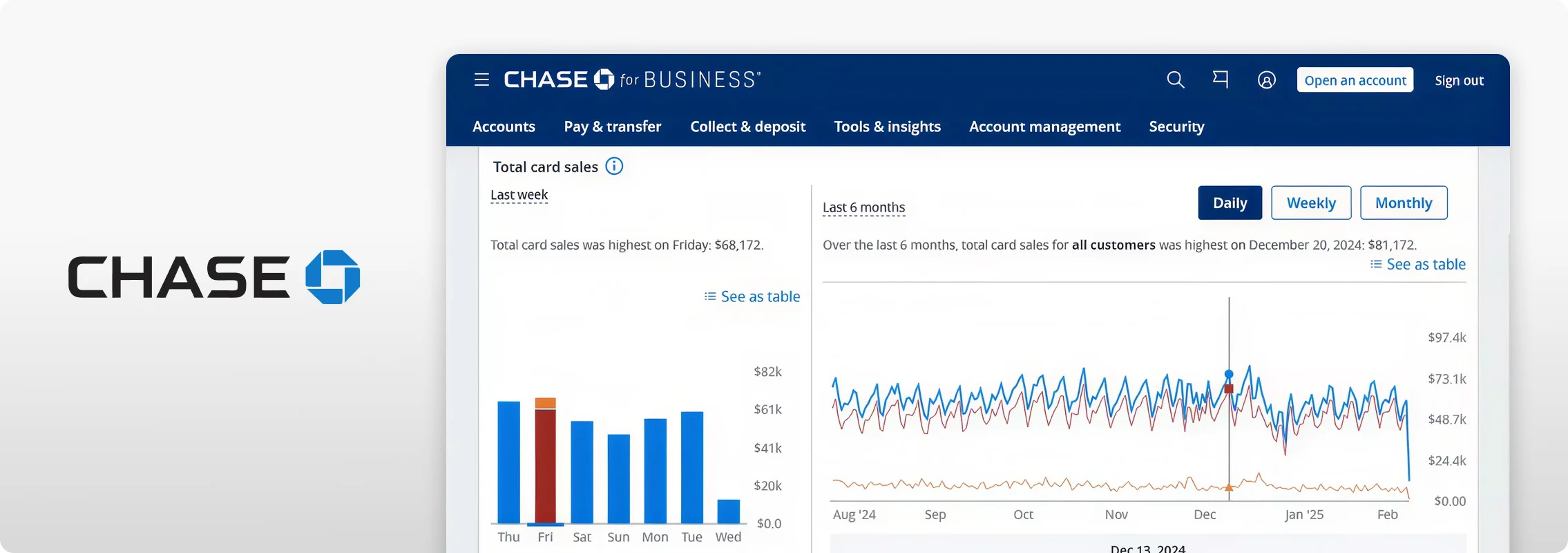
Chase screen via business.com
Rounding out the list is Chase Payment Solutions, a solid option for restaurant merchant services if you’d rather keep your banking and payment processing under one roof. If you already bank with Chase, bundling your merchant services provider with your existing business account can simplify reconciliation and give you one less login to manage.
It’s not the flashiest option here, but the convenience of one relationship for banking and payments is genuinely appealing to owners who’d rather not juggle multiple vendors.
Best for: Restaurants that want one banking relationship and don’t need restaurant-specific software bells and whistles.
How to Choose the Right Payment Processing Platform
There’s no single answer here, since every restaurant’s situation looks a little different. That said, a few questions tend to point owners in the right direction pretty quickly.
How much of your business happens online versus in person? A restaurant doing heavy delivery volume needs a different setup than a dine-in-only spot. Do you already use accounting software you’d like your payments to sync with automatically? If so, that narrows the field considerably.
It’s also worth sitting down and comparing payment processing fees line by line, rather than glancing at the advertised rate. Statement fees, PCI compliance fees, and equipment leasing costs all add up, and they don’t always show up in the marketing materials.
Finding the Right Option for Your Business
Every option on this list can get the job done, and honestly, a lot of restaurants would do fine with any of them. But for restaurants that want their payment processing to genuinely work with the rest of their business, rather than just sit next to it, EBizCharge stands out. The combination of accounting integration, potential savings through Level 2 and Level 3 processing, and solid security makes it a strong fit for owners who are tired of doing double the paperwork just to keep their books straight.
Whichever direction you go, the goal is the same: a payment processing solution that lets you accept payments quickly, keeps your fees reasonable, and gets out of the way so you can focus on the food.
Get paid faster with less work.
Get paid faster with less work.
3-minute product overview