

4 Best Payment Processing for Physical Therapists: What to Look for and Must Haves


Physical therapy practices sit in an unusual spot when it comes to collecting payment. Most PT patients have insurance, but that doesn’t make getting paid simple. Between copays that vary by deductible, coinsurance calculations patients don’t fully understand, and patient balances that arrive after insurance processes, PT billing is genuinely layered in ways general-purpose tools weren’t built to handle.
The landscape is also shifting. Out-of-network and concierge PT are growing, high-deductible health plans are the norm, and the average patient balance has climbed steadily. Collecting that balance efficiently is one of the more pressing operational challenges in physical therapy right now.
If you’re running a PT clinic or managing its finances, you need a payment processing solution that handles all of it. This article breaks down what to look for and why EBizCharge deserves serious consideration.
The PT Billing Landscape: Why Generic Tools Fall Short
The episode-of-care model defines physical therapy billing. Patients come in two or three times a week for weeks or months, and each visit generates a transaction. While insurance covers part of it, the patient’s share has to be collected at checkout or billed afterward. Your payment processing software needs to handle recurring patient balances across multiple visits, not just isolated one-time charges.
The cash-pay side has its own demands. Out-of-network and concierge PT practices collect everything directly from patients. For them, the right merchant services provider is the difference between a smooth operation and a constant collection backlog. Recurring billing, installment plans, and online portals aren’t nice-to-haves here. They’re core infrastructure.
The Health Insurance Portability and Accountability Act of 1996 (HIPAA) applies, too. Any payment processing services that touch patient billing data require a HIPAA-compliant framework, and the merchant services provider you choose must be willing to execute a Business Associate Agreement.
What Physical Therapists Need from a Payment Processor
PT clinic owners and billing managers deal with a specific combination of requirements that doesn’t map cleanly onto what most processors offer. Here’s what actually matters.
HIPAA compliance and a signed BAA. Every physical therapy merchant services provider you evaluate should be prepared to sign a Business Associate Agreement before the conversation goes any further.
PCI compliance. Compliance with Payment Card Industry (PCI) Standards is imperative. A well-built payment processing solution manages card data security on your behalf, so your staff isn’t responsible for maintaining those standards independently.
Recurring billing for ongoing care. Whether it’s a cash-pay patient in an episode-of-care package or an insured patient paying a consistent weekly copay, recurring billing saves your front desk meaningful manual work.
Patient balance collection tools. After insurance pays, collecting the patient’s share is one of the biggest operational challenges in PT. A good payment solution here means online portals, emailed or texted payment links, and automated balance reminders. A weak payment solution means your staff is making phone calls and mailing statements.
Integration with accounting software. Payment processing services that connect to QuickBooks or similar platforms eliminate manual reconciliation. When transactions post automatically, month-end accounting is far less painful.
Credit card and ACH options. Credit card processing is the baseline, but ACH transfers cost less and are worth offering for patients carrying larger balances.
Transparent payment processing fees. PT margins can be tight, especially in insurance-heavy practices where reimbursement rates have stagnated. Payment processing fees need to be clear upfront.
How EBizCharge and the Alternatives Compare
PT practices need a merchant services provider that can genuinely handle both the insurance-copay side and the direct patient billing side. Here’s an honest look at the main options.
| Feature |  |
 |
 |
 |
|---|---|---|---|---|
| HIPPA compliant |  |
 |
Must sign BAA | |
| Accounting integration | |
 |
|
|
| Recurring billing | |
|
|
|
| G2 review (out of 5) | 4.8 | 4.9 | 4.5 | 4.3 |
Scroll to compare 
EBizCharge
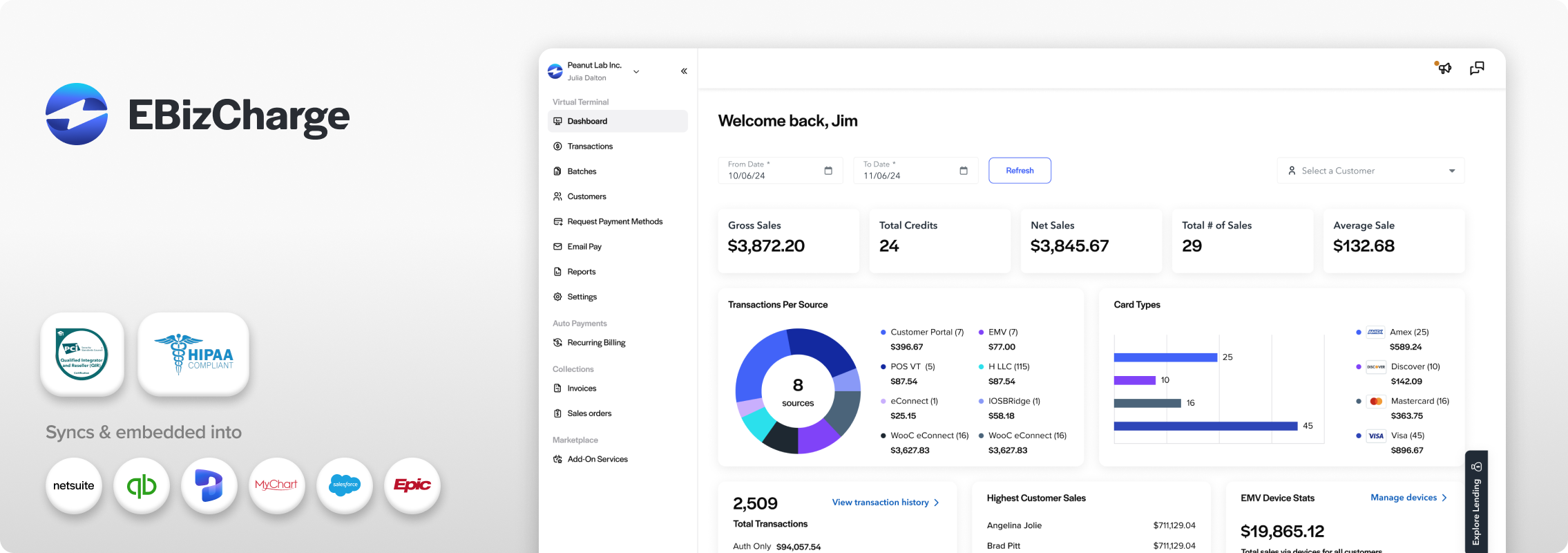
EBizCharge stands out as the strongest payment processing solution for physical therapy practices, and the case is grounded in what PT billing actually demands.
Recurring billing is central. Episode-of-care payment plans can be automated, weekly charges can run without manual input, and patients can enroll in autopay from the first visit. For a practice seeing the same patients multiple times a week, that matters.
Compliance is built in. EBizCharge executes Business Associate Agreements as a standard part of working with healthcare-adjacent businesses, and every transaction runs through a fully PCI-compliant environment. Credit card processing and ACH are both available in the same platform. Patients can pay at checkout, click a link from a text or email, or settle their balance through a secure online portal.
EBizCharge integrates with QuickBooks, NetSuite, and other accounting tools so payments reconcile automatically. Payment processing fees are published clearly with no hidden line items. The support team is U.S.-based and in-house.
The same platform handles insurance-heavy, in-network practices and fully cash-pay out-of-network clinics without requiring different tools for each model.
Stax
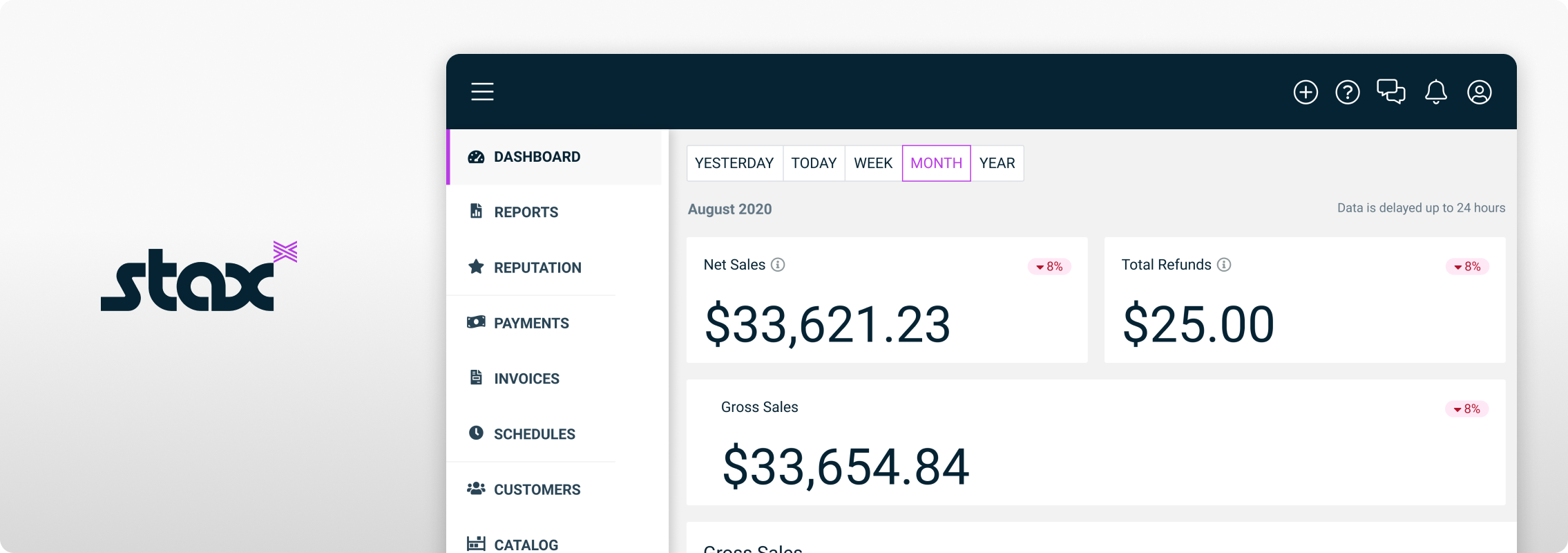
Stax screen via G2
Stax uses a flat monthly subscription model rather than percentage-based transaction costs, which can reduce payment processing fees meaningfully for high-volume practices.
The tradeoff is compliance. Stax isn’t built for healthcare, HIPAA isn’t embedded in the product, and getting a BAA executed takes more effort than it should. Worth evaluating on cost alone for high-volume practices with simple compliance needs, but the gaps are real.
Square
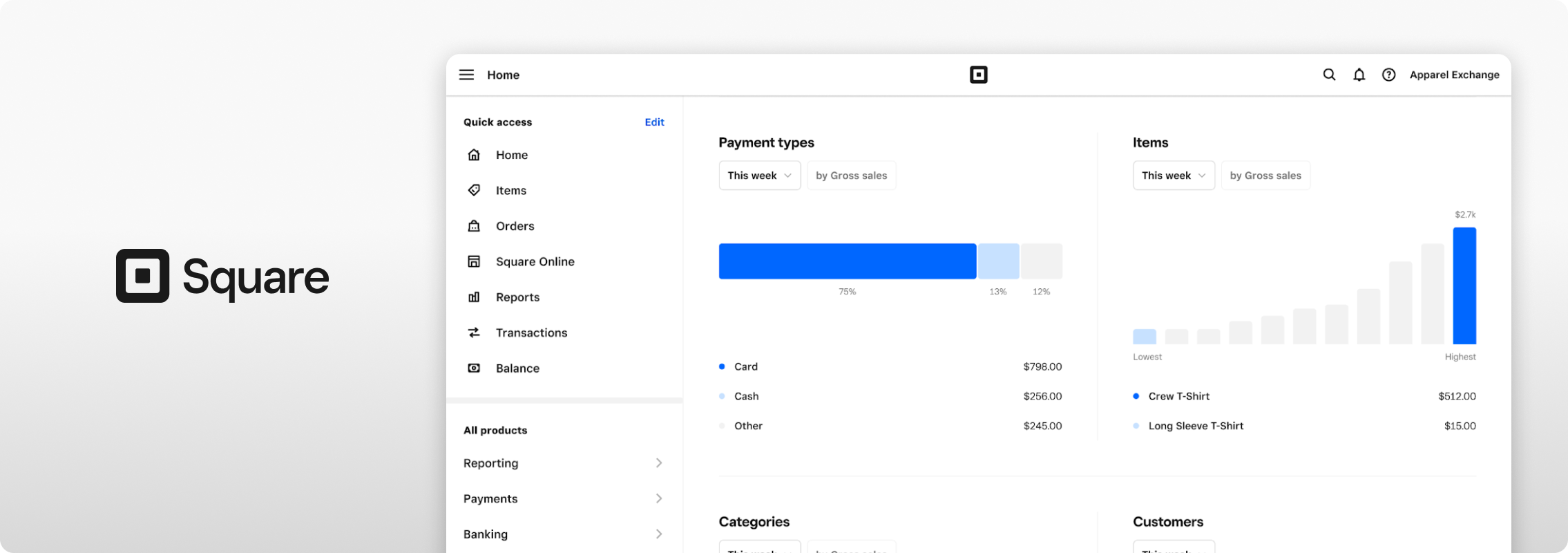
Square screen via squareup.com
Square is easy to start with. For a solo practitioner doing occasional cash-pay sessions, it covers the basics.
The limitations surface fast once billing gets more complex. Square is a retail point-of-sale tool. Its HIPAA support covers a few specific features, not the patient billing workflow PT practices actually need. Physical therapy billing outgrows it quickly.
PaySimple
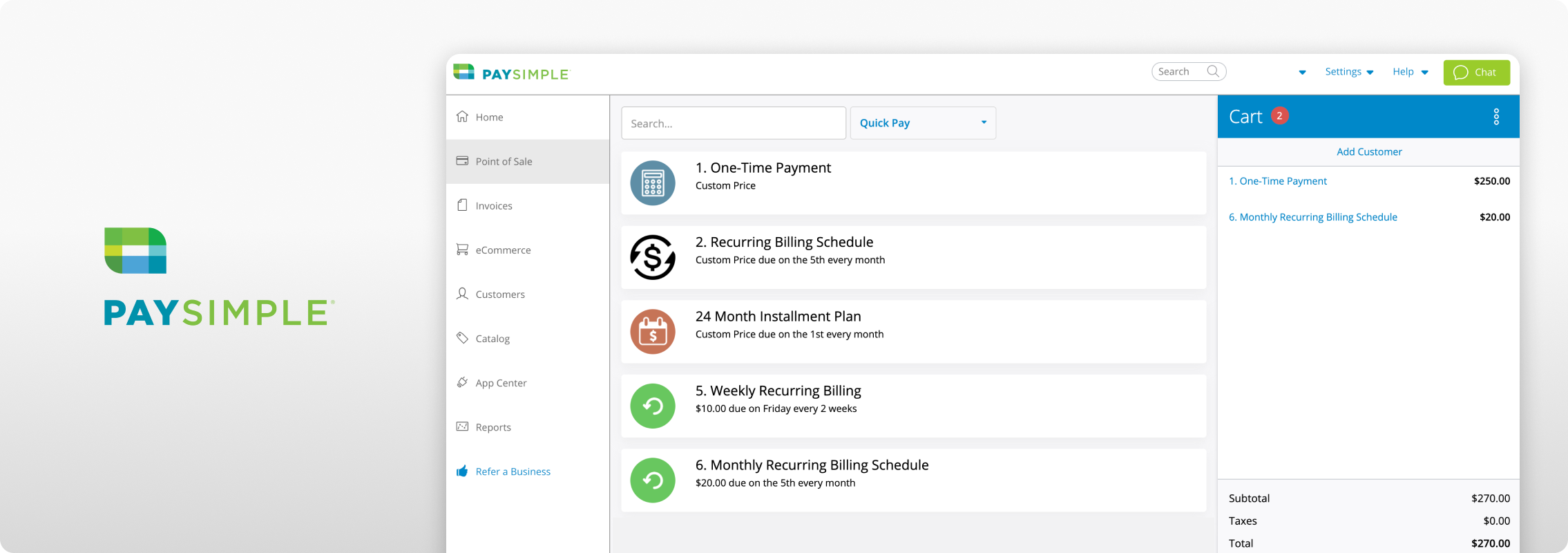
PaySimple screen via trustradius.com
PaySimple is more relevant for PT than Square because it was built for service businesses that bill on a recurring schedule. The invoicing and recurring billing tools are more developed, and the workflow fits a practice model better.
The compliance gap remains. PaySimple wasn’t built for HIPAA and doesn’t offer BAA execution as a standard part of onboarding. For a small cash-pay practice with simple billing, it’s reasonable. For any practice handling patient health information, the gap needs to be addressed before committing.
Matching the Right Processor to Your Practice Type
Physical therapy practices aren’t all built the same, and the right payment processing solution depends on your billing model.
In-network, insurance-heavy practices need strong patient balance collection tools above almost anything else: HIPAA compliance, post-insurance balance billing, and accounting integration. EBizCharge fits this model well.
Out-of-network or hybrid practices put more weight on recurring billing, installment plans, and online payment options. When visit frequency is high and patients are paying more out of pocket, automation matters most.
Cash-pay and concierge PT practices need the best merchant services provider available for autopay enrollment, package billing, and a polished payment experience. Finding the best merchant services provider matters most here because every dollar collected comes directly from the patient. EBizCharge handles this well; PaySimple suits simpler operations.
Whatever your model, payment processing fees should be fully understood before signing anything.
Why EBizCharge Works Well for Physical Therapists
Physical therapy billing sits at the intersection of insurance complexity and direct patient responsibility. Most patients have coverage, but their out-of-pocket share has grown, and collecting it efficiently is one of the real operational challenges of running a modern PT clinic. The growing cash-pay and out-of-network segment adds another layer, needing a merchant services provider that handles recurring billing, autopay, and patient portals without compromising on compliance.
EBizCharge handles both sides. The HIPAA-conscious design and BAA availability satisfy compliance requirements. Recurring billing and payment plan tools reduce manual collection work. The online portal and digital payment links give patients easy ways to pay without calling the office. Transparent payment processing fees mean no surprises at the end of the month.
Stax suits high-volume practices motivated by fee reduction with minimal compliance demands. PaySimple works for smaller cash-pay operations with simple needs. But for a full-featured, compliance-ready payment solution built around how PT practices actually bill, EBizCharge is the most complete option available.
Frequently Asked Questions
Do physical therapists need a HIPAA-compliant payment processor?
Yes. Any payment processing software or merchant services platform that handles patient billing data is subject to HIPAA. Confirm BAA availability before evaluating pricing or features.
What’s the best way to collect patient balances after insurance pays?
A combination of emailed or texted payment links, a secure online portal, and automated reminders gives patients easy ways to pay without calling the clinic. EBizCharge supports all of this through its physical therapy merchant services platform.
How do payment processing fees affect PT margins?
Credit card processing typically runs between 2% and 3.5% per transaction, with ACH transfers costing less. In a practice with tight reimbursement rates, that difference adds up over a year.
Can physical therapists use Square or Stripe?
They can, but both were designed for general commerce. Stripe doesn’t sign a HIPAA BAA at all, so it’s off the table if PHI is involved. Square does offer a BAA for a handful of HIPAA-enabled features, but neither platform offers the purpose-built patient balance collection tools PT billing requires.
Does EBizCharge work for out-of-network PT practices?
Yes. The same recurring billing tools, online portals, and payment flexibility apply regardless of how your practice bills.
Get paid faster with less work.
Get paid faster with less work.
3-minute product overview