


8 Best Payment Processing Solutions for Energy & Utility Companies

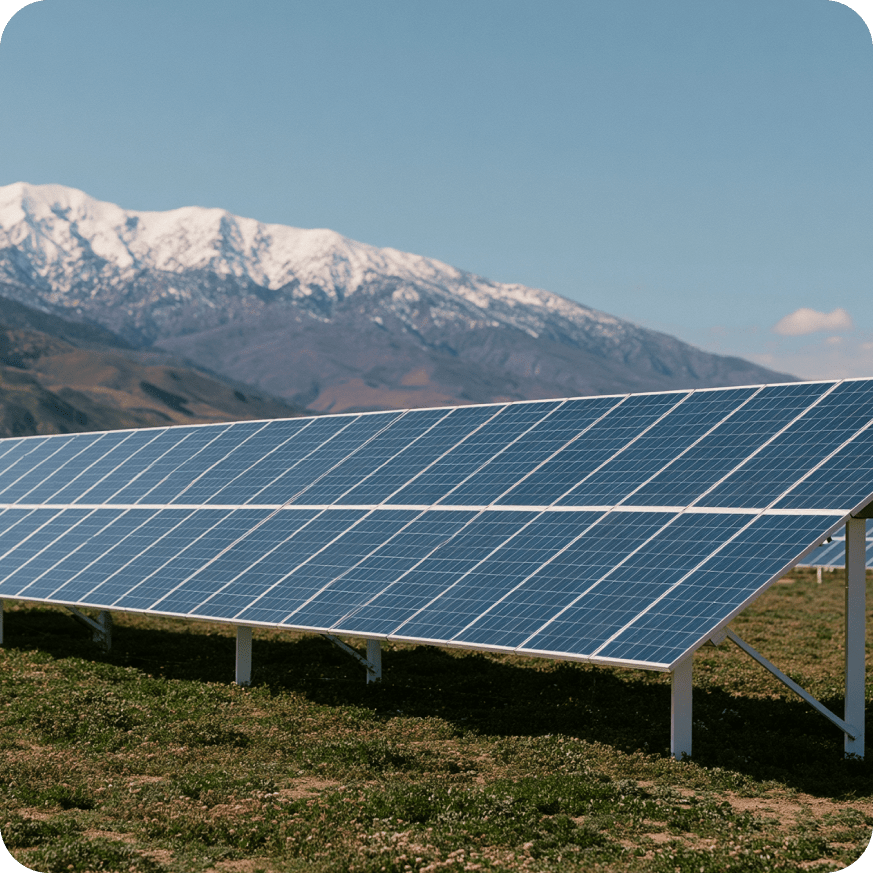
Nobody wakes up excited to pay their electric bill. But if you run an energy or utility company, you know that the moment a customer pays is one of the only times they actually interact with your business. That’s a lot of pressure for a single transaction, and it’s the reality utility providers live with every billing cycle.
This one’s for the billing managers, controllers, and operations folks who spend their days thinking about recurring payments, ACH reconciliation, and keeping customer data safe. If that’s you, you already know that not every payment processing platform is built with utilities in mind. Some are designed for retail. Some are designed for subscription boxes. Very few are actually built around the way energy and water bills work.
So, let’s walk through eight solid options.
What to Look for Before You Pick a Payment Processor
Before jumping into the list, it helps to know what actually matters when you’re choosing payment processing solutions for utility company operations. Utilities aren’t like a typical retail business. Bills repeat monthly, usage varies, and a big chunk of customers still prefer paying straight from their bank account rather than a card. Good utility and energy payment processing solutions are built around that reality rather than fighting against it.
Here’s the short version of what to look for:
- Support for both one-time and automated recurring payments
- ACH and credit card processing under one roof, since utility customers use both
- Strong security that keeps you PCI compliant without extra manual work
- Integration with the accounting or ERP software you already run
- A self-service portal so customers can pay without picking up the phone
- Transparent payment processing fees that don’t creep up as your volume grows
Keep those in mind as we go through the list, because they’ll come up again and again.
A Side-by-Side Comparison











Tyler Technologies
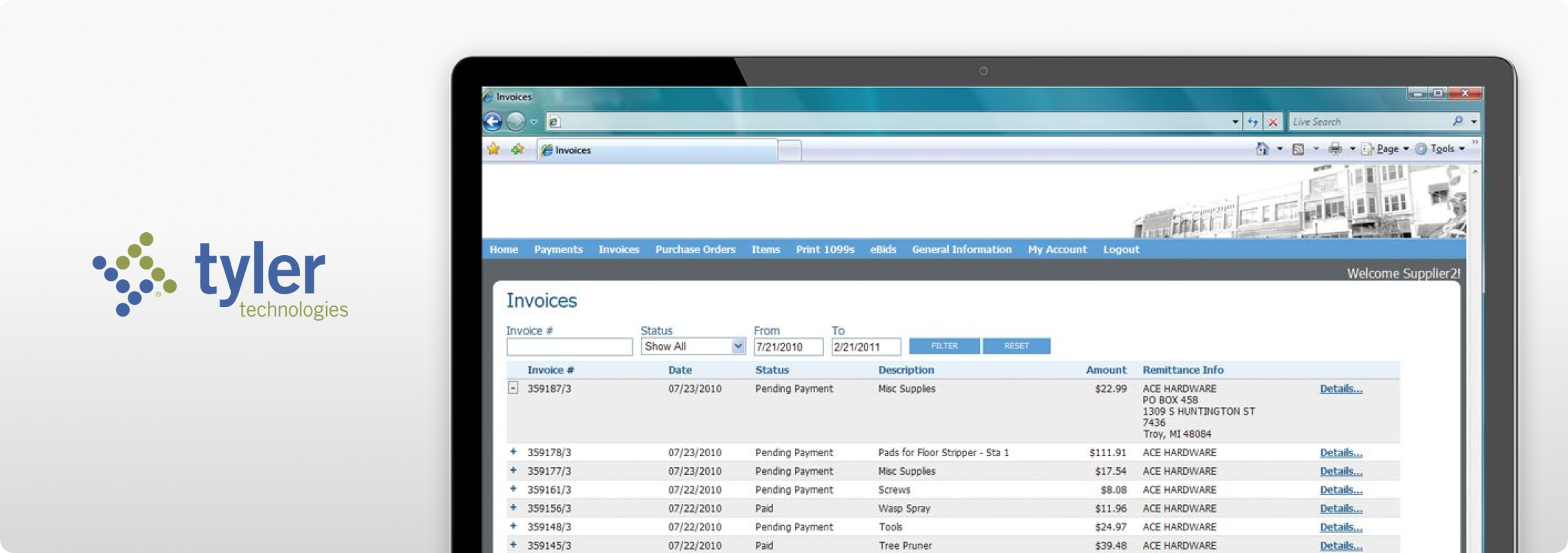
Tyler screen via tylertech.com
Tyler Technologies is a familiar name in the public sector, and for good reason. It’s built with municipal and government-run utilities in mind, handling compliance and reporting requirements that commercial-focused tools often overlook.
The tradeoff is that Tyler leans hard into government workflows. If you’re a privately run energy company, you might find yourself working around features designed for municipalities rather than for you. It’s a solid payment processing solution if you fall squarely into that public-sector category, but it’s not the most flexible option here.
GoCardless
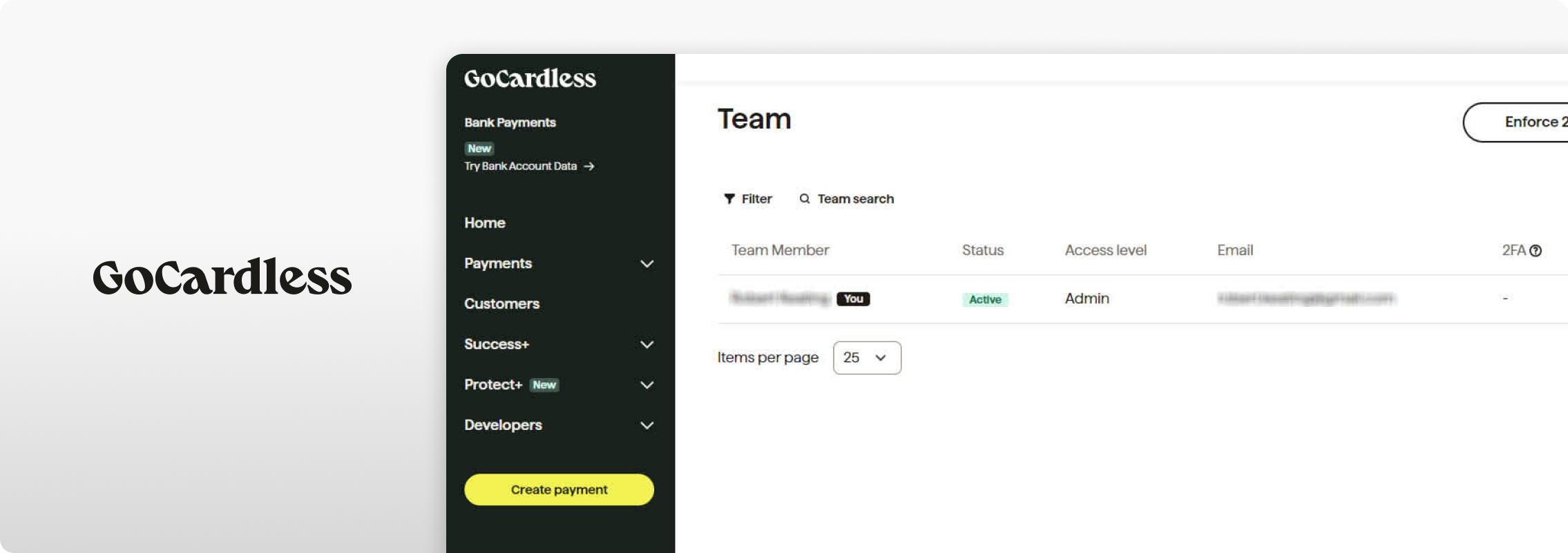
GoCardless screen via gocardless.com
GoCardless takes a different approach by focusing almost entirely on bank-to-bank payments instead of cards. For a utility, that’s a reasonable strategy, since so many customers already prefer paying straight from checking accounts. Automatic retry logic helps catch failed payments before they turn into a collections headache.
Where it falls short is on the card processing side. If a meaningful chunk of your customers still want to pay by credit card, this payment processor won’t feel complete on its own. It’s a nice piece of a bigger puzzle, but rarely the whole answer.
Stripe
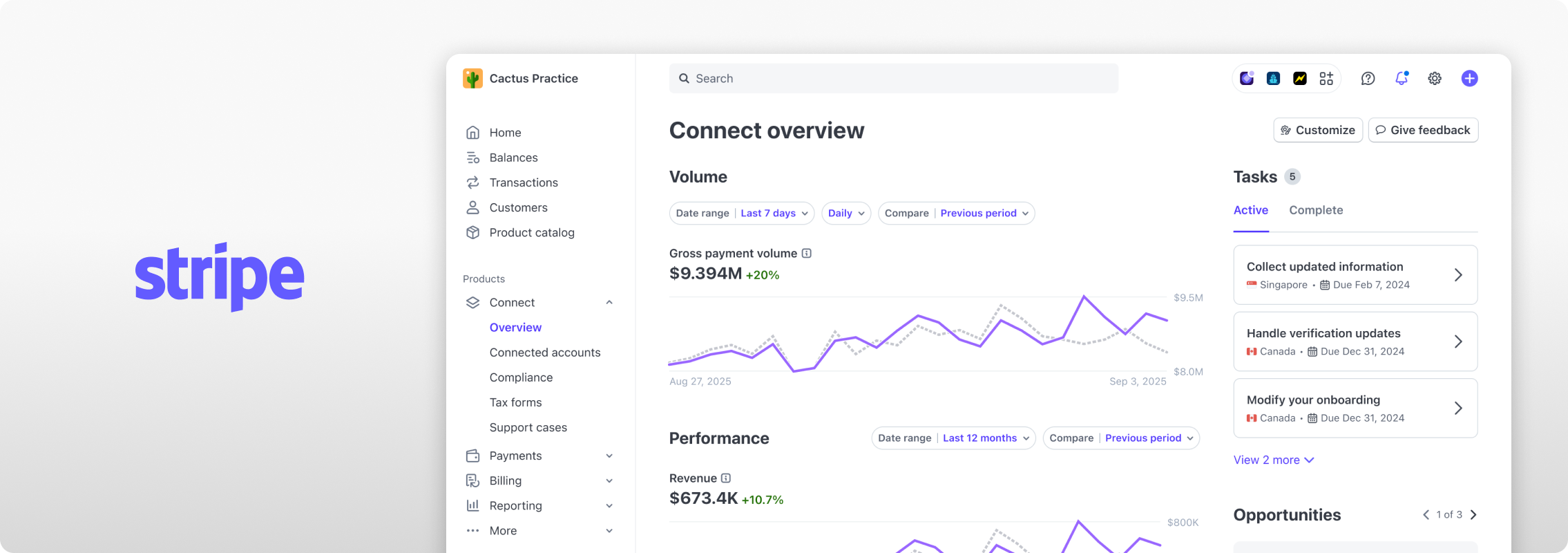
Stripe screen via stripe.com
Stripe shows up on pretty much every list like this one, and there’s a reason for that. It’s flexible, well-documented, and gives developers a lot of room to build something custom. If your utility has an in-house development team, Stripe can be shaped into almost anything you need.
That flexibility is also the catch. Stripe is a payment processing software toolkit more than it is a utility-specific solution out of the box. You’ll likely spend real engineering time building the recurring billing logic, the customer portal, and the reporting most utilities need on day one. Good payment processing software should save your team time, not create a second project for your developers.
CSG Forte
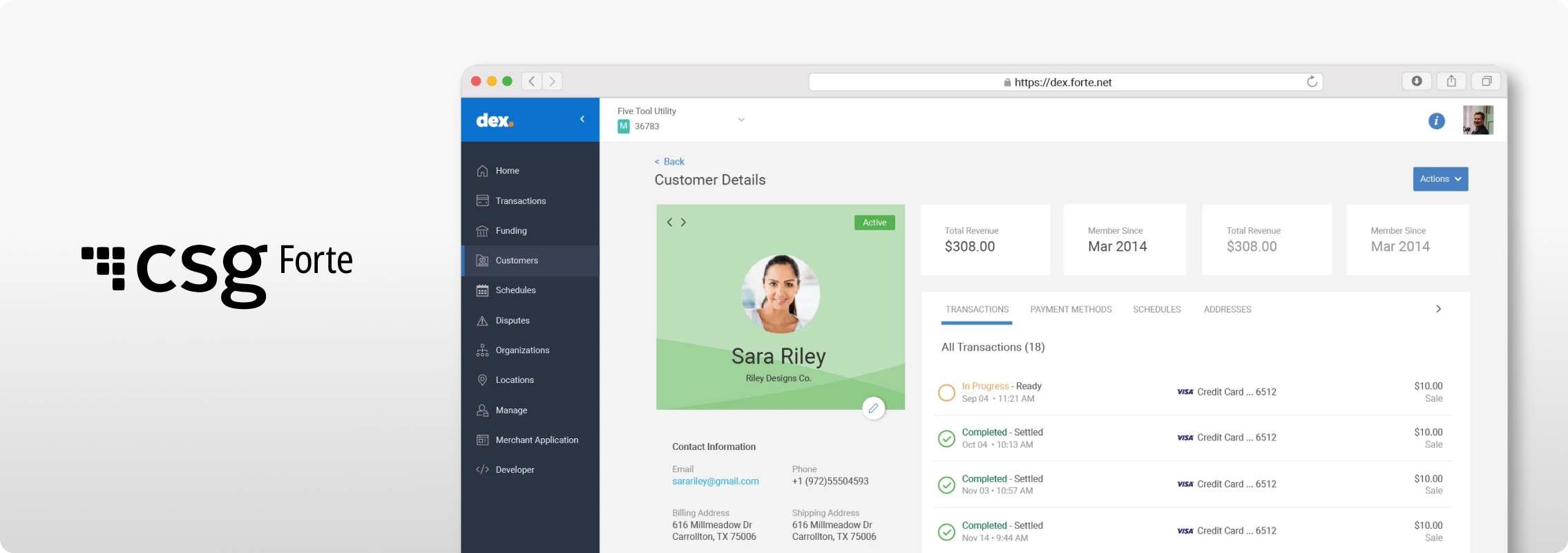
CSG Forte screen via forte.net
CSG Forte brings something genuinely useful with its ACH validation tools and point-of-sale options for customers who still pay in person. Tokenization and encryption are built in, which helps keep things secure without much extra setup.
It handles the basics of energy payment processing solutions reasonably well, especially for utilities juggling online, phone, and walk-in payments. Where it comes up short is in deeper integration with existing accounting or ERP systems. It works, but it doesn’t always feel built specifically around your back-office software.
InvoiceCloud
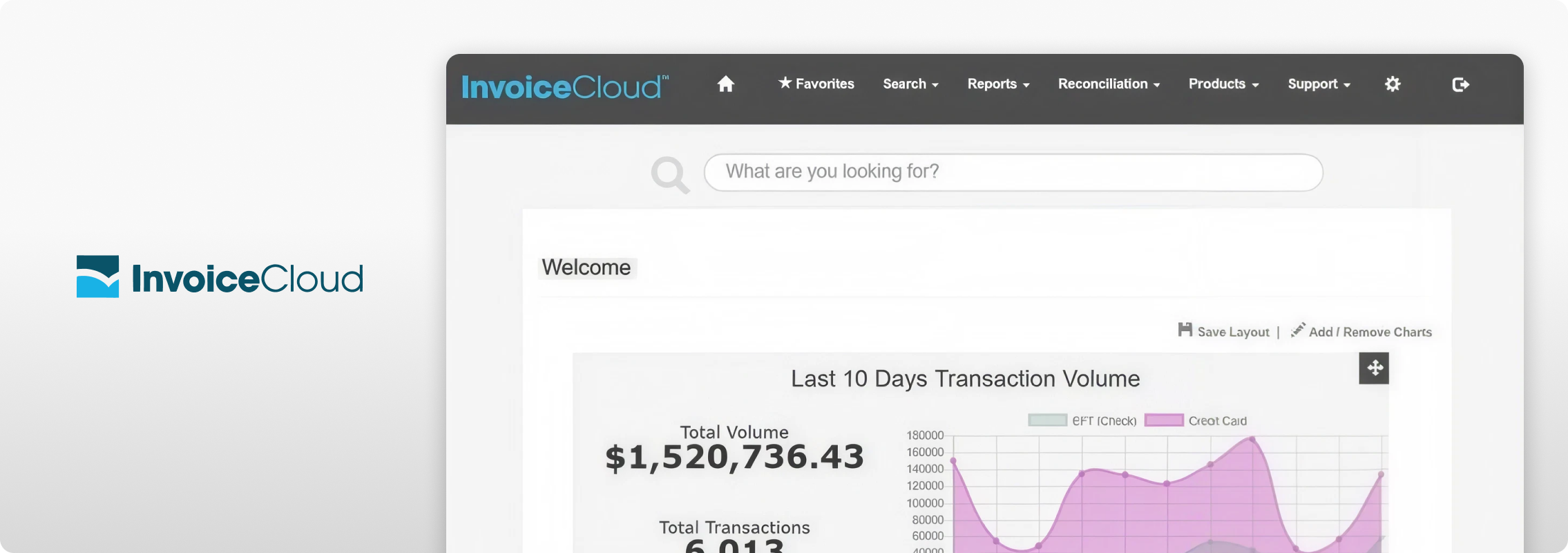
InvoiceCloud screen via SourceForge.net
InvoiceCloud puts a lot of energy into the customer-facing side of things. Its AI-driven bill presentment is designed to reduce late payments, and it plays reasonably well with legacy systems like SAP and Oracle. For a utility trying to modernize how bills look and feel, that’s a real strength.
The catch is that InvoiceCloud leans more toward bill presentment than pure payment processing. It’s a strong payment processing platform for improving the customer experience, but if tightening up how payments move through your books is the goal, you might want something with more backend muscle.
Fiserv
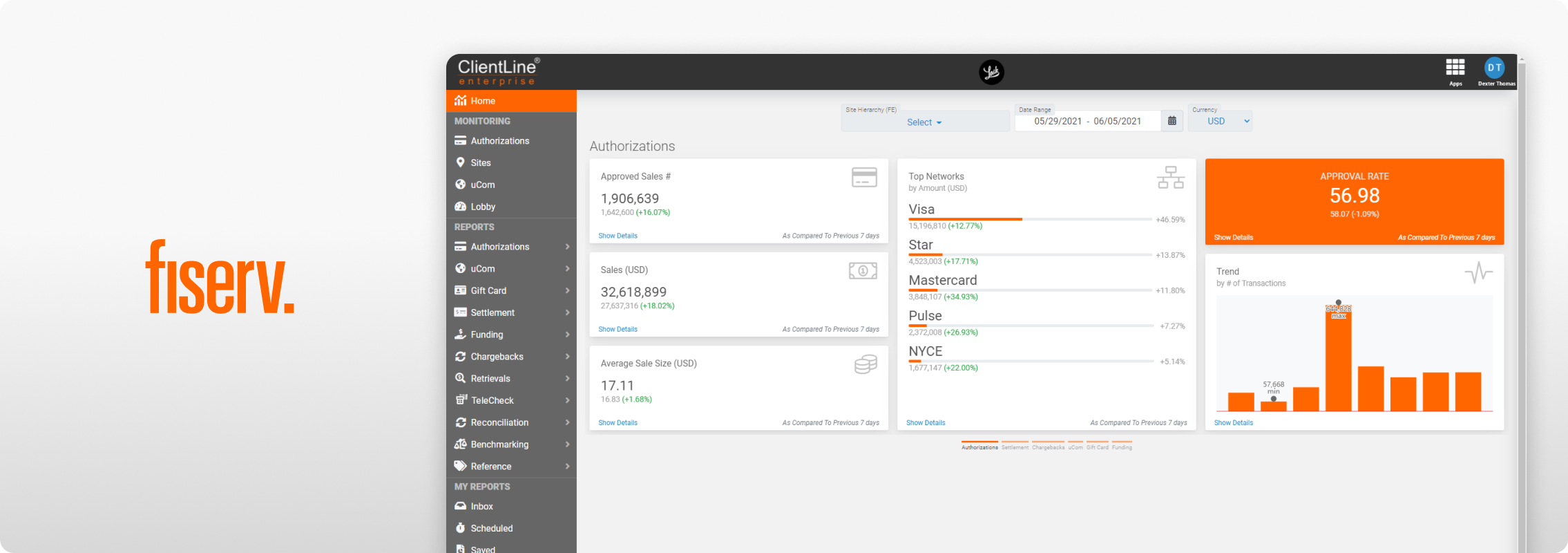
Fiserv screen via carat.fiserv.com
Fiserv has been around long enough to work with thousands of utility companies, and that kind of scale says something. It handles enormous transaction volume without blinking, and its integrated approach to billing and payments can genuinely simplify a complicated operation.
The size that makes Fiserv appealing for large utilities can also be a drawback for smaller ones. Implementation tends to take longer, and the sheer number of features can feel like overkill if you’re running a leaner operation. Fiserv is capable, and it belongs on any serious list of utility and energy payment processing solutions, but it’s clearly built with big enterprises in mind first.
KUBRA
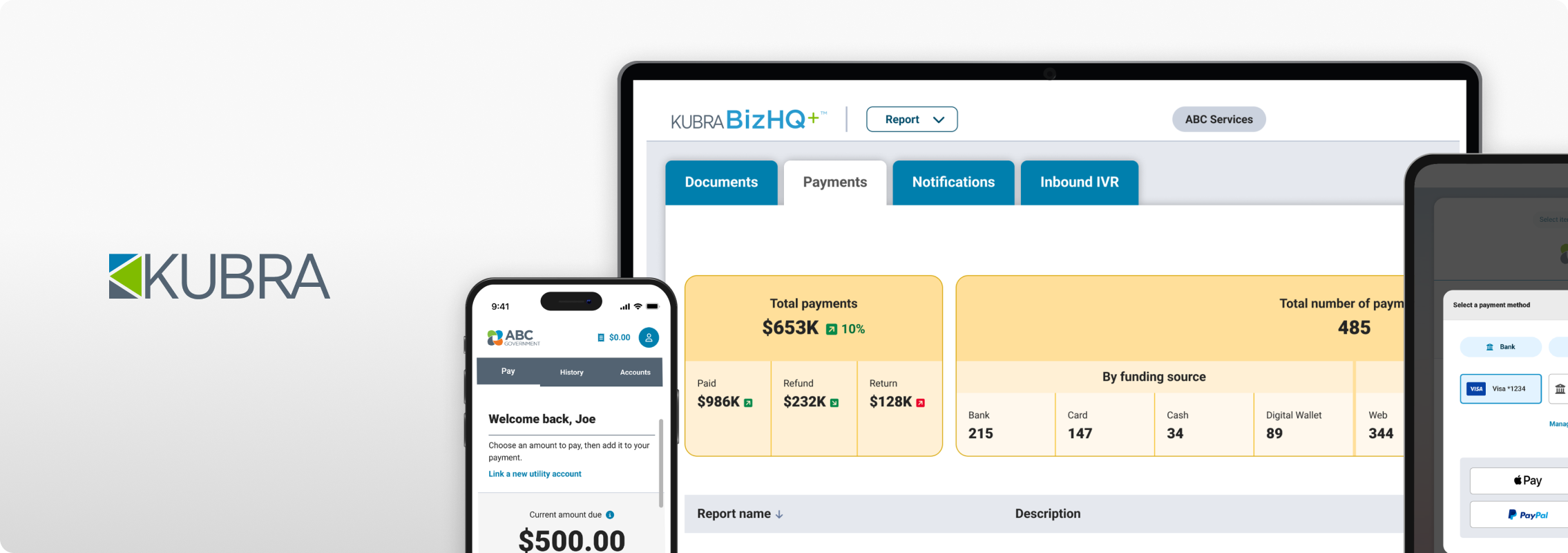
KUBRA screen via kubra.com
KUBRA rounds out the specialized end of the list with an impressive suite built specifically for utilities. Omnichannel bill pay, phone-based payments, and even in-person cash networks are all part of the package, which is hard to find anywhere else.
That said, KUBRA is clearly designed for scale. Smaller and mid-sized utilities may find themselves paying for complexity they don’t actually need. It’s an excellent energy payment processing solutions option for large providers, but not always the leanest fit for everyone else.
EBizCharge
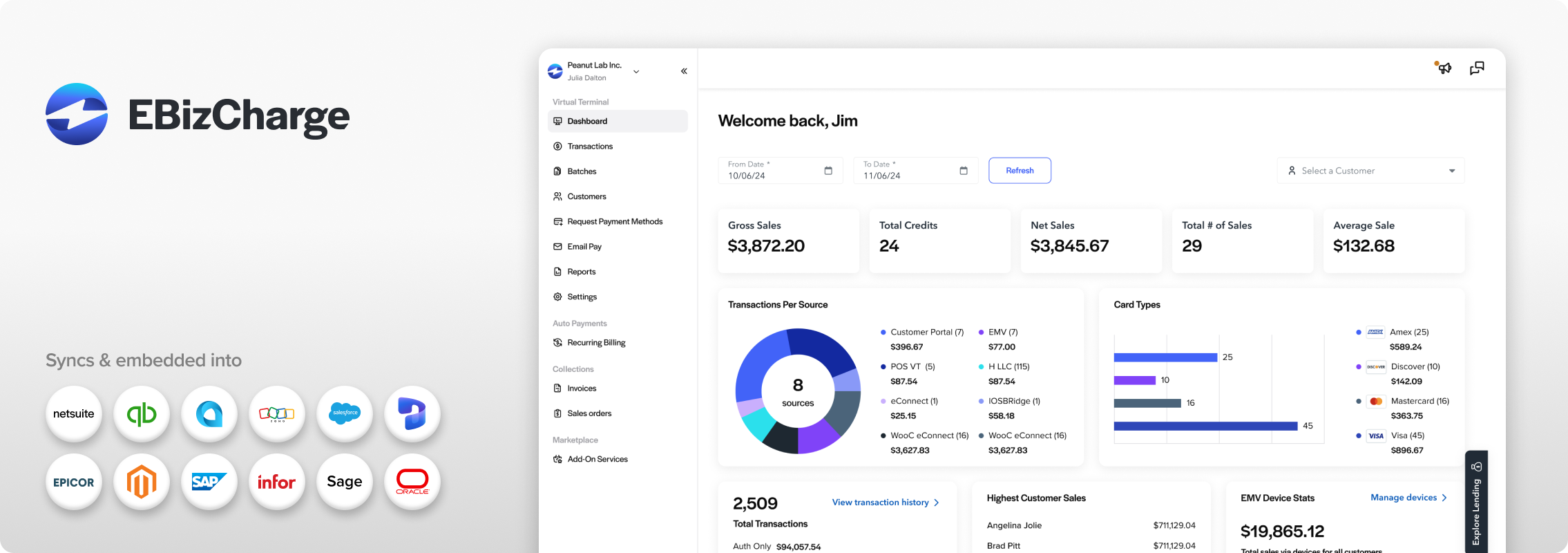
EBizCharge earns the top spot because it does what a lot of the other options on this list only manage in pieces. It combines a genuinely simple payment processing platform with the kind of deep accounting and ERP integration utilities actually needed day-to-day.
Instead of forcing your team to bounce between systems, EBizCharge sits directly inside the accounting or ERP software you’re already using. Payments sync automatically, invoices update themselves, and your team spends less time chasing down what got paid and more time actually running the business. For a utility processing hundreds or thousands of recurring bills a month, that kind of automation adds up fast.
Security is handled properly, too. EBizCharge uses tokenization and encryption to keep customer payment data safe, and it stays PCI compliant without requiring your team to become security experts overnight. Customers get a self-service portal to view and pay bills on their own time, recurring billing runs on autopilot, and saved payment profiles mean nobody has to call in and read their card number over the phone again.
There’s also a practical financial angle worth mentioning. Many utilities don’t realize how much they’re losing to inefficient credit card processing fees until they actually sit down and compare providers. EBizCharge tends to come out ahead here, too, since a payment solution built around your existing software naturally cuts down on wasted processing and payment processing fees tied to reconciliation errors.
Put simply, if you’re weighing payment processing solutions for utility company operations and you want something that actually feels built for the way utilities operate, EBizCharge is the one that tends to check every box without asking you to compromise on any of them.
How to Choose What’s Right for You
Every option on this list has its place. Tyler Technologies makes sense in the public sector. GoCardless is worth a look if ACH dominates your customer base. Stripe is great if developers are itching to build something custom. Fiserv and KUBRA both shine at scale.
But if you’re looking for a single payment processing solution that handles recurring billing, integrates with your existing accounting setup, and keeps security simple instead of complicated, EBizCharge is hard to beat. It doesn’t ask you to choose between convenience and control. It gives you both.
The Importance of Getting It Right
Payment processing might not be the most exciting part of running an energy or utility company, but it’s one of the few moments customers actually notice. Getting it right builds trust. Getting it wrong creates support tickets and late payments. The right payment solution quietly fixes both problems at once.
Work through this list with your own operation in mind, and don’t be afraid to test a few options before committing. But if you’re looking for a place to start, EBizCharge earned its spot at the top of this list for a reason, and it’s worth seeing what it can do for your utility firsthand.
Get paid faster with less work.
Get paid faster with less work.
3-minute product overview