
Blog > Merchant Services for Medical Offices: A Buyer’s Guide for Practice Managers
Merchant Services for Medical Offices: A Buyer’s Guide for Practice Managers

Most payment processors are built around a simple idea. A customer shows up, pays for something, and leaves. The whole thing wraps up in seconds.
Medical billing doesn’t work that way. A patient comes in for a visit, insurance processes the claim over the following weeks, and then the practice bills the patient for whatever balance remains. By the time money actually changes hands, the appointment might be a month old. That gap between service and payment is one of the defining characteristics of healthcare billing, and it’s exactly why a generic payment processor often fails medical practices.
Practice managers and billing staff feel this more than anyone. They’re the ones managing aging accounts receivable, chasing patient balances, reconciling insurance payments, and fielding calls from patients who can’t figure out how to pay online. The payment setup your practice uses either makes that work easier or considerably harder. This guide covers what merchant services for medical offices actually need to include, what to watch out for, and what questions are worth asking before you commit to a provider.
How Medical Payment Processing Differs from Retail
Before evaluating any merchant services provider, it helps to understand why healthcare billing is its own category entirely.
In retail, payment is immediate. The transaction happens at the point of sale, and that’s the end of it. In a medical office, the billing cycle has multiple stages. First, the claim goes to insurance. Then the explanation of benefits comes back, often with adjustments, denials, or partial payments. Then the patient balance is calculated and billed separately. That whole sequence can take weeks, and the payment processor needs to support every stage of it, not just the final card swipe.
The payment sources are more varied, too. On a single patient account, a practice might collect a copay at check-in, receive an insurance reimbursement via EFT a few weeks later, and then bill the patient for a deductible balance paid with an HSA card. Each of those transactions works differently, carries different fees, and needs to be recorded accurately in the patient’s account.
Layered on top is HIPAA. When payment data and protected health information exist in the same system, your payment processing solution carries compliance obligations that go well beyond what a standard retail processor is designed for. That’s a structural requirement that should inform every vendor evaluation from the very beginning.
HIPAA, PCI Compliance, and Why Both Matter
Two compliance standards apply to any medical practice processing patient payments, and understanding both is worth the time.
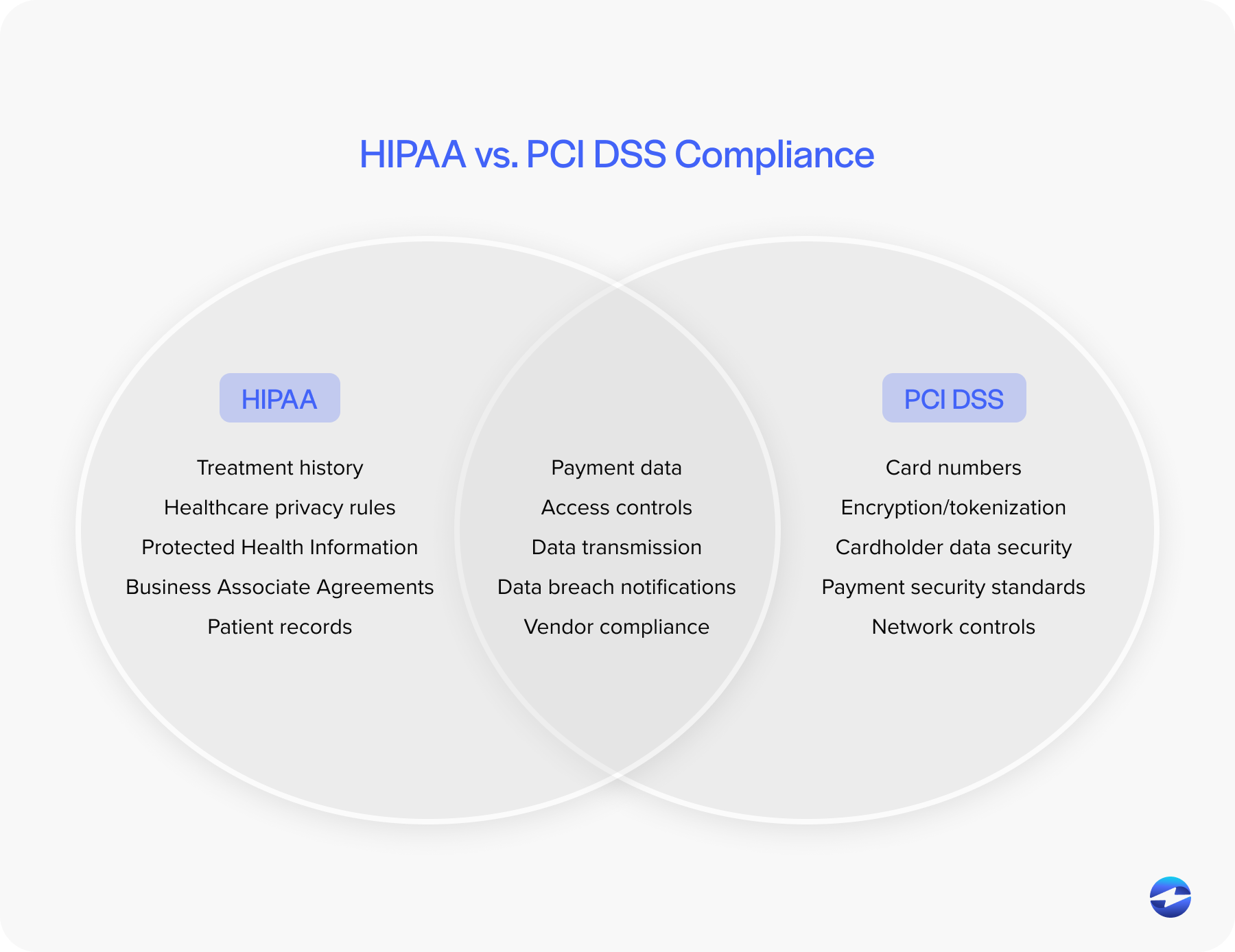
HIPAA, the Health Insurance Portability and Accountability Act, governs how protected health information is stored, transmitted, and accessed. When a payment is tied to a patient account, it carries protected health information (PHI) context. That means your payment tools and any software that touches patient payment data may fall under HIPAA’s requirements. Any vendor who handles that data on your behalf should be willing to sign a Business Associate Agreement, commonly called a BAA. If a processor won’t sign one, that’s a hard stop.
PCI compliance, governed by the Payment Card Industry Data Security Standard, sets the security requirements for handling cardholder data. It applies to every business that accepts card payments. It covers encryption, tokenization, access controls, and network security. A PCI-compliant payment processing solution reduces your exposure to data breaches and keeps your practice out of compliance trouble on the payment side.
Where the two standards meet is worth paying close attention to. A processor that’s PCI-compliant but HIPAA-unaware can still create real liability for your practice. The best merchant services for medical offices will satisfy both, with data handling practices that protect patients and keep your billing environment secure.
Features That Actually Matter for Medical Merchant Services
Not every payment feature matters equally in a healthcare setting. Here’s what should be on the list when evaluating any payment processing software for a medical practice.
Patient balance billing. Your processor needs to support post-visit billing, not just point-of-sale transactions. Once insurance has processed, the remaining patient balance needs to go out promptly and through a channel patients will actually use to pay it.
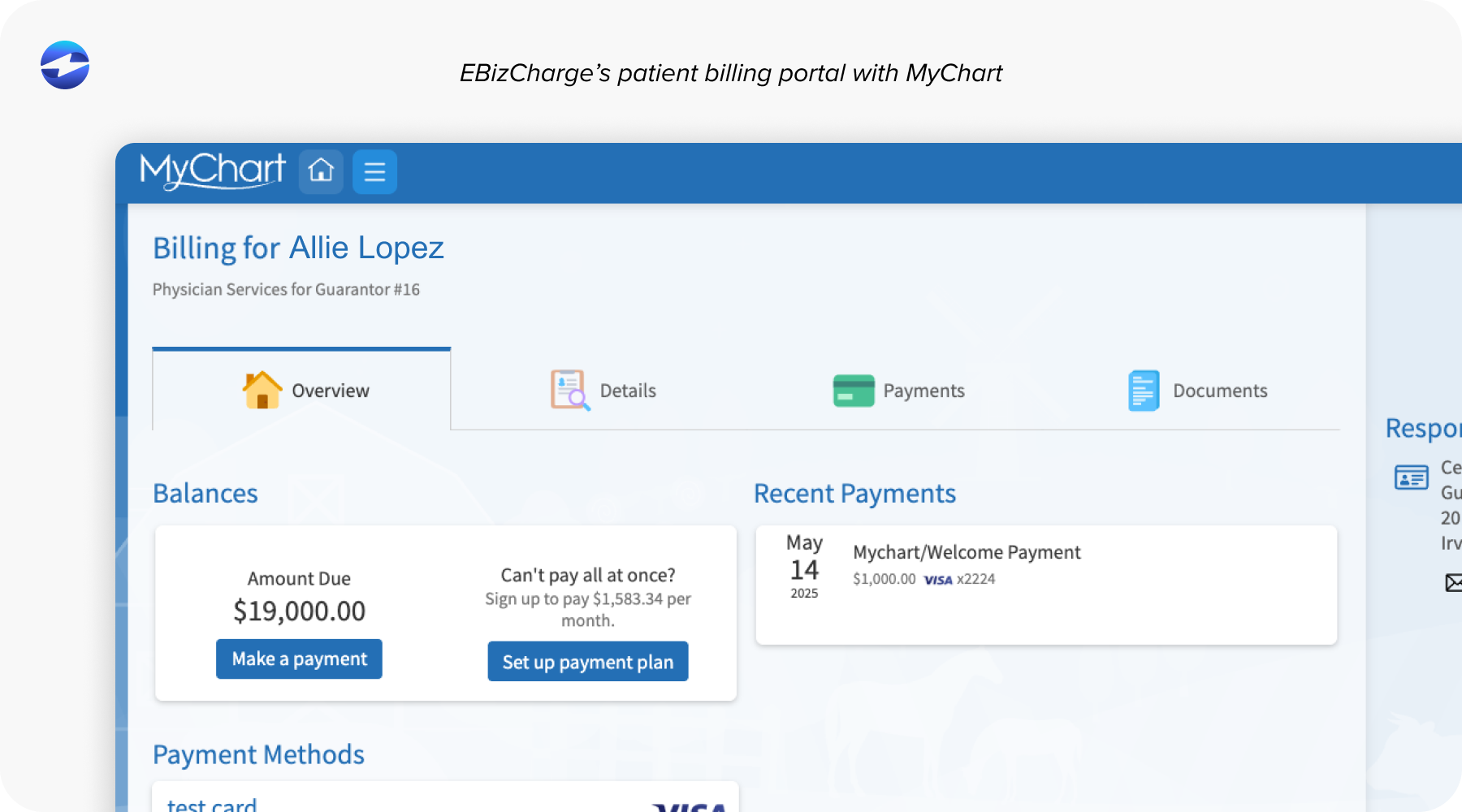
Text-to-pay and digital payment portals. Mailed statements are slow and easy to ignore. A digital payment portal that lets patients pay from their phone speeds up collection considerably. Text-to-pay and email billing links get balances in front of patients quickly and cut down on the inbound calls your front desk has to manage.
Recurring billing and card-on-file storage. For patients on payment plans, for practices with subscription wellness programs, or for any situation where you need to charge a stored card on a schedule, this capability needs to be built into the payment solution natively. Tokenized card storage keeps patient data secure while making recurring billing straightforward to manage.
FSA and HSA card acceptance. A significant portion of patients use flexible or health savings accounts to cover medical bills. These cards are eligible for most medical services, but your processor needs to handle them correctly and without friction at the point of collection.
EHR and practice management software integration. When your payment processor connects directly to your EHR or billing system, payments post automatically and balances update in real time. Look for direct integrations with platforms like Epic, Athenahealth, eClinicalWorks, or whatever system your practice already runs on.
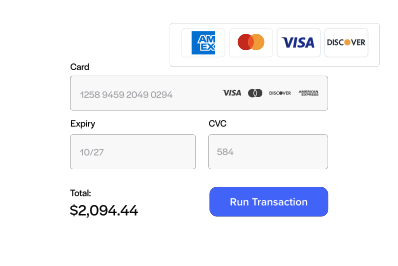
Virtual terminal. For billing balances after the visit, collecting over the phone, or sending a secure payment link without requiring the patient to be present at a terminal.
Reporting and AR visibility. Your billing team needs to see what’s outstanding, how long balances have been aging, and what collection rates look like across providers or locations. A processor with strong reporting gives you that visibility rather than leaving you to piece it together across multiple systems.
Red Flags When Evaluating a Payment Processor
Some issues with a merchant services provider only become clear after you’ve signed the contract. These are the warning signs worth catching early.
A processor that won’t sign a BAA is a non-starter for any medical practice. If they hesitate or don’t know what you’re asking for, that tells you everything about their experience with healthcare clients.
No integration with your EHR or billing software means your team enters payment data manually across systems. That creates errors, slows reconciliation, and quietly adds hours to the billing workflow every single week.
No digital patient payment options means you’re still dependent on mailed statements and phone calls to collect balances. That’s slow and expensive in an era when patients expect to settle a bill with a link on their phone.
Opaque or tiered pricing tends to cost medical practices more over time. Interchange-plus pricing is more transparent and typically more favorable at the transaction volumes a busy medical practice runs.
Long-term contracts with significant early termination penalties limit your flexibility as the practice grows or changes systems. A provider that’s genuinely confident in their product generally doesn’t need to lock you into a three-year agreement to keep your business.
How Better Payment Processing Improves AR
The quality of your merchant services directly affects how quickly your practice collects money and how much staff time it takes to make that happen. It’s not a back-office detail. It’s a revenue cycle issue.
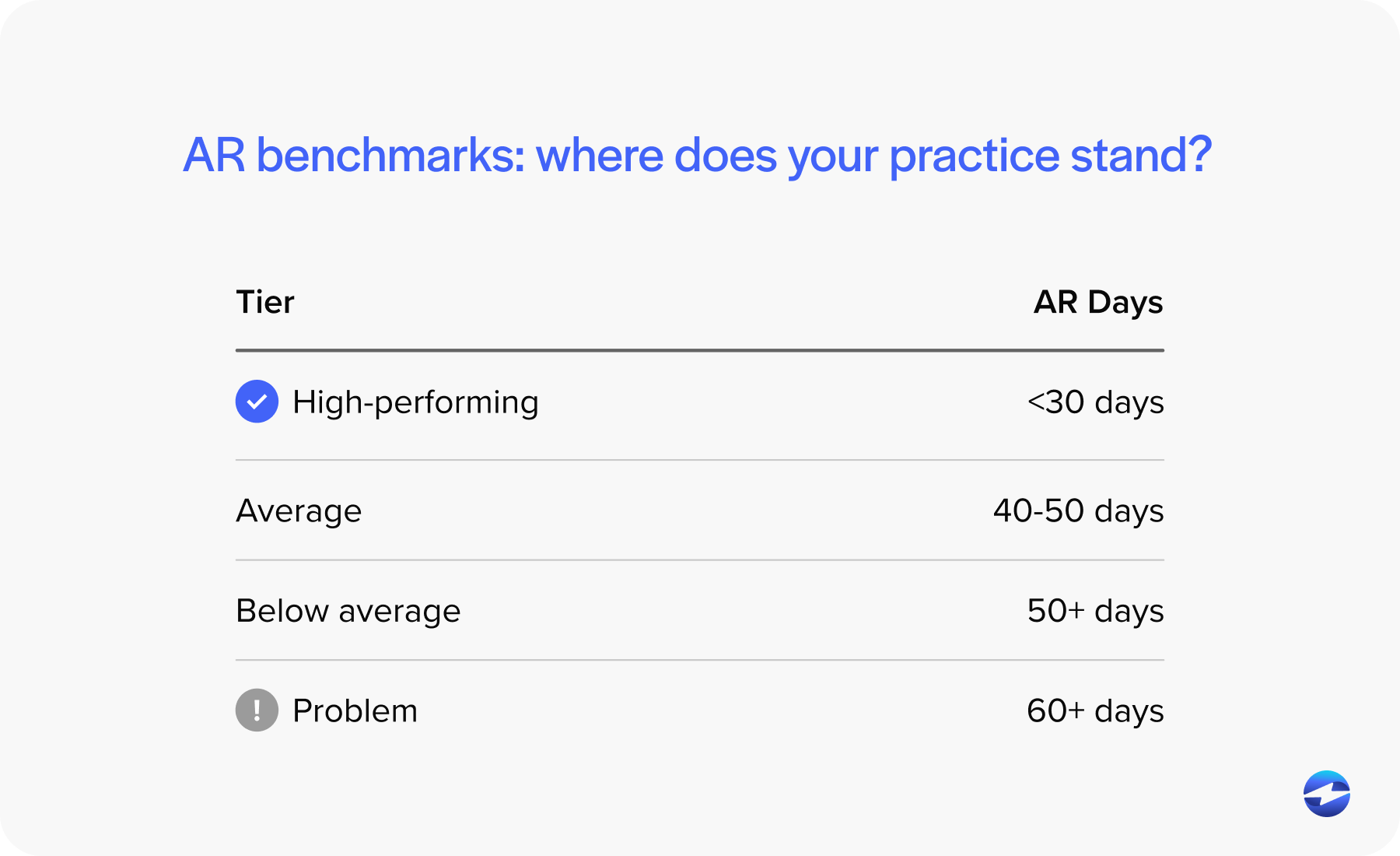
When patients receive a text message with a payment link the same week their balance is calculated, they pay faster than when a paper statement arrives two weeks later. Digital-first collections shrink the gap between claim processing and patient payment, which reduces the average age of your AR in a measurable way.
Payment plans address the other side of the problem. When a patient has a larger balance, offering a structured installment plan on a stored card is far more effective than sending repeated statements and waiting. It converts a potential write-off into a reliable monthly payment without requiring your staff to follow up manually each time.
The reconciliation piece matters just as much. When your payment processing software integrates directly with your billing system, every incoming payment posts automatically to the right account. Your billing staff stops manually matching payments, stops hunting for mismatches, and gets time back for work that actually requires their judgment.
Questions to Ask Before Choosing a Provider
Choosing a payment provider can be a daunting task, but there are ways to make it easier. Use these questions when evaluating any merchant services for medical offices. A provider with real healthcare experience will answer them clearly and specifically.
- Are you HIPAA-compliant and willing to sign a Business Associate Agreement?
- Which EHR and practice management systems do you integrate with directly?
- Does your platform support patient balance billing, recurring payments, and card-on-file storage natively?
- What patient-facing options do you offer — text-to-pay, online payment portal, digital statements?
- What reporting do you provide on outstanding balances, payment aging, and collection rates?
- What is your pricing model, and what fees exist beyond the base interchange rate?
- What are the contract terms, and is there an early termination fee?
Finding The Best Merchant Services for Medical Offices
The right HIPAA-compliant medical merchant services provider simplifies billing, supports compliance, and gives your team the tools to collect patient balances faster with less manual effort. The wrong one creates compliance exposure, slows your AR, and adds hours to your billing team’s week without anyone fully realizing why.
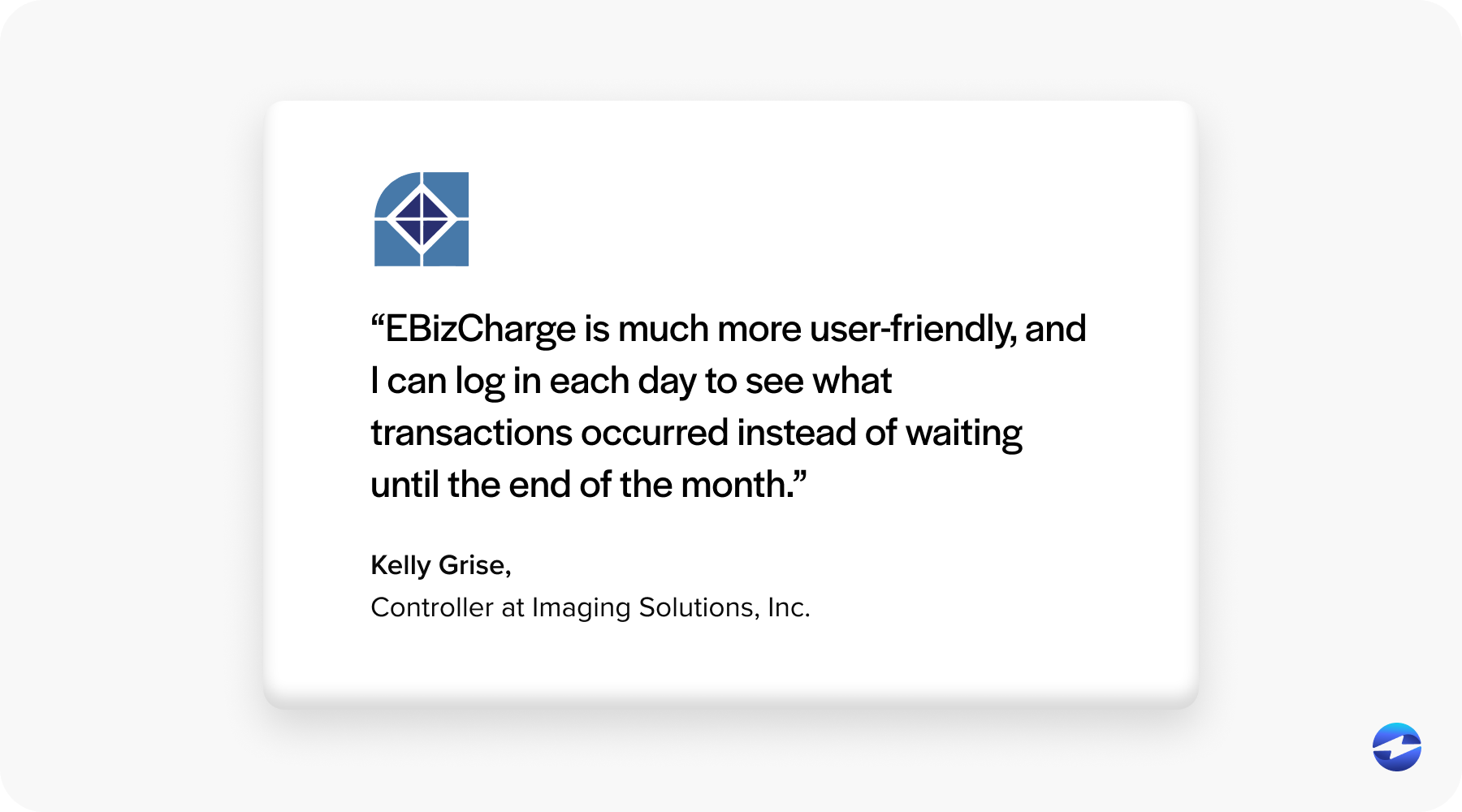
Payment solutions like EBizCharge are designed with the complexity of medical billing in mind. From HIPAA-compliant data handling and recurring patient billing to direct software integrations and transparent interchange-plus pricing, EBizCharge offers merchant services built for the way healthcare practices actually operate.
Use the questions in this guide as your starting point, and see how EBizCharge holds up.