



Logistics is a broad term that covers a lot of ground. A third-party logistics (3PL) provider handling warehousing and fulfillment operates very differently from a last-mile delivery company or a customs broker, but they share a common challenge: the billing side of the business is genuinely complex, and most payment tools were built for something simpler.
A 3PL might invoice an enterprise client $50,000 a month for warehousing and fulfillment while also processing hundreds of individual shipping charges for the same client. That’s two very different payment sizes and billing cadences running through the same operation. Add long-term service contracts, ACH-dominant B2B payment terms, and the need for clean ERP reconciliation, and the gap between a generic tool and the right tool becomes obvious fast.
Operations managers, finance directors, and back-office teams in the logistics industry deal with this every day. Finding the right logistics payment processing setup isn’t just about taking money from clients. It’s about finding a payment processing solution that integrates with how the business actually runs.
Why Logistics Billing Is Its Own Category
The first issue is transaction variety. Most businesses have a relatively consistent invoice size. Logistics companies often don’t. A warehousing contract generates one large monthly invoice; individual fulfillment charges generate dozens of smaller ones. The payment processing software needs to handle both without friction.
Recurring contract billing is a significant part of most logistics operations. Long-term warehousing agreements, fulfillment retainers, and SLA-based contracts need to bill automatically. Manual intervention every month is staff time that should go elsewhere.
ACH (Automated Clearing House) and wire transfers dominate B2B logistics payments. Enterprise clients don’t pay warehouse contracts by credit card. They pay by bank transfer, and the payment processor needs to handle ACH natively rather than treating it as an afterthought.
ERP and WMS (Warehouse Management System) integration matters more in logistics than in most industries. Logistics processes are deeply tied to Warehouse Management Systems and ERP platforms. When payment data doesn’t flow automatically into those systems, someone reconciles it by hand — and that error risk compounds.
Finally, chargeback exposure is another important factor. When a shipment is lost, delayed, or damaged, billing disputes follow. Having solid documentation tools and a structured dispute process isn’t optional — it’s a regular part of operations.
The Best Payment Processing Options for Logistics Companies
1. EBizCharge: Best Overall
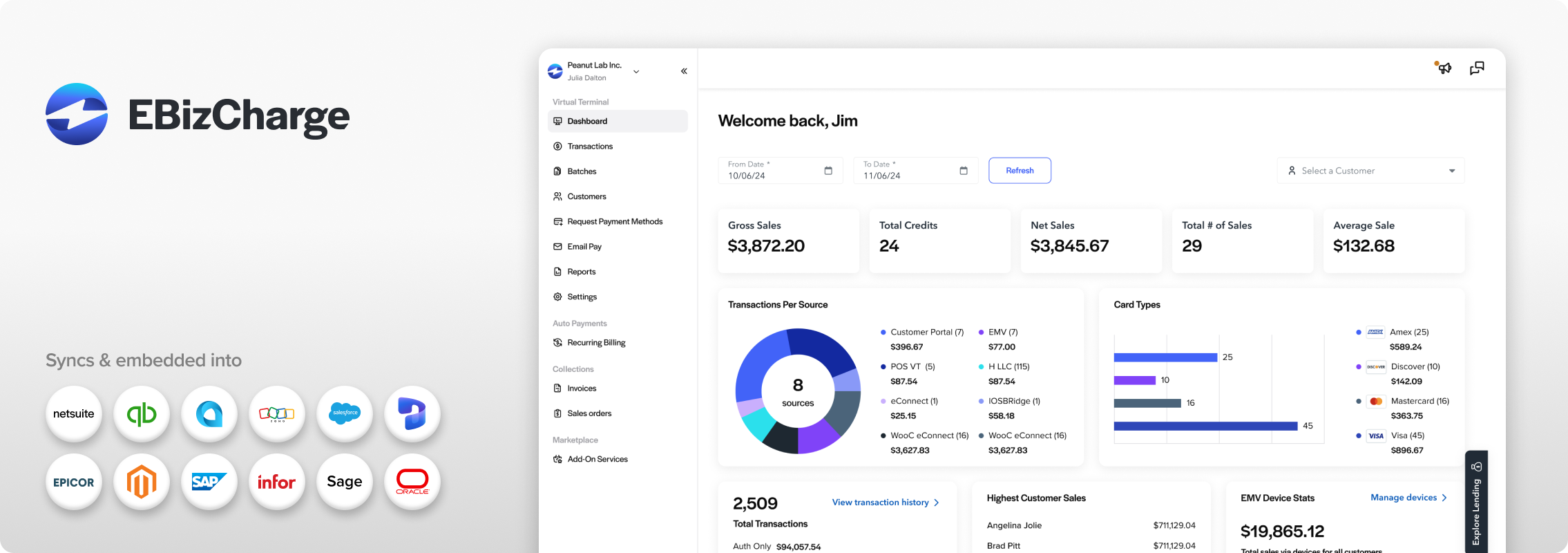
EBizCharge is the strongest all-around payment processing solution for logistics companies. It was built for complex, high-value B2B billing environments — which precisely describe most logistics operations, whether you’re running a 3PL, a fulfillment center, or a customs brokerage.
The pricing model is where EBizCharge makes the clearest impact. Running on interchange-plus pricing, the platform passes through the actual cost of each transaction rather than a flat-rate markup. On large warehousing or fulfillment invoices, the difference between interchange-plus and flat-rate credit card processing fees is substantial. Credit card processing fees should scale with actual transaction cost, not a retail markup applied regardless of invoice size.
ACH support is built in natively. Enterprise clients paying monthly contracts via bank transfer are handled through the same platform as card payments. There’s no need to route ACH through a separate tool or manage two systems for different clients.
The ERP and accounting integrations are deep. EBizCharge connects natively with QuickBooks, Sage, and other platforms, so payment data posts automatically into the correct accounts without manual reconciliation.
The recurring billing engine handles warehousing agreements, fulfillment retainers, and SLA-based billing automatically across multiple clients and contract terms.
The secure payment vault stores client payment details on file, so high-volume billing relationships move faster every cycle. The virtual terminal handles phone-in payments and ancillary charges without a physical reader. Chargeback management tools cover the documentation and dispute process when shipment issues lead to contested invoices, and U.S.-based support is available when a billing problem threatens a client relationship.
Verdict: EBizCharge covers the full billing picture of a logistics company — large B2B contracts, recurring service billing, ACH, ERP integration, and dispute management — better than any other option on this list.
2. Stripe: Best for Tech-Enabled Logistics Platforms
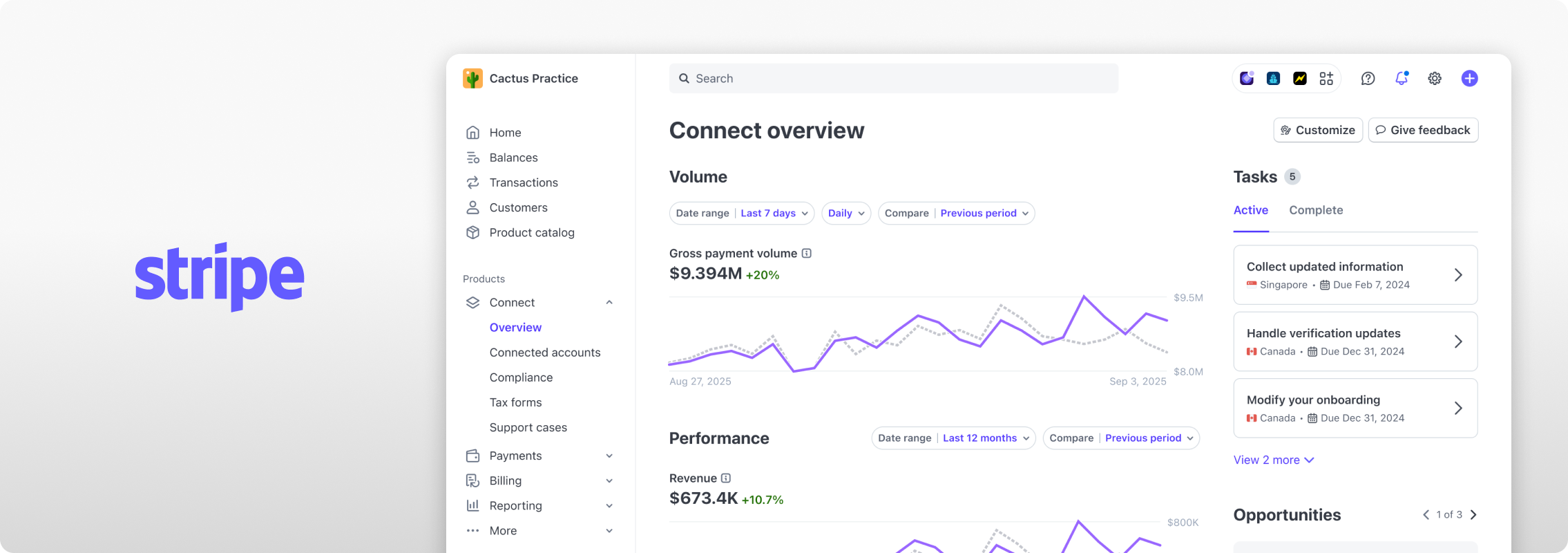
Stripe screen via stripe.com
Stripe is one of the most capable payment processors available, with an API that can handle virtually any billing workflow when properly configured. For logistics technology companies building proprietary fulfillment platforms, client-facing billing portals, or payment-embedded software, Stripe is a decent foundation. It handles high transaction volumes, ACH, recurring billing, and complex invoice logic well.
The limitation is that none of this comes ready for a standard logistics back-office. Stripe is a developer-first platform. Getting it configured for logistics processes requires real technical investment, and there are no native WMS or ERP integrations. Support is largely self-service, which creates a gap when billing issues affect client contracts.
Verdict: Excellent for logistics tech companies building custom platforms. Not the right payment processing software for most logistics operations without a dedicated engineering team.
3. QuickBooks Payments: Practical for QuickBooks-Native Operations
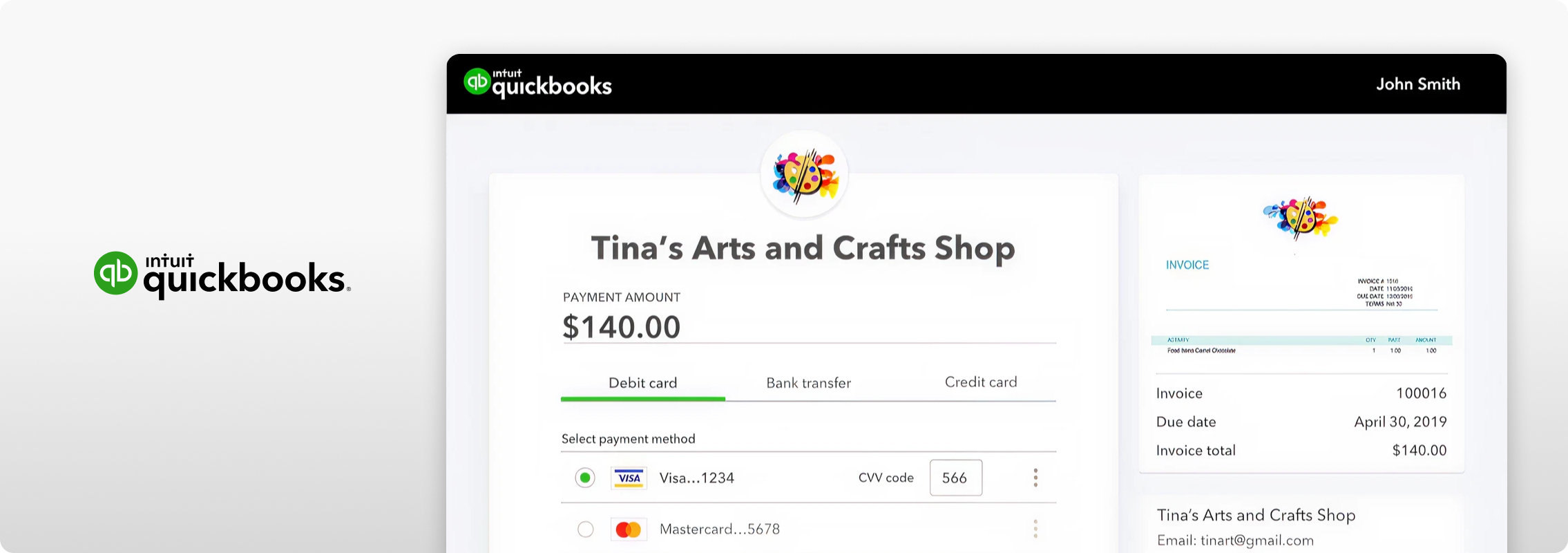
QuickBooks Payments screen via intuit.com
QuickBooks Payments makes sense for logistics companies already running their back-office in QuickBooks. Payments sync with existing invoices and financial records, and ACH is included.
Flat-rate pricing means payment processing fees don’t scale well on large B2B invoices, and there’s no interchange-plus option. The platform also functions as a QuickBooks extension rather than a standalone payment solution, which limits flexibility for operations running multiple software platforms.
Verdict: A workable default for smaller logistics operations fully committed to QuickBooks. More expensive and less capable than EBizCharge as billing complexity and invoice size grow.
4. PaySimple: Best for High-Volume Recurring Contract Billing
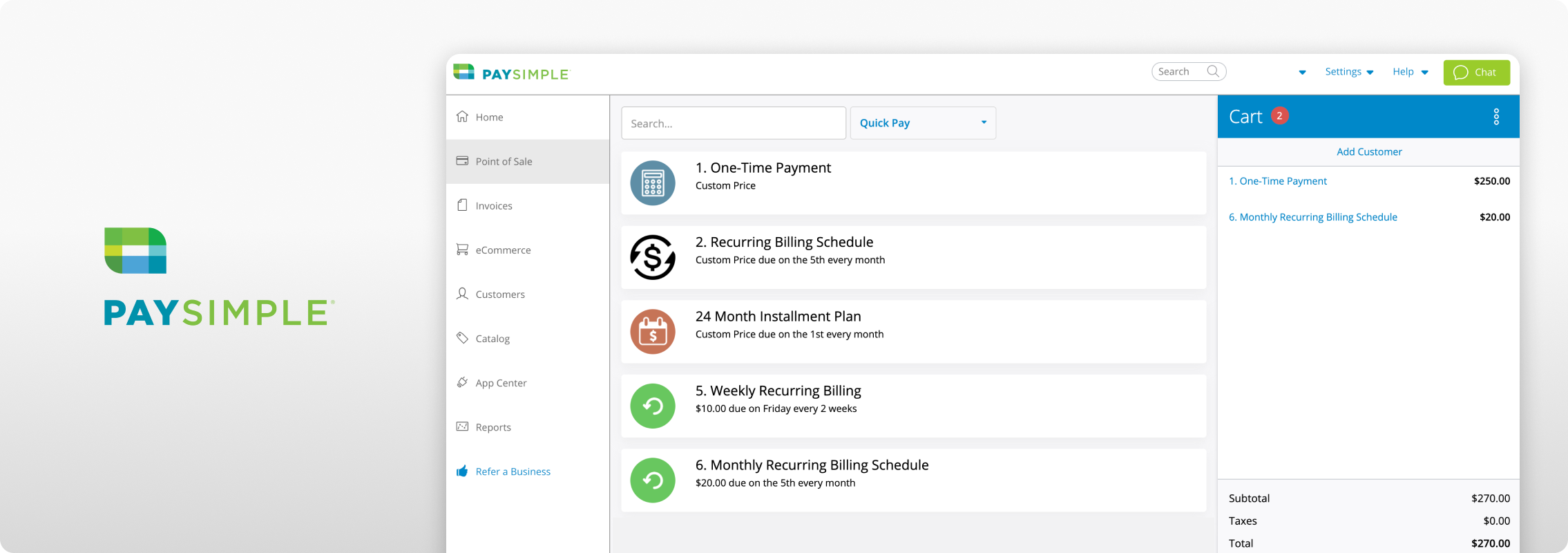
PaySimple screen via trustradius.com
PaySimple’s recurring billing tools are solid. For logistics companies billing clients on fixed monthly warehousing or service contracts, the workflow is reliable, and a self-service client portal reduces billing-related back-office calls.
Outside recurring billing, PaySimple falls a bit short. No native WMS or ERP integration, limited accounting software connections, and basic chargeback tools. It also wasn’t designed for the mixed transaction types that define most logistics operations.
Verdict: A strong payment solution for the recurring billing piece of logistics revenue. Not a complete platform for operations with more complex billing profiles.
5. Authorize.Net: A Common Default Worth Reconsidering
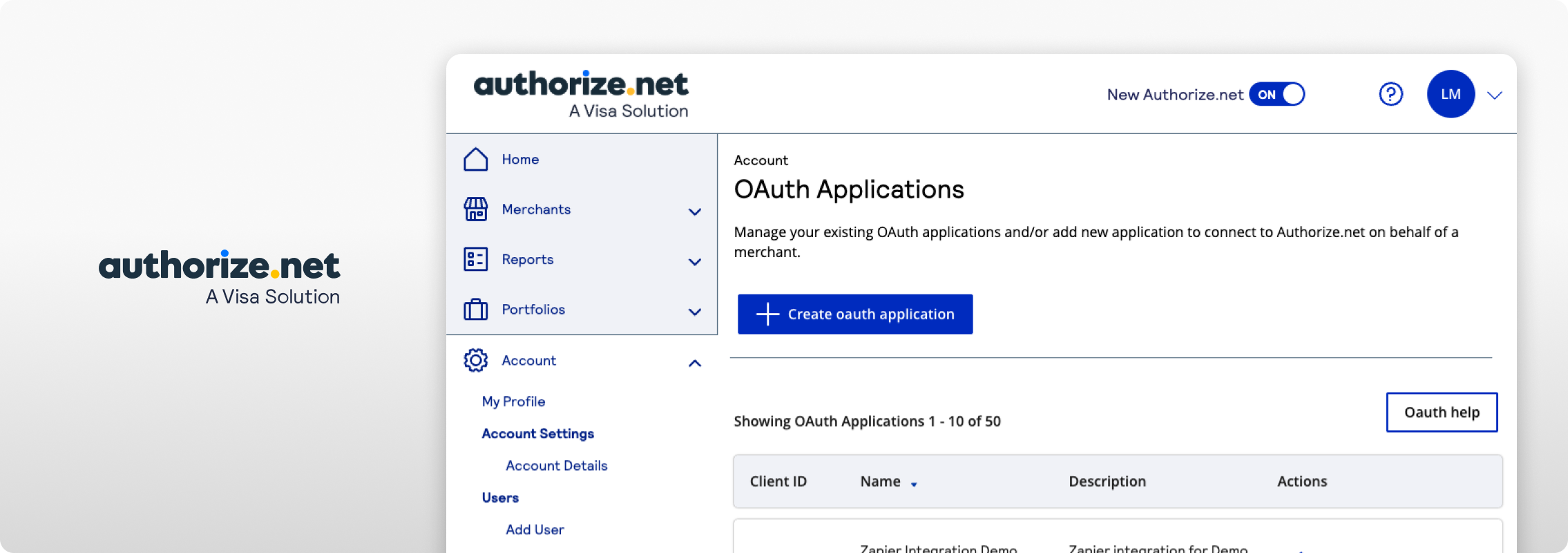
Authorize.net screen via authorize.net
Authorize.Net is a reliable platform with solid card and ACH processing, reasonable recurring billing, and a broad integration library. Many logistics companies are using it simply because it was set up years ago.
The issue is cost. Authorize.Net charges a gateway fee on top of processing fees, and those layers add up at the invoice volumes typical in the logistics industry. ERP and WMS integration depth is more limited than EBizCharge, and chargeback tools are less robust for logistics-scale disputes.
Many logistics companies on Authorize.Net have never compared what they’d pay with interchange-plus pricing. That comparison is worth doing.
Verdict: Functional and familiar, but frequently more expensive than it needs to be. Logistics companies on Authorize.Net should evaluate their actual payment processing fees against EBizCharge’s interchange-plus model.
How the Options Compare
| Feature |  |
 |
 |
 |
 |
|---|---|---|---|---|---|
| Pricing model | Interchange-plus | Flat rate | Interchange-plus | Gateway + processing | Monthly + transactional |
| ACH support |  |
 |
|
|
|
| ERP/WMS integration | |
QB native | Dev required |  |
|
| Recurring billing | |
|
|
|
|
| Mixed transaction types | |
|
|
|
|
| Chargeback tools | |
|
|
|
|
| Support | U.S.-based | Inconsistent | Self-service | Phone/email | Phone/email |
| Best for | All- around | QB Users | Custom platforms | Legacy users | Contract billing |
= partial or varies
Scroll to compare 
EBizCharge Gives Logistics Companies the Billing Infrastructure the Industry Needs
Stripe is excellent for logistics tech companies building proprietary software, but wrong for operations-focused teams without engineering staff. QuickBooks Payments and Authorize.Net are defaults many logistics companies use out of habit, but both carry fee structures that cost more than necessary at typical billing volumes. PaySimple handles recurring contract billing well, but doesn’t cover the full scope of logistics payment processing.
EBizCharge is the only option on this list that combines interchange-plus pricing, deep ERP integration, native ACH support, strong recurring billing, and robust chargeback tools in a single platform. For a logistics operation with real billing complexity, that combination is hard to replicate.
If your logistics company hasn’t revisited its payment processing setup in a while, the comparison between your current costs and EBizCharge’s interchange-plus model is worth running. The gap is often larger than expected.
Get paid faster with less work.
Get paid faster with less work.
3-minute product overview