

Blog > Guide: Free Credit Card Processing for Small Businesses: Too Good to Be True?
Guide: Free Credit Card Processing for Small Businesses: Too Good to Be True?

For many small business owners, every dollar counts. Whether you’re running a local bakery, an online retail store, or a mobile service, credit card processing fees can quietly eat away at your profits. That’s why the promise of free credit card processing for small businesses sounds so appealing. But what does “free” actually mean in this context? And is it really as simple as it sounds?
No-fee credit card processing goes by many names: zero-cost processing, free credit card processing, zero-fee processing, and no-cost processing. They all refer to the same thing: a payment model where merchants stop paying credit card processing fees by passing those costs to customers through a surcharge at checkout. Despite what the name implies, the fees do not disappear. They shift. Some processors market this as “free” to catch a merchant’s attention, but a more accurate term is surcharging.
This guide breaks down what free credit card processing for small businesses really means, how it works, the rules you need to follow, and how to find a trustworthy payment processor if you are considering this route.
What “free” credit card processing really means
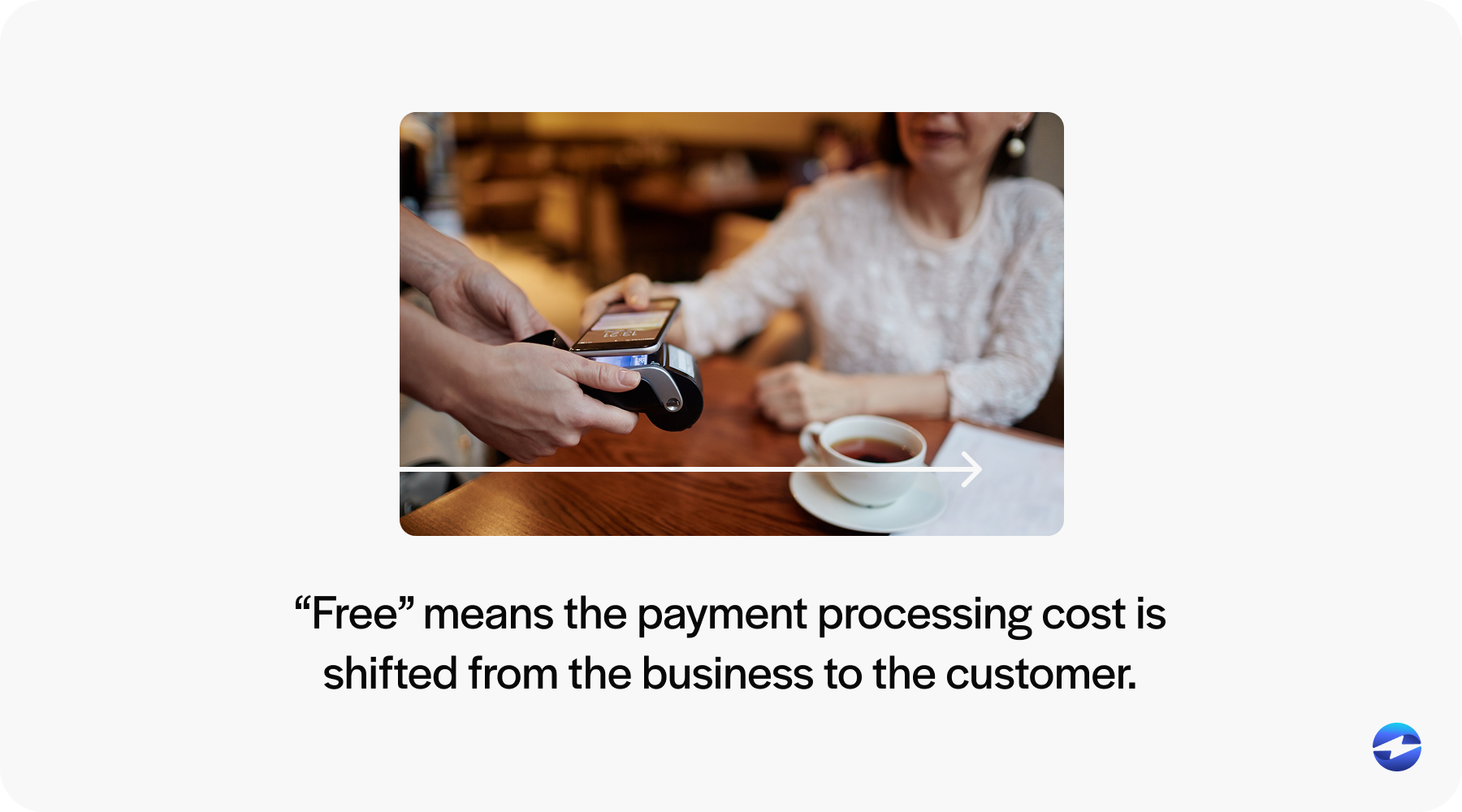
Despite what the headline might suggest, free credit card payment processing doesn’t mean no one is paying. In most cases, “free” means the payment processing cost is shifted from the business to the customer. Instead of the merchant absorbing the fees, the customer pays a small additional charge—known as a surcharge—at checkout.
There are two main ways this is done:
- Surcharge programs: A percentage-based fee is added when a customer pays with a credit card.
- Cash discounting: Prices reflect the cash payment amount and a higher price is applied for credit card transactions.
So, while no-fee payment processing sounds great on paper, it’s more of a redirection of cost rather than the elimination of it.
How Zero Cost credit card processing works
Here’s how it typically plays out. You work with a payment processing solution that offers a surcharge or cash discounting model. They help you configure your payment terminal or eCommerce platform so it can automatically detect when a customer uses a credit card—and then apply the correct charge only to those qualifying transactions.
This setup involves more than just toggling a setting. It typically includes compliance-ready templates for receipts, signage that explains the surcharge, and software updates that ensure debit card and cash transactions are excluded from any added fees.
For example, if a customer buys a $50 item using a credit card, the system might apply a 3% surcharge—adding $1.50 to the bill. The customer sees this reflected on their receipt or checkout screen. If they choose to pay with debit or cash, the charge doesn’t apply. This level of clarity is essential to help maintain customer trust.

The goal of this structure is to allow merchants to benefit from free credit card processing for small businesses or free online credit card processing for small businesses by shifting the expense in a way that’s transparent and compliant with card brand rules. It’s not truly free in the purest sense—but it can feel that way on your balance sheet if done right.
What’s the catch of free credit card processing?
As with anything labeled “free,” there are a few things to keep an eye on.
Some payment processing providers who advertise free credit card payment processing still charge monthly service fees, sell or lease proprietary equipment, or bundle their offers with long-term contracts. These costs may not show up until you’re locked in.
There are also regulatory and reputational issues. Some states restrict surcharging or cash discounting altogether. And even when legal, adding fees at checkout may frustrate your customers—especially if they weren’t expecting it.
Before signing up for any free online credit card processing for small businesses, it’s important to dig into the details.
Legal and compliance concerns
While surcharging is permitted at the federal level in the U.S., the legal landscape becomes trickier at the state level. Some states—like Connecticut and Massachusetts—still have active bans on the practice, while others allow it under strict conditions. That means what’s perfectly legal in one state might land you in hot water in another.
And it’s not just state laws you need to worry about. Major card networks, like Visa, Mastercard, American Express, and Discover, all have their own sets of rules designed to protect consumers and ensure transparency. These typically include:
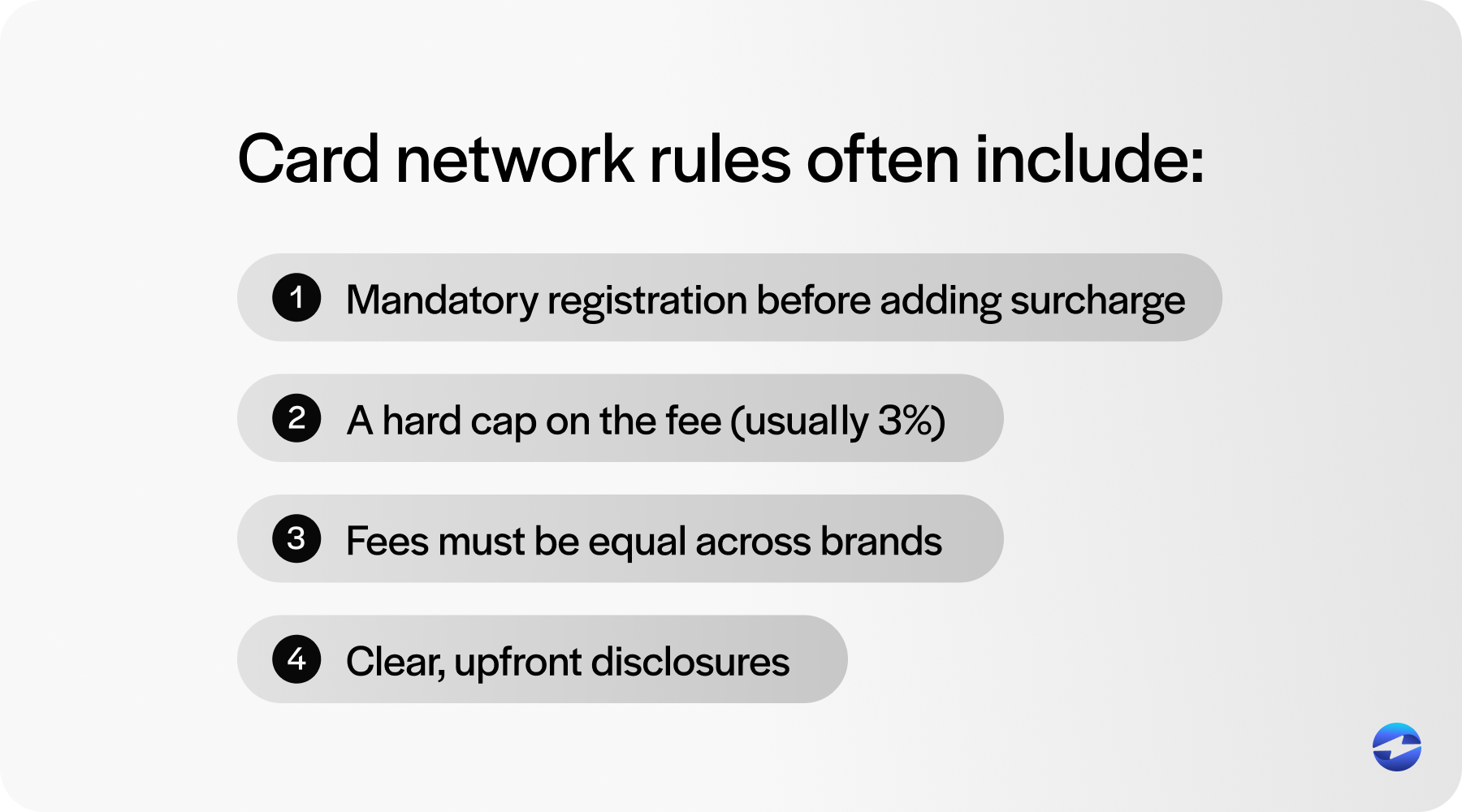
- Mandatory registration with the card network before adding a surcharge.
- A hard cap on the fee—usually no more than 3% of the transaction amount.
- A requirement that fees are applied equally across all credit card brands (known as brand parity).
- Clear, upfront disclosures—both at the point of entry and at the point of sale.
These requirements aren’t optional. Failing to comply can lead to penalties, chargebacks, or even termination of your ability to accept cards. And while a reliable payment processing solution can help automate compliance and guide you through the setup, the responsibility ultimately falls on you to understand and uphold the rules. If you’re unsure, it’s worth consulting legal counsel or your processor to avoid costly missteps.
Pros and cons of free credit card processing for small businesses
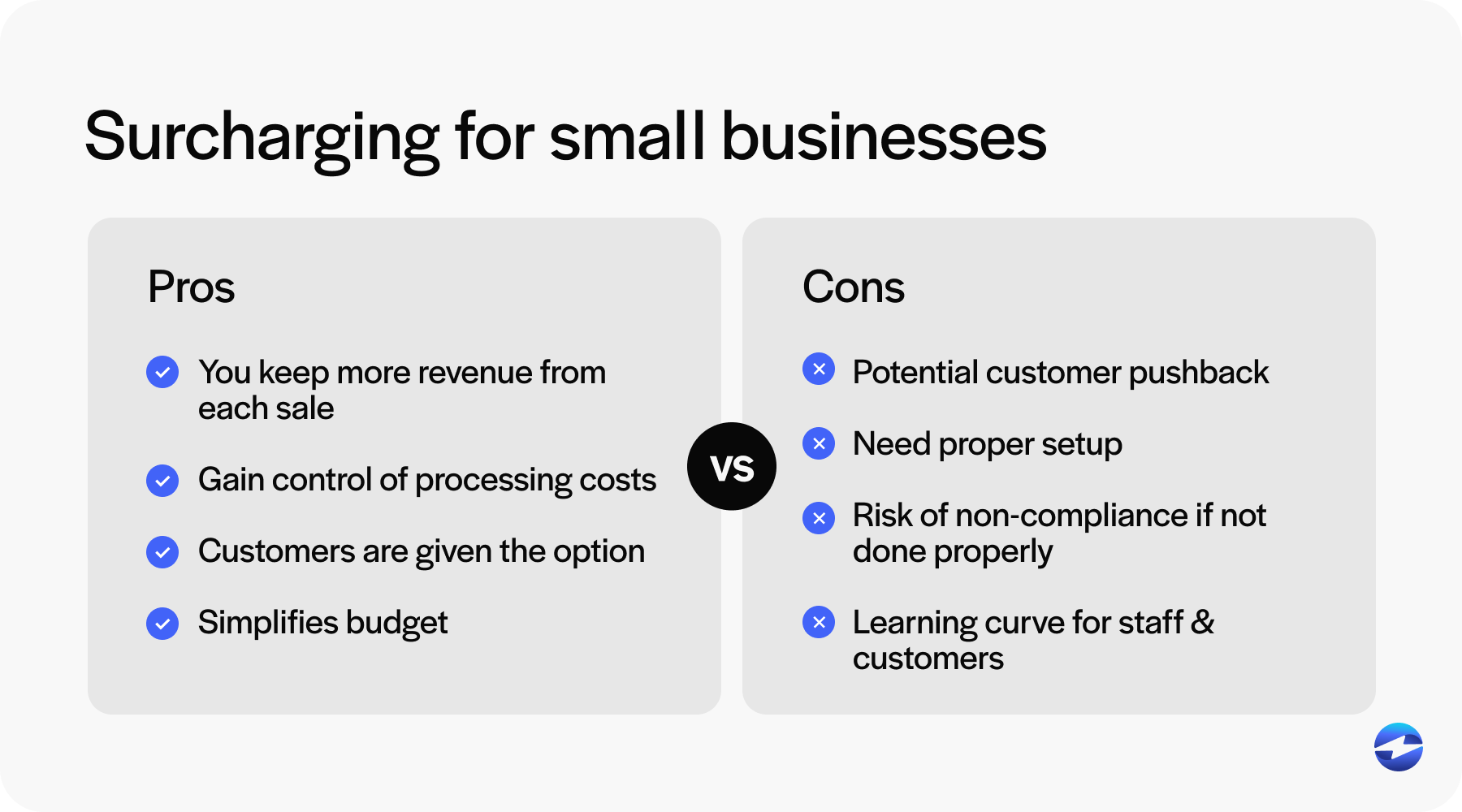
Let’s talk about what’s actually on the table when it comes to free credit card payment processing. Like most business decisions, this approach has advantages and disadvantages. The key is to understand where it might fit well—and where it could cause headaches.
Pros:
- Keeping more revenue from each sale by eliminating processing fees from your balance sheet.
- Gaining control over how and when payment processing costs are applied—whether you absorb them, pass them on, or offer discounts for alternative payment types.
- Customers are given the option to avoid fees by paying with debit or cash, which can foster a sense of choice and transparency.
- Simplifying budgeting, especially for small businesses with tight margins, by creating a predictable financial structure.
Cons:
- Some customers may react negatively to added fees, especially if they’re surprised at checkout. This can affect repeat business and online reviews
- You’ll need the right setup—both technically and operationally—to ensure fees are calculated accurately and disclosed early in the payment process.
- If you’re not careful, you could end up violating state laws or card network rules, which may result in fines or restrictions from your payment processing solution.
- The learning curve for educating staff and customers about surcharging policies can be steeper than expected, particularly in fast-paced retail or service environments.
For many businesses, no-fee payment processing can be a practical tool to reduce overhead—but only if it’s implemented thoughtfully and in compliance with the rules. If you take the time to set it up correctly and communicate it clearly, it can work in your favor.
Key questions small business owners should ask before implementing free credit card processing
Before committing to a no-fee processing program, small business owners specifically should work through these four questions:
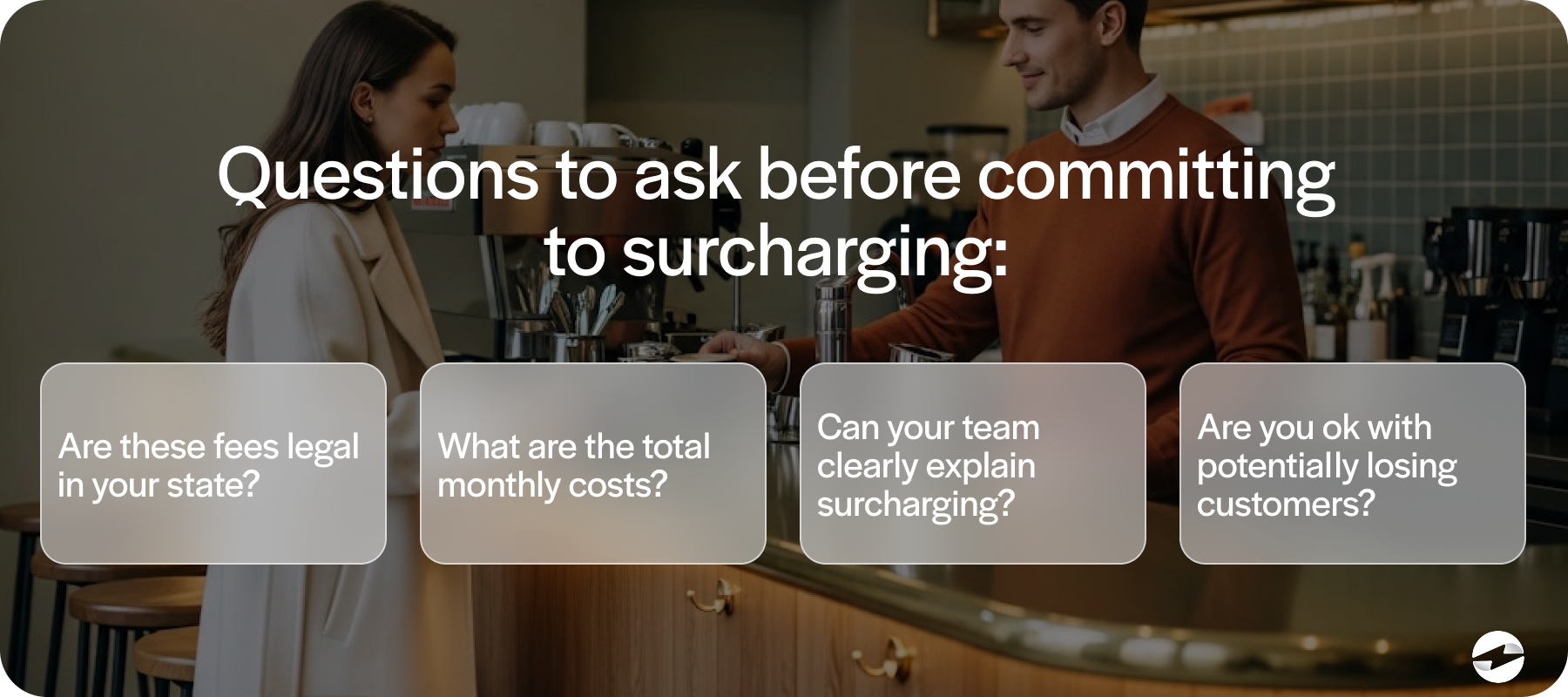
- Is surcharging legal in your state? Some states including Connecticut, Maine, and Massachusetts prohibit it entirely. Make sure you are clear on local regulations before moving forward. If surcharging is restricted where you operate, cash discounting is legal in all 50 states and is often the simpler compliant alternative.
- What are the total monthly costs beyond per-transaction fees? Ask every provider about monthly service fees, equipment leases, PCI compliance charges, and required software subscriptions. The surcharge program itself may be structured to cost the merchant nothing per transaction, but those recurring costs can offset the savings quickly if you are not watching for them.
- Can your team clearly explain the surcharge policy to customers? Frontline staff at small businesses are often the ones fielding customer questions at the register. They need to be confident, consistent, and tactful when explaining why a fee is being added and how customers can avoid it. A poorly explained surcharge creates more friction than the fee itself.
- Are you prepared for some price-sensitive customers to push back? Some buyers will walk away or switch to cash when they see a surcharge at checkout. For small businesses where every customer relationship matters, understanding your customer base and how they are likely to respond is essential before making the switch.
It’s also critical to read the fine print in any contract. Some agreements lock you into long-term deals or include early termination penalties. Others might raise your rates after a few months or charge extra for things like support or reporting tools. Ultimately, the decision isn’t just about cutting costs — it’s about finding a model that supports your business’s sustainability, compliance, and customer relationships.
Is free credit card processing right for your small business?
The answer depends on your business type, your customer base, and your competitive environment. Here is how to think through it:
If you run a service business or B2B operation. Clients in these sectors are generally accustomed to administrative or convenience fees. A 3% surcharge on a $500 invoice is unlikely to raise eyebrows and the savings at that ticket size are meaningful.
If you run a retail store, restaurant, or coffee shop. Things get trickier. A customer paying for a small purchase may feel nickel-and-dimed by a surcharge at checkout. If your brand depends on loyalty and repeat foot traffic, the customer experience impact is worth weighing carefully.
If your average transaction size is high. The math works strongly in your favor. A 3.5% surcharge on a $200 transaction is $7 you no longer owe the processor. Businesses with higher average tickets see the clearest benefit.
If you operate in a competitive market. Think about what competitors are doing. If nearby businesses are absorbing processing costs and you are not, you will need to clearly communicate your fee structure and make the case for why customers should stay.
You know your customers better than anyone. The right choice balances your margins with their expectations and your position in the market.
Making free processing work with EBizCharge
Free credit card processing for small businesses isn’t necessarily too good to be true—but it does require the right technology and approach. In most models, the cost doesn’t disappear entirely and a portion is simply shifted to the customer through a surcharge. This strategy can reduce overhead, but only if implemented with care and full transparency.
That’s where EBizCharge credit card processing solution comes in. As a trusted, top-rated payment processing solution, EBizCharge offers a fully compliant and easy-to-deploy no-fee payment processing model. Their platform allows small businesses to apply surcharges automatically at checkout—online or in person—while maintaining compliance with state laws and card network rules. It’s not just about avoiding fees; it’s about doing it right.
EBizCharge equips merchants with all the tools they need to begin surcharging legally. And it’s not just for small businesses—EBizCharge’s robust platform supports companies of all sizes, across a wide range of industries, with over 100 integrations into the business systems your company uses.
So, if your business is struggling with rising payment processing costs, or you’re looking to boost margins without raising prices, EBizCharge can help you turn free credit card payment processing from a marketing promise into a real, sustainable strategy.
- What “free” credit card processing really means
- How Zero Cost credit card processing works
- What’s the catch of free credit card processing?
- Legal and compliance concerns
- Pros and cons of free credit card processing for small businesses
- Key questions small business owners should ask before implementing free credit card processing
- Is free credit card processing right for your small business?
- Making free processing work with EBizCharge