



Most chiropractors don’t get into practice thinking much about billing infrastructure. You trained to help patients recover, manage pain, and move better. Payment processing was supposed to take care of itself.
It doesn’t. And the reason is specific to how chiropractic care actually works.
You’re managing an ongoing financial relationship with every active patient. Most come in on a regular schedule, sometimes twice a week, sometimes weekly. That means recurring billing, autopay enrollment, and front desk efficiency all matter in ways they don’t for a one-visit specialty practice.
A large portion of chiropractic revenue is also self-pay. Many insurance plans have limited chiropractic benefits, so patients pay out of pocket more than in most other healthcare settings. Add in membership plans, care packages, and HIPAA compliance requirements, and you’ve got a billing environment most off-the-shelf payment processors weren’t designed for.
What Makes Chiropractic Billing Unique
The recurring visit structure is the first thing that sets chiropractic apart. A patient on a twelve-week care plan needs a system that charges automatically or collects on a set schedule. If your payment processing systems require a staff member to manually initiate every transaction, that work adds up fast across dozens of active patients.
Wellness memberships follow the same logic. Monthly subscription care models need a payment solution that handles automated recurring charges reliably, without someone managing the process manually.
The cash-pay dynamic also shifts what good payment processing looks like. Rather than emphasizing insurance claims integration, cash-pay practices need fast checkout, flexible online payment options, and the ability to offer care packages on installment plans.
Compliance applies here, too. Any processor touching patient billing data needs to be HIPAA-compliant and willing to sign a Business Associate Agreement. That requirement alone rules out a lot of popular general-purpose payment processing software. When evaluating payment-processing software for a chiropractic practice, HIPAA compliance should be the first filter you apply.
A Closer Look at the Best Options
Choosing a payment processor for a chiropractic practice is less about finding the cheapest rates and more about finding a system that handles the recurring, compliance-sensitive, patient-forward billing environment without requiring your staff to compensate for its gaps. Here’s how the main options stack up.
| Feature |  |
 |
 |
 |
|---|---|---|---|---|
| HIPPA compliant |  |
 |
Must sign BAA | |
| Accounting integration | |
 |
|
|
| Recurring billing | |
|
|
|
| G2 review (out of 5) | 4.8 | 4.9 | 4.5 | 4.3 |
Scroll to compare 
= partial or varies
EBizCharge
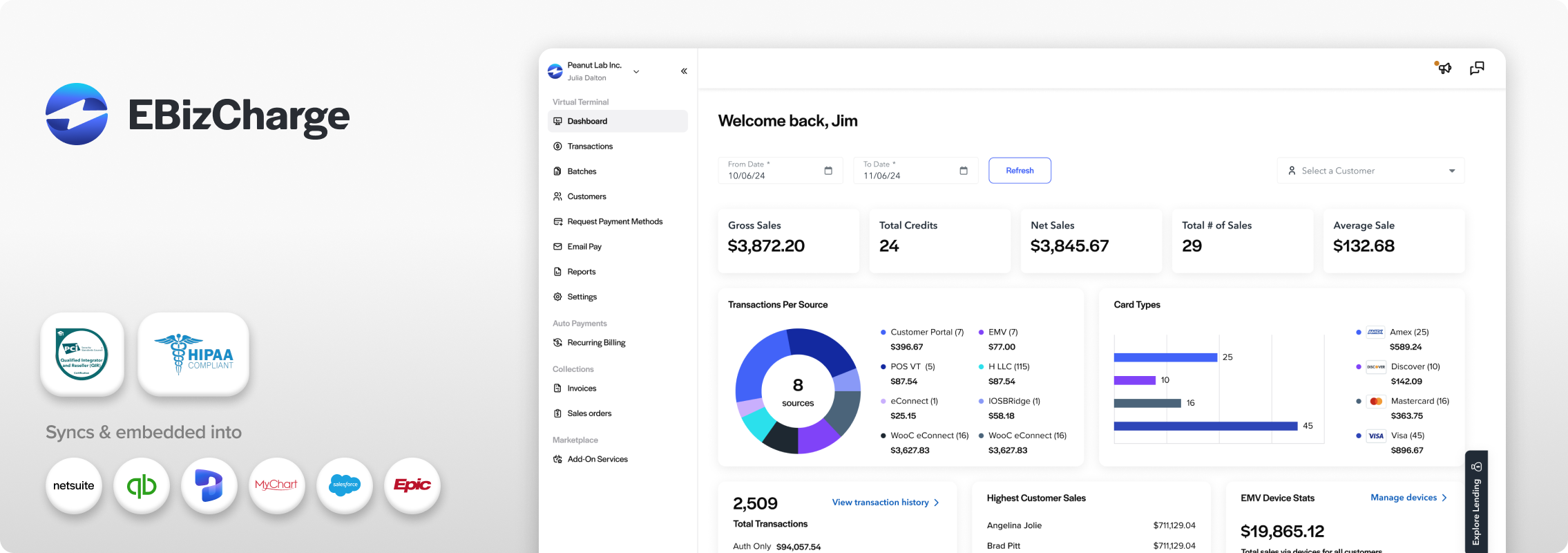
EBizCharge is the strongest fit available for chiropractic payment processing, and the reasons connect directly to what makes chiropractic billing different.
Start with recurring billing. EBizCharge was built for businesses that bill on a schedule. Care plan charges can be automated, patients can be enrolled in autopay, and the whole process runs without manual intervention at each cycle. For a practice managing dozens of active care plans, that’s a real operational improvement.
Compliance is handled. EBizCharge maintains a HIPAA-conscious platform, executes a Business Associate Agreement, and runs every transaction through a fully PCI-compliant environment. Card data security isn’t something you manage independently.
Credit card processing and ACH are both available in a single platform. The online payment portal lets patients pay from their phone or computer. Automated installment schedules work for care packages and treatment financing without requiring staff involvement at each step.
EBizCharge connects with QuickBooks, NetSuite, and a range of accounting tools, so payments reconcile automatically. Payment processing fees are published clearly with no surprise line items. And the support team is in-house and U.S.-based.
The platform works the same for a solo chiropractor as it does for a multi-provider clinic billing hundreds of recurring patients.
Stax
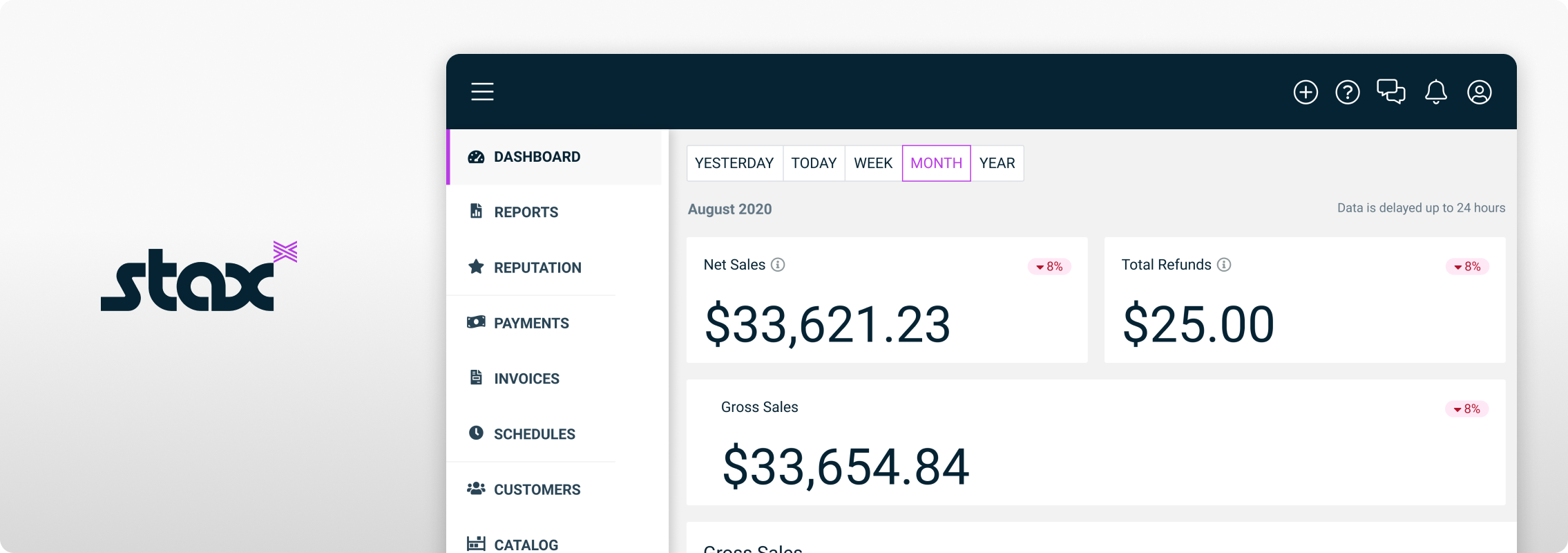
Stax screen via G2
Stax takes a different approach to pricing. Rather than charging a percentage of each transaction, it charges a flat monthly subscription plus a small per-transaction fee. For practices processing significant monthly revenue, this structure can reduce payment processing costs meaningfully.
The platform handles invoicing and reporting well. Where Stax falls short for chiropractic is in healthcare compliance. HIPAA support isn’t built in, and getting a BAA requires more effort than it should. Recurring billing exists but needs more configuration than advertised. Worth evaluating for high-volume practices with straightforward compliance needs, but the HIPAA gaps are real.
Square
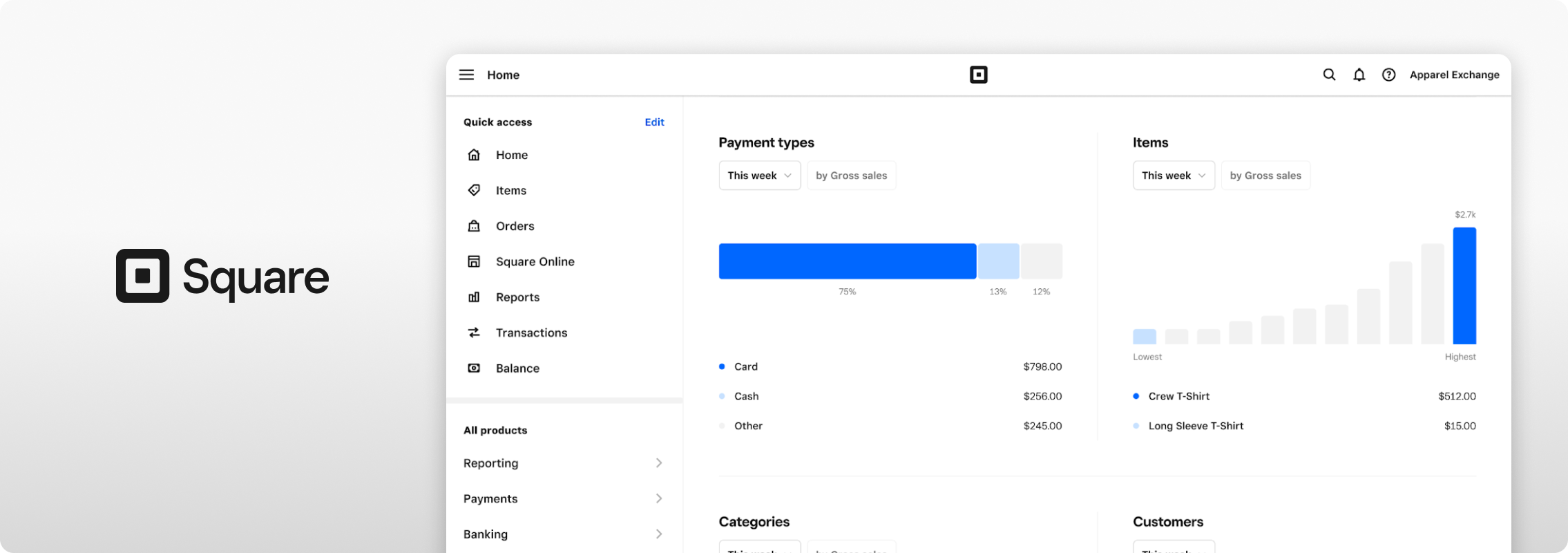
Square screen via squareup.com
Square comes up in chiropractic conversations because it’s familiar, and getting started is fast. A new practice doing mostly walk-in cash-pay visits can get it working quickly.
The ceiling shows up once billing gets more complex. Recurring billing is basic. HIPAA compliance isn’t part of the product design. Credit card processing rates are predictable but expensive at volume. Square is a fine point-of-sale tool. It’s not a serious payment processing solution for a practice with care plans or meaningful patient volume.
PaySimple
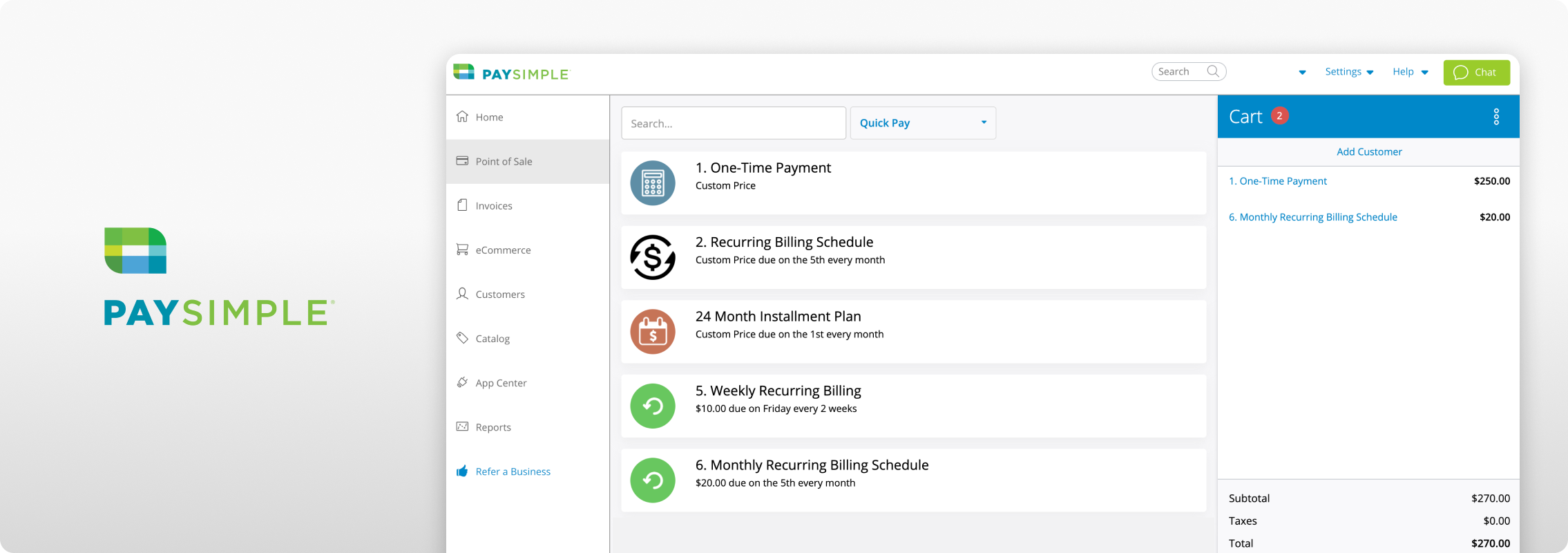
PaySimple screen via trustradius.com
PaySimple is more relevant for chiropractic than Square because its product was designed around service businesses that bill clients on a recurring schedule. The recurring billing tools are more developed, and the invoicing workflow makes more sense for a practice model than Square’s register-first design.
The compliance picture is the same problem you see across general-purpose processors, though. PaySimple doesn’t offer HIPAA-specific protections and isn’t built to execute a Business Associate Agreement as a standard part of onboarding. For a small cash-pay practice with simple billing and no insurance component, PaySimple can get the job done. For anything that touches patient data more directly, the compliance gap matters.
Getting the Decision Right
A few things are worth pinning down before committing to any system.
Know your patient mix. If most patients are on care plans or memberships, recurring billing capability isn’t optional. Payment processing for chiropractors in that situation needs automation that actually runs without manual confirmation at each cycle.
Understand the full cost of payment processing fees. The advertised rate is the starting point, not the finish line. Monthly platform fees, chargebacks, and feature-specific costs all contribute. Run the real numbers against your monthly volume.
Verify HIPAA compliance directly. Ask whether the vendor will sign a BAA before the sales process goes too far. If the answer is no or requires escalation, that tells you what you need to know.
Think about support. Payment processing services with in-house teams respond differently than those routing you through a ticket system. The quality of payment processing services only becomes obvious when something breaks, and that’s the worst time to find out.
Why EBizCharge Is Worth a Serious Look for Chiropractic Practices
Chiropractic billing isn’t complicated because the transactions themselves are complex. It’s complicated because the volume is high, the cadence is recurring, the patients often pay directly, and the compliance requirements don’t go away just because your practice is small.
EBizCharge addresses all of that in one platform. Automated recurring billing removes the manual work from care plan collection. The HIPAA-conscious design and signed BAA satisfy the compliance requirements. Credit card processing, ACH, online portals, and installment plan automation give patients real flexibility without adding work for your staff. And the transparent payment processing fees mean your margins are predictable rather than a monthly surprise.
Stax has an argument for high-volume practices where pricing structure matters more than compliance depth. PaySimple suits simple, small-scale cash-pay operations. But for a chiropractic payment processing solution that fits how the practice actually runs, EBizCharge is the most complete option available.
Frequently Asked Questions
Is HIPAA compliance actually required for chiropractic payment processing?
Yes, when your payment system handles patient billing information. A Business Associate Agreement from the processor is a legal requirement in that context. Most general-purpose processors either don’t offer one or make it difficult to obtain.
How much does recurring billing matter for a chiropractic practice?
It depends on your model. If you run care plans, maintenance memberships, or treatment financing, recurring billing is central to how you collect revenue. A payment processing solution that handles it automatically reduces staff workload and improves collection rates.
What should I expect to pay in payment processing fees?
Credit card processing typically runs between 2% and 3.5% per transaction. ACH transfers cost less. At the volume most active chiropractic practices generate, the difference between processors adds up meaningfully over a year.
Why can’t I just use Square or Stripe?
You can, but both were built for general commerce rather than healthcare billing. Neither prioritizes HIPAA compliance, and both have limited recurring billing capabilities. Payment processing systems designed for retail work differently than those built for ongoing patient care.
Does EBizCharge work for smaller practices?
Yes. The compliance infrastructure, recurring billing tools, and support quality don’t change based on practice size. A solo chiropractor gets the same platform as a multi-location clinic.
Get paid faster with less work.
Get paid faster with less work.
3-minute product overview