



The average gas station processes hundreds of card transactions every single day. Every one of those swipes costs money, and credit card processing fees on fuel purchases are among the highest in retail because the card networks have historically treated fuel as a high-risk category with large average transaction values.
Most gas station owners and operators already know their processing fees are painful. What they don’t always know is how much of that pain is actually necessary, and how much comes from being locked into a processor bundled by their fuel brand without ever shopping around.
This guide breaks down the five best payment processing solutions for gas stations. Understanding what good payment processing for gas stations actually looks like is a useful starting point.
What Makes Gas Station Payment Processing Uniquely Challenging
Payment processing for gas stations involves a set of requirements that most general-purpose tools weren’t designed for. Here’s what actually matters.
Fuel pre-authorization holds are the first complication. When a customer swipes at the pump, the processor places a hold — often $100 or more — before the final amount is known. This process needs to work cleanly, because failed or sluggish authorizations create real friction at the pump during morning and evening rush hours.
Interchange rates on fuel are a bigger issue than most operators realize. The pricing model a gas station uses for credit card processing — whether that’s flat-rate or interchange-plus — has a direct and outsized effect on margin at scale. When you’re running hundreds of transactions a day, even a small difference in the per-transaction rate is a meaningful dollar amount by the end of the month.
EMV chip compliance at the outdoor payment terminal is another pressure point. The liability shift for pump-side card readers has pushed stations to upgrade their hardware, and not every payment processor supports EMV-compliant pump terminals equally well.
Fleet card acceptance matters for stations serving commercial customers. Many businesses pay for fuel with fleet-specific cards like WEX or Voyager, and not every payment solution handles those networks.
Finally, most gas stations run a convenience store alongside the fuel operation. The payment processing software should handle both sides with unified reporting rather than forcing separate reconciliation.
The 5 Best Payment Processing Solutions for Gas Stations
1. EBizCharge: Best Overall
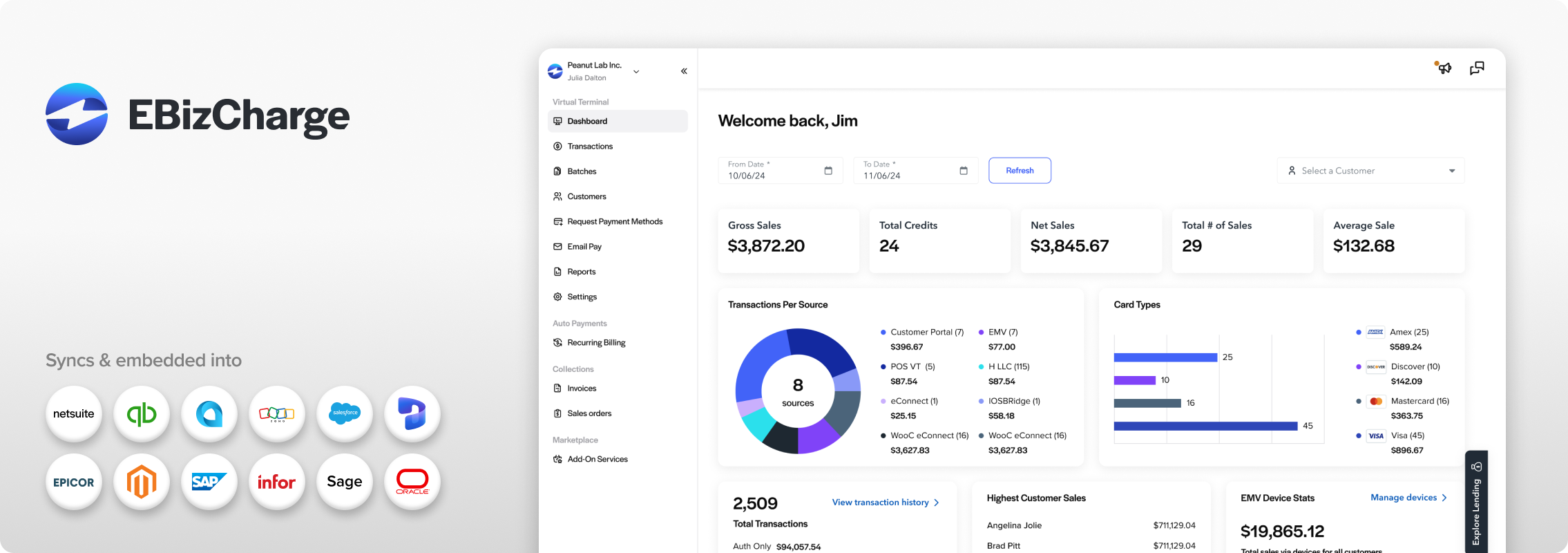
EBizCharge is the strongest payment processing solution available for independent gas stations and multi-site operators. It wasn’t built specifically for the fuel retail industry, but it was built for exactly the kind of high-volume, cost-sensitive business environment that gas stations operate in every day.
The pricing model is where EBizCharge makes the most immediate impact. Running on interchange-plus pricing, the platform passes through the actual transaction cost rather than a flat-rate markup. For gas station credit card processing at real fuel volumes, that difference compounds across hundreds of daily transactions into a number worth paying attention to.
The accounting integrations are genuinely useful for operators running both fuel and c-store revenue. EBizCharge connects natively with QuickBooks, Sage, and other platforms, so payment data posts automatically into your financial records without manual reconciliation at the end of each shift or week. For a station owner managing multiple revenue streams, that automation is a real time-saver.
The virtual terminal covers payment scenarios that don’t happen at the pump or the register. Fleet account invoices billed monthly, phone-in payments for repair bay work, or any other off-site transaction all flow through the same platform without needing separate tools.
The recurring billing engine handles automated monthly billing for commercial fleet accounts without staff involvement each cycle.
The secure payment vault stores regular commercial customer payment details on file, so fleet customers move through billing faster every cycle. Chargeback management tools are built in, and they matter in fuel, retail where drive-offs and fraudulent transactions are a recurring problem. U.S.-based support is reachable when a pump goes down during peak hours.
Verdict: EBizCharge delivers the pricing transparency, integration depth, and transaction volume capability that most fuel-bundled processors don’t offer. For independent operators and multi-site owners who have never compared their current setup to an interchange-plus alternative, the exercise is worth doing.
2. Verifone: Best for EMV-Compliant Pump Hardware

Verifone hardware via verifone.com
Verifone is one of the dominant names in pump payment hardware. Their outdoor payment terminals are widely deployed, and integrations with fuel brands and fleet card networks are well-established. For stations facing EMV liability shift pressure, it’s a realistic and well-supported hardware option.
The limitation is pricing. Verifone’s model tends toward flat-rate or proprietary fee structures rather than interchange-plus, which means payment processing fees don’t scale favorably at high fuel volumes. Software and back-office reporting are also more limited than EBizCharge.
Verdict: A solid hardware and compliance choice for branded stations with existing Verifone relationships. More expensive and less flexible on pricing and back-office integration for independent operators evaluating from scratch.
3. Square for Retail: Works for the C-Store, Not the Pump
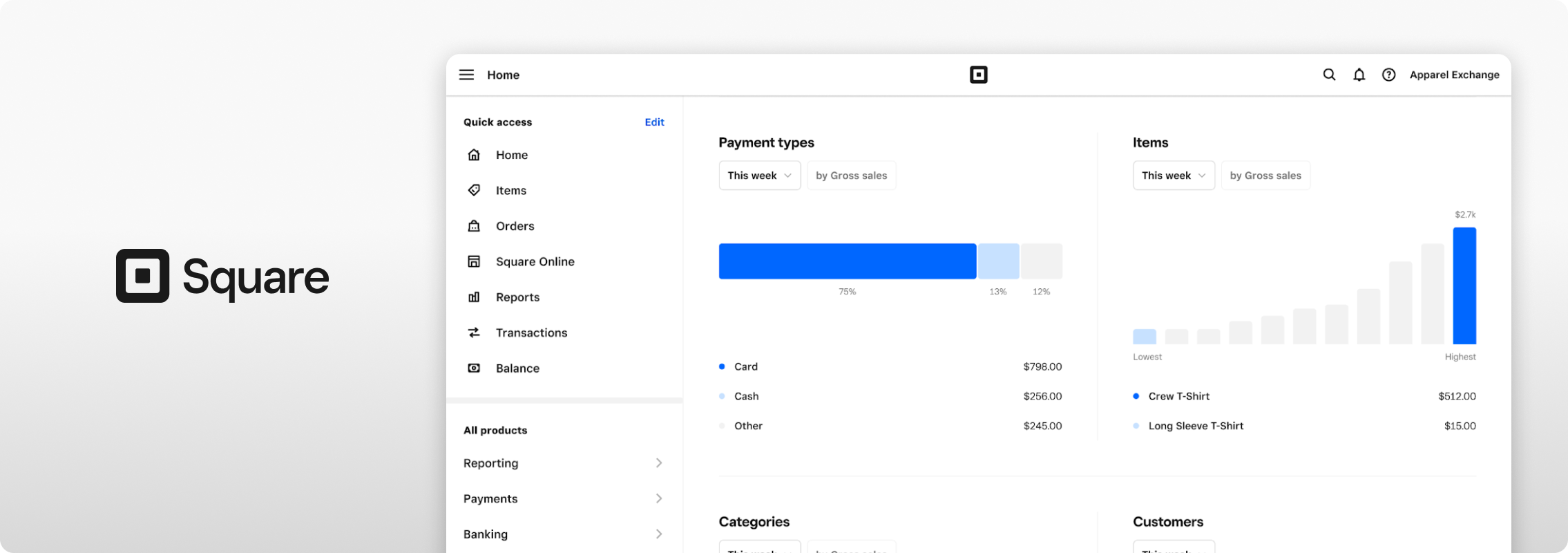
Square screen via squareup.com
Square’s retail POS is genuinely capable for the c-store side of a gas station — inventory, employee permissions, and sales reporting are solid, and the interface is easy to learn.
The problem is that Square stops at the door. There’s no pump integration. Square can’t manage outdoor payment terminal transactions at all, making credit card processing for gas stations that need unified fuel and retail billing impossible on this platform. Fleet card acceptance is also absent.
Verdict: A workable inside sales tool for small or independent operators who need something simple for c-store transactions. As a standalone payment solution, it handles retail well — but it’s not a complete payment solution for a gas station that needs the pump side covered.
4. Stripe: For Tech-Forward Multi-Site Operators
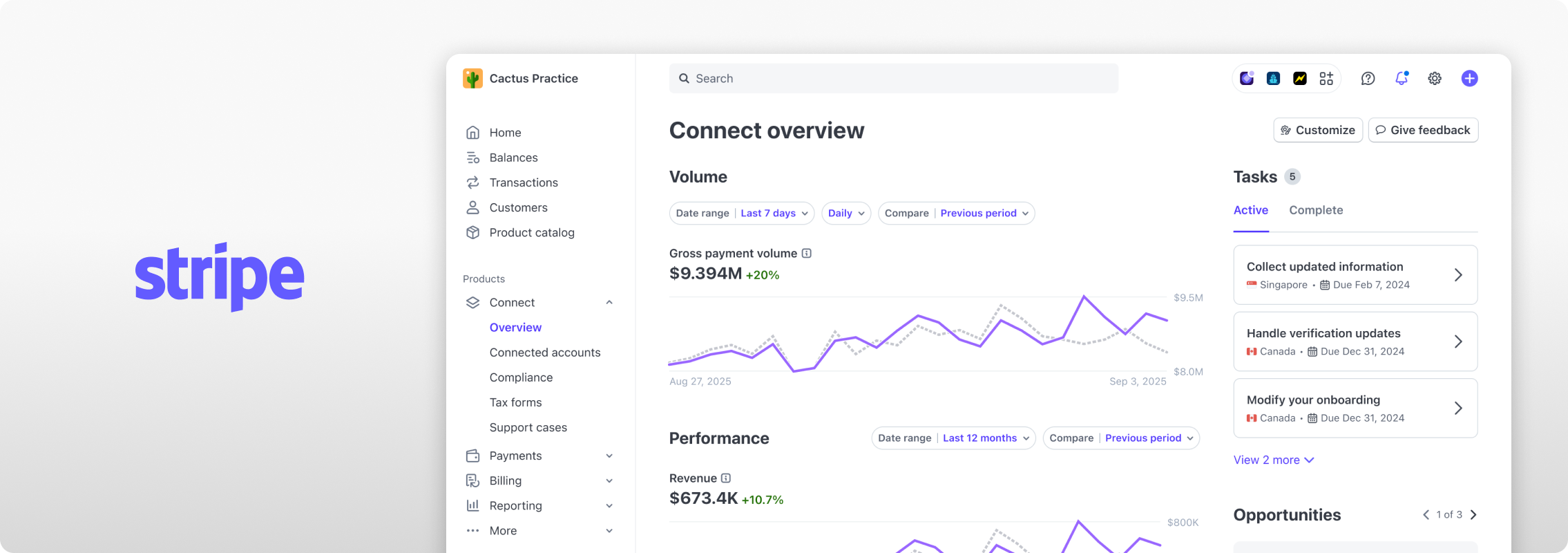
Stripe screen via stripe.com
Stripe’s API can handle high-volume transaction processing, recurring fleet billing, and custom reporting for larger operators or fuel tech companies building proprietary platforms.
Outside that use case, the limitations are significant. No native pump integrations and no fuel-specific POS support without developer work. Self-service support creates real gaps when issues arise mid-operation.
Verdict: A viable payment processing software backend for sophisticated operators building custom systems. Not a practical choice for most independent gas station owners who need something that works without an IT team.
5. Heartland Payment Systems: An Established Alternative Worth Comparing
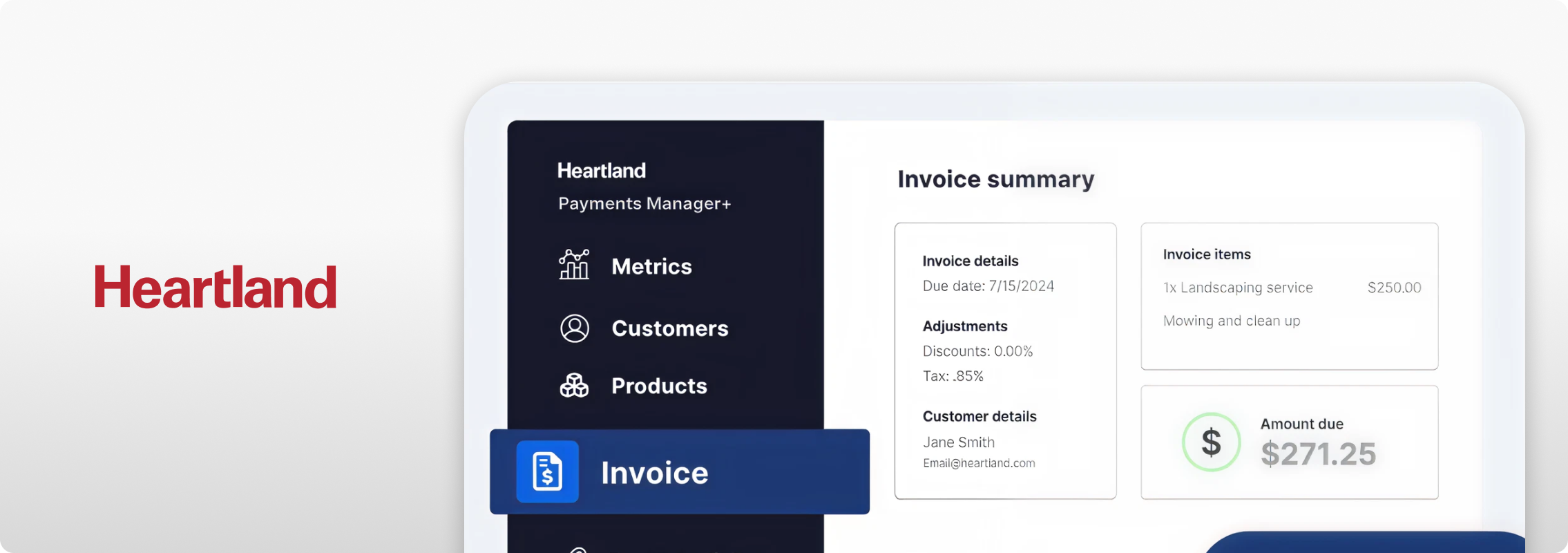
Heartland screen via heartland.com
Heartland, now part of Global Payments, has real fuel retail experience and integrates with several major fuel POS platforms. Interchange-plus pricing is available to qualifying merchants, and the platform covers the basics of gas station payment processing.
Where Heartland falls short is in accounting software integration depth and pricing transparency. Fee structures can be complex, contract terms vary, and smaller independent operators may not receive consistent service. Reconciling payment data with accounting records still requires more manual effort than EBizCharge provides.
Verdict: Heartland is a legitimate payment processor worth including in any comparison. As a payment processor with real fuel retail experience, it’s a credible option — but EBizCharge’s cleaner pricing model and deeper accounting integrations give it an edge for most gas station operators.
Side-by-Side Comparison
| Feature |  |
 |
 |
 |
 |
|---|---|---|---|---|---|
| Pricing model | Interchange-plus | Flat/proprietary | Flat rate | Interchange-plus | Interchange-plus (qualifying) |
| Pump integration |  |
 |
 |
Dev required | |
| Fleet card support | |
|
|
Dev required | |
| EMV compliance | |
|
|
|
|
| Accounting integration | |
 |
|
Dev required | |
| Recurring billing | |
|
|
|
|
| Chargeback tools | Robust | Basic | Basic | Basic | Moderate |
| Best for | All- around | Hardware/branded | Custom platforms | Custom platforms | Traditional operators |
= partial or varies
Scroll to compare 
EBizCharge Gives Gas Station Operators What Fuel-Bundled Processors Usually Don’t
Fuel margins are thin, transaction volumes are high, and payment processing fees quietly erode what’s left if the pricing model isn’t right.
Verifone handles pump hardware well, but it isn’t the right pricing model for margin-focused independent operators. Square handles the c-store side cleanly, but stops at the pump. Stripe requires technical investment that most station owners don’t have. Heartland is a genuine alternative worth comparing, but it doesn’t match EBizCharge on integration depth or pricing simplicity.
EBizCharge is the only option on this list that combines interchange-plus pricing at fuel volumes, deep accounting integration, recurring fleet billing, and chargeback management from a single platform.
Gas station credit card processing at volume is expensive enough as it is. Credit card processing for gas stations doesn’t have to cost as much as operators are currently paying. If you haven’t compared your current setup to an interchange-plus alternative recently, it’s worth doing.
Request a demo or pricing quote from EBizCharge to see how it compares to your current setup.
Get paid faster with less work.
Get paid faster with less work.
3-minute product overview