
Blog > Merchant Services for Contractors: Payment Processing for Construction Companies
Merchant Services for Contractors: Payment Processing for Construction Companies

Most payment processing advice is written with retail in mind. Swipe a card, collect the money, move on. Construction doesn’t work that way, and anyone who has run a contracting business for more than a season already knows that. You’re managing six-figure invoices, payments tied to project milestones, clients who prefer ACH on large draws, and cash flow gaps that can stretch for weeks between when the work gets done and when the money actually arrives.
Getting merchant services for contractors right means finding a setup built around how the industry actually bills, not one designed for coffee shops and adapted for everything else. The stakes are higher when a single invoice is $75,000 and the margin on that job is already tight. That’s why construction merchant services deserves its own conversation, separate from the generic payment processing advice that gets recycled across every industry.
This article is written for general contractors, specialty subcontractors, construction company owners, and project managers who are tired of working around payment tools that were never designed for them. We’ll cover what makes the billing needs of this industry genuinely unique, which features actually matter, and how to stop overpaying on every transaction you run.
Why Construction Billing Is Different
The average construction invoice is significantly larger than what most businesses process in a week. That single fact changes everything about how payment processing should work, and it’s why a generic payment processor built for high-volume, low-ticket transactions consistently falls short in a construction environment.
Flat-rate pricing feels manageable on a $40 sale. On an $80,000 draw payment, that same flat percentage becomes a painful dollar amount that comes straight out of your job margin. Construction merchant services need to be evaluated with that math in mind, because the cost difference between pricing models is far more pronounced at high-ticket sizes than most contractors realize until they actually run the numbers.
Beyond transaction size, construction billing involves layers that most other industries never deal with. Progress billing means collecting multiple partial payments against a single contract over the life of a project. Retainage means a portion of every payment gets withheld until the job is complete and accepted, sometimes months after the bulk of the work is done. Deposit collection at contract signing, draw requests at milestones, and retainage release at project close are all part of a single billing lifecycle. A payment setup that can’t manage all of that cleanly is going to create manual work at every step.
The Case for ACH on Large Transactions
ACH (Automated Clearing House) is the most underused tool available to contractors, and it’s worth understanding exactly why it should be the default option on large invoices.
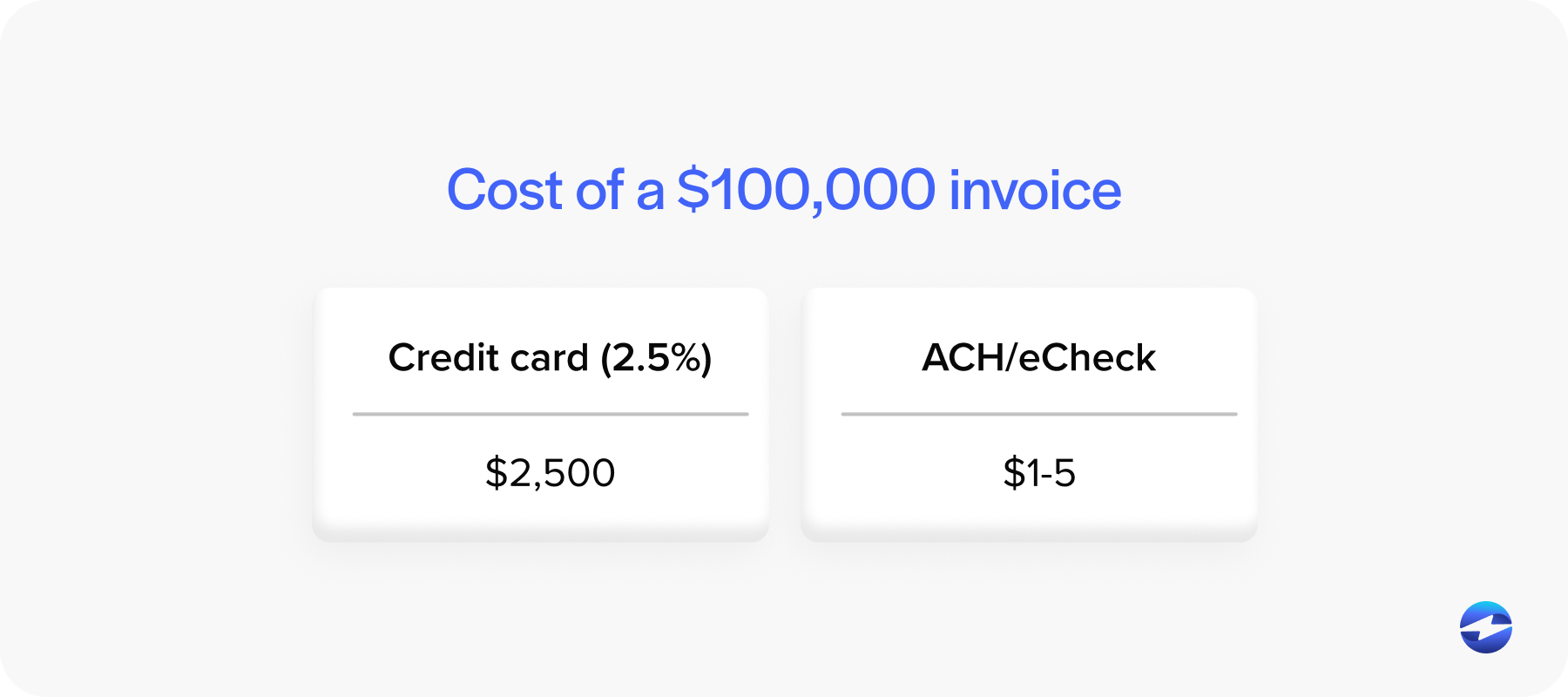
Credit card fees are calculated as a percentage of the transaction. On a $100,000 invoice processed at a 2.5% rate, you’re paying $2,500 in merchant services fees on a single payment. The same payment made via ACH might cost $1 to $5, depending on your payment solution. That’s not a minor difference. Across a full year of large draw payments, it’s a substantial budget line that most contractors are quietly absorbing without a second thought.
Offering ACH and actively encouraging clients to use it on large invoices is one of the simplest ways to reduce costs without changing anything else about how you operate. Most commercial clients are comfortable with ACH. Many prefer it for their own accounting reasons. The key is having a payment solution that handles it cleanly, with capped per-transaction fees, reliable settlement timing, and proper handling of returns.
Same-day ACH availability matters more in construction than most people expect. When a draw payment comes through, and you need to pay subcontractors or cover a material delivery, the difference between same-day and next-day settlement can determine whether the job keeps moving on schedule.
Credit Cards, Surcharging, and Level 2/3 Processing
Credit cards still have a real place in construction, particularly for smaller transactions, residential deposits, and clients who prefer card payments for their own record-keeping. The goal isn’t to eliminate card acceptance, but to manage its cost efficiently.
Flat-rate pricing is the wrong model for merchant services for construction companies processing any real volume. A payment processor using interchange-plus pricing charges you the actual cost of the transaction plus a fixed markup, which is almost always cheaper on large commercial card payments than a flat rate. The gap in merchant services fees between these two pricing models compounds significantly over a full year, especially when your average transaction is large.
Surcharging is worth understanding, too. More contractors are now passing card fees to clients as convenience fees, which are legal in most states with the right setup and disclosures. Done correctly, it effectively removes card processing costs on transactions where clients choose to pay by card. Not every client will accept it, and the rules vary by state, but for contractors running high card volumes, it’s a legitimate and increasingly common approach.
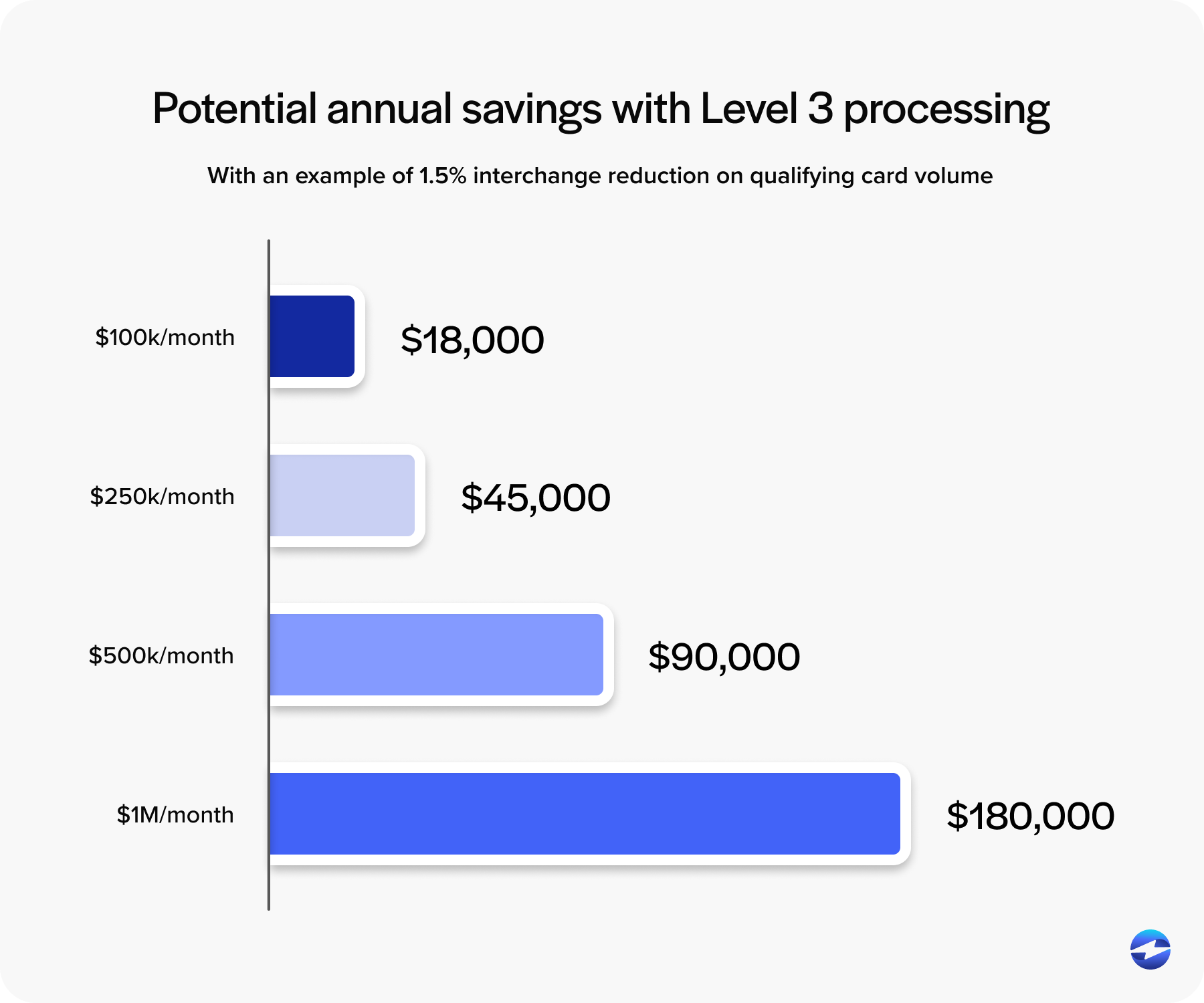
Level 2 and Level 3 processing is the piece that most contractors never think about. When clients pay with commercial cards, passing enhanced transaction data with the payment qualifies those transactions for lower interchange rates. Most payment processor options don’t support this by default. The ones that do deliver meaningfully lower merchant services rates on commercial card transactions, which is exactly the card type most commonly used in construction billing.
What Your Payment Setup Actually Needs to Handle
A proper payment processing solution for construction industries and contractors needs to do more than accept cards and deposit funds. It needs to fit the actual billing workflow of a construction business, from first deposit to final retainage release.
That means supporting multi-payment invoices tied to a single job or contract. It means handling deposits at signing, draw requests at milestones, and retainage releases as distinct transactions against the same project. A good payment solution also gives clients a clean online portal to view and pay invoices without requiring a phone call, and it sends automated reminders, so you’re not manually chasing down every outstanding balance across a dozen active jobs.
Mobile capability is a practical requirement, not a bonus feature. Construction happens in the field. Being able to send an invoice, accept a payment, or process a card from a job site without returning to the office keeps billing moving in real time instead of piling up at the end of the week.
Accounting Integration and Job Costing
Payments need to flow cleanly into your accounting software. A payment processing solution that requires manual data entry after the fact isn’t saving time. It’s moving the work somewhere else.
For most contractors, QuickBooks integration is the baseline requirement. Payments should post automatically to the right job in the right accounts, updating accounts receivable and the general ledger without anyone touching them. When payment data maps correctly to job cost reports, the downstream reporting benefits are real. When it doesn’t, you’re paying a bookkeeper to clean it up every month.
What to Look for in a Merchant Services Provider
The right merchant services provider for a construction business checks a specific list of boxes. Interchange-plus or interchange-optimized pricing rather than flat-rate. Full ACH support with capped fees and same-day availability. Level 2 and Level 3 processing for commercial card savings. Surcharging capability where permitted. Multi-payment invoice support with an online client portal. Mobile tools for field use. Native QuickBooks integration with real-time posting.
If a provider can’t clearly answer how they handle every one of those items, that’s useful information. The best merchant services options for contractors won’t make you dig for the details. They’ll be able to walk you through exactly how each piece works in a construction billing context.
EBizCharge: A Top-Rated Option for Construction Companies and Contractors
EBizCharge consistently earns its reputation as one of the best merchant services options for businesses that process large invoices with complex billing structures, and the features map directly to what contractors actually need.
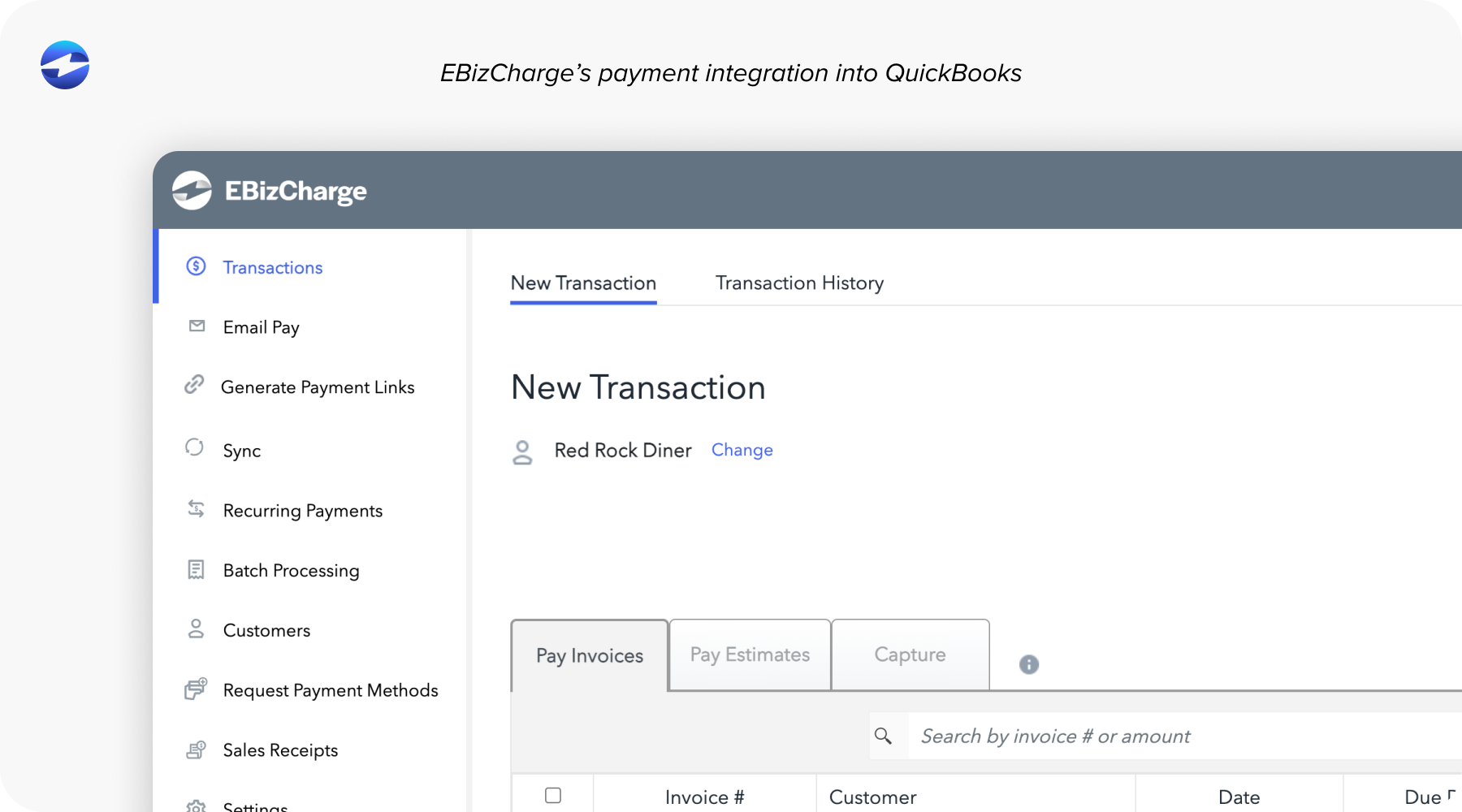
Interchange-optimized pricing means your effective merchant services rates come down as your volume allows, rather than staying fixed at a flat percentage regardless of what you process. Full ACH support and competitive flat fees make it the right choice for large draw payments. Level 2 and Level 3 processing is built in, which matters on every commercial card transaction. Surcharging tools are available for contractors who want to legally pass card fees to clients legally. The customer payment portal gives clients a self-serve way to pay invoices on their own time. And the QuickBooks integration is native and real-time, posting payments to the right accounts automatically without manual entry.
For construction companies that are done working around a payment setup that wasn’t built for them, EBizCharge is the merchant services provider worth a close look. It handles the billing complexity, transaction sizes, and cash flow demands that define this industry. If your current setup isn’t doing that, it’s worth finding out what the gap is actually costing you.