



- What to Look for in Law Firm Payment Processing Software
- EBizCharge: A Top-Rated Payment Solution
- Other Payment Processing Software Worth Considering
- How to Choose the Right Payment Software for Your Law Firm
- Why EBizCharge Is the Right Payment Processing Solution for Law Firms
- Frequently Asked Questions
Running a law firm means juggling a lot at once. You’re managing cases, clients, deadlines, compliance requirements, and somewhere in the mix, you’re also trying to get paid. That last part sounds simple, but anyone who’s worked in a legal practice knows it’s anything but.
Billing is complicated in the legal world. You’re dealing with retainers, trust accounts, hourly invoices, flat-fee arrangements, and clients who expect a professional, secure experience when they hand over their payment information. Choosing the right payment processing software matters more than most firms realize, and the wrong choice can lead to compliance headaches, unexpected fees, and friction that slows your cash flow.
This guide is written for attorneys, office managers, and legal administrators who want a clear, honest breakdown of the best payment processing software for law firms, without the fluff.
What to Look for in Law Firm Payment Processing Software
Before diving into specific products, it helps to know what separates a good payment solution from one that’s merely adequate. Law firms have requirements that most generic payment processors simply weren’t built for.
Trust account compliance. If you handle client funds, you almost certainly deal with IOLTA accounts. Your payment processing solution needs to separate earned and unearned fees cleanly, without commingling funds. This is an ethics requirement enforced by your state bar, not a suggestion.
ABA and state bar rules. Many bar associations provide guidance on which payment processors attorneys may use and how payment processing fees should be handled relative to trust funds. Not every processor is designed with this in mind.
PCI compliance. Any software that handles card data needs to be PCI compliant. PCI compliance (short for Payment Card Industry Data Security Standard) protects your clients’ payment information and your firm from liability. Look for processors that maintain active PCI compliant certification and make it straightforward for your firm to stay within those standards.
Integrations with practice management software. Your payment processor shouldn’t exist in a silo. The best payment processing software connects directly to tools like Clio, MyCase, or QuickBooks so invoices, payments, and reconciliation happen without manual data entry.
Transparent payment processing fees. Fee structures vary wildly in this industry. Some processors advertise low rates and bury surcharges in the fine print. Know what you’re paying per transaction, what monthly fees look like, and whether there are setup or cancellation costs.
A client-friendly experience. Your clients are often stressed when they’re working with a lawyer. A clean, easy online payment portal reduces friction and gets invoices paid faster.
EBizCharge: A Top-Rated Payment Solution
EBizCharge consistently stands out as the best payment processing software for law firms. Built for business-to-business payment needs, EBizCharge combines legal compliance features, deep software integrations, and a genuinely usable client experience in one platform.
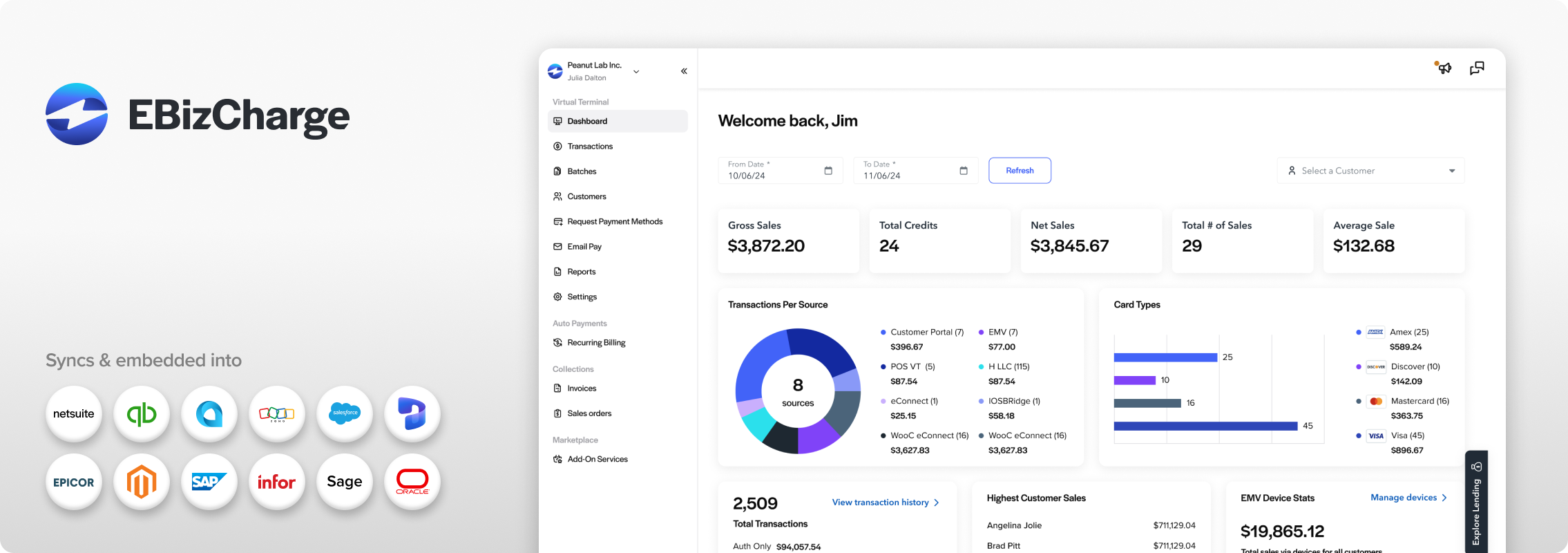
Trust and IOLTA account management. EBizCharge understands how attorney trust accounts work and is built to handle them correctly. Funds flow into the right accounts, fees are handled appropriately, and you don’t have to worry about inadvertently creating an ethics violation because your payment software wasn’t designed for legal billing.
Integrations with legal software. EBizCharge integrates with QuickBooks and a range of other practice management and accounting platforms. When a client pays an invoice, that payment syncs automatically. No manual reconciliation at the end of the month.
Secure client payment portal. Clients can pay invoices online through a branded, secure portal. No phone calls, no mailed checks. And because EBizCharge is PCI compliant, your clients’ card data is protected at every step.
ACH and credit card processing. EBizCharge handles both, giving your clients flexibility and giving your firm options when managing processing costs.
Transparent fee structure. One of the more common complaints about payment processors is hidden fees. EBizCharge’s pricing is competitive and clear, which makes budgeting easier and eliminates surprises on your monthly statement.
EBizCharge works for solo practitioners and large multi-attorney firms alike. If you want a payment processing solution built to handle the complexity of legal billing without making your staff fight a confusing system, this is the right place to start.
Other Payment Processing Software Worth Considering
EBizCharge earns the top spot, but it’s worth knowing what else is out there. Different firms have different needs, and a few other payment software solutions for law firms are worth a look.
| Feature |  |
 |
 |
 |
 |
 |
|---|---|---|---|---|---|---|
| Email Pay |  |
 |
|
|
|
|
| ACH/eCheck | |
|
|
|
 |
|
| Accounting integration | |
|
|
|
|
|
| G2 review (out of 5) | 4.8 | 4.7 | 4.6 | n/a | 4.5 | 4.2 |
Scroll to compare 
= partial or varies
LawPay
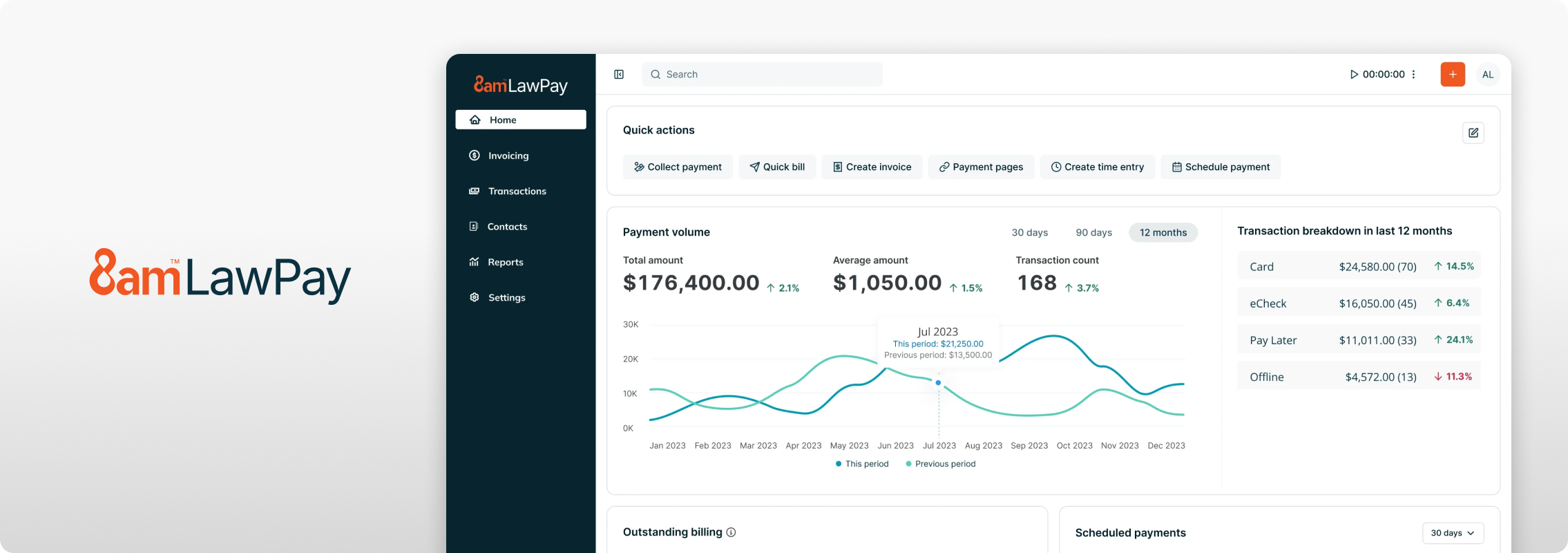
LawPay screen via lawpay.com
LawPay. LawPay has been in the legal payment space for years and is endorsed by a large number of state bar associations. It handles IOLTA compliance well and offers a clean credit card processing experience. Where it falls short is in integration depth and reporting compared to EBizCharge. It’s a solid option for smaller firms that prioritize simplicity and bar endorsement.
Clio
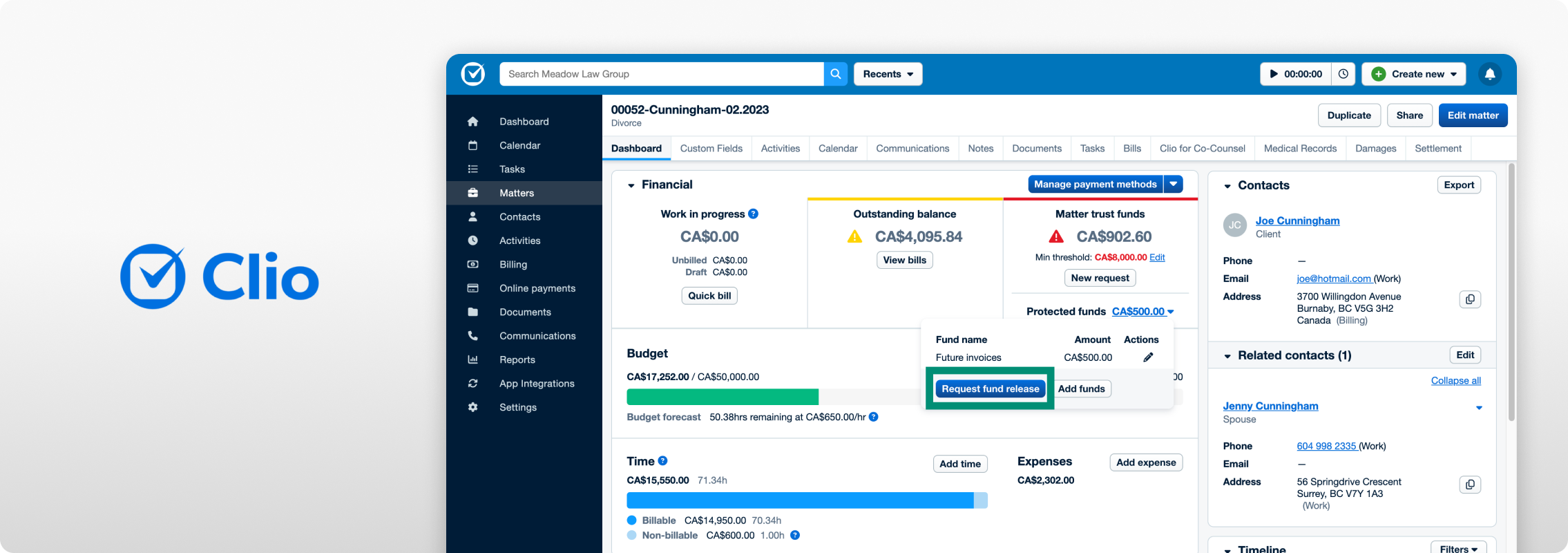
Clio screen via help.clio.com
Clio Payments. If your firm already runs on Clio, Clio Payments is the path of least resistance. It’s built directly into the platform, so the workflow is seamless if you’re already in that ecosystem. The tradeoff is that it’s locked to Clio users, and payment processing fees can run higher than standalone processors.
Headnote
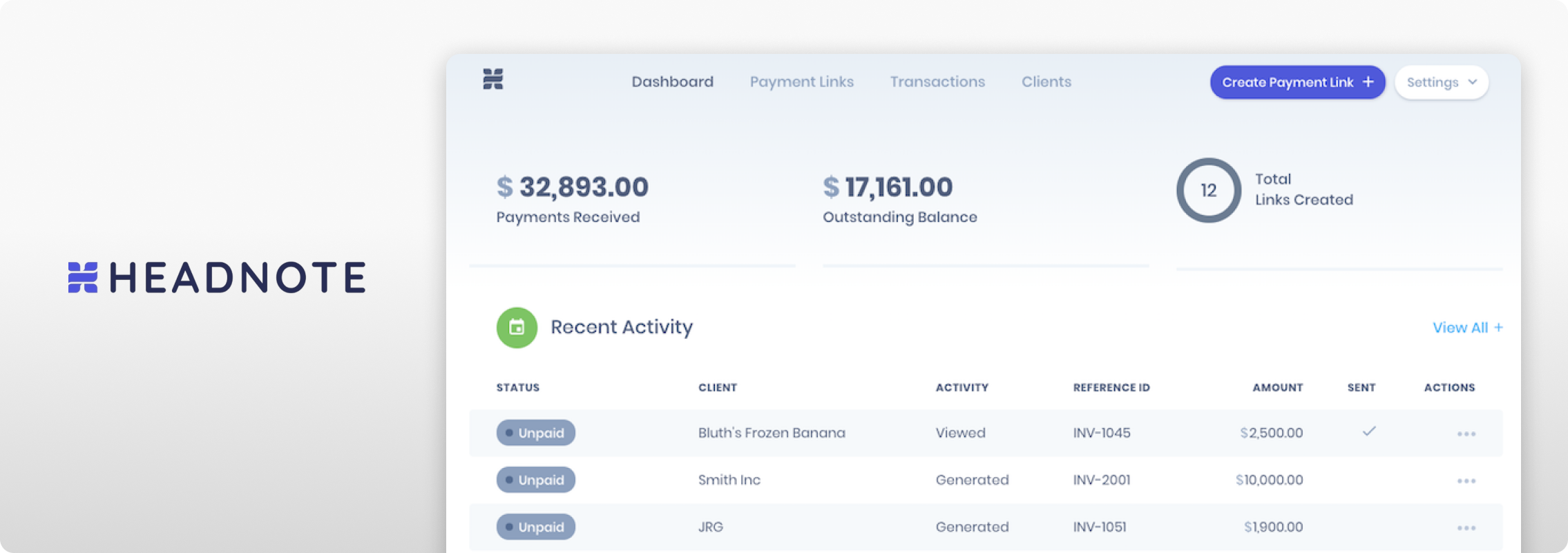
Headnote screen via Capterra
Headnote. Headnote is a newer option focused specifically on law firm payment needs. It offers IOLTA-safe transactions and a clean interface, and it’s popular with solo and small firm attorneys. A good choice if you want something purpose-built but don’t need the full feature set of a larger platform.
Square and Stripe
Square Screen via squareup.com
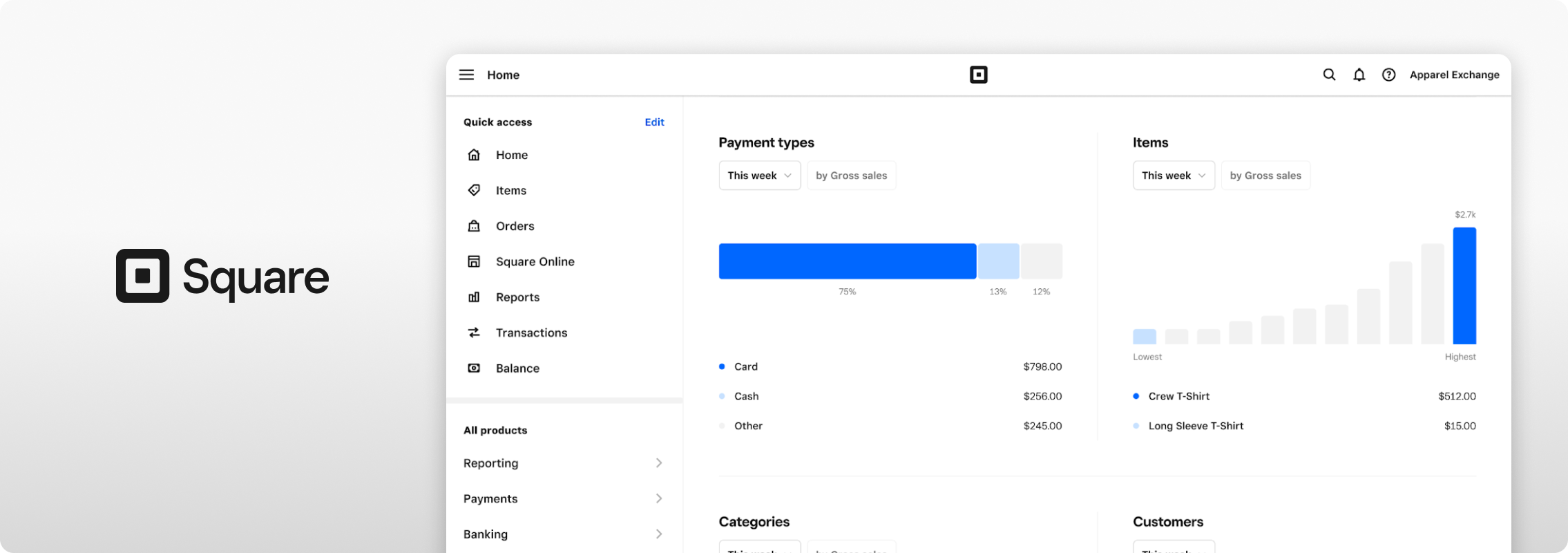
Square and Stripe. Both are excellent for what they’re built for, which is primarily retail and online businesses. The problem is that neither handles trust accounting correctly, and neither integrates meaningfully with legal software. They’re workarounds, not real payment software solutions for law firms.
How to Choose the Right Payment Software for Your Law Firm
Choosing the right payment processor depends on your specific situation. Start with compliance. If your state bar endorses or recommends specific processors, that matters. Some bar associations have explicit rules about how payment processing fees interact with client trust funds, and using a compliant payment processor from day one is far easier than fixing problems after the fact.
Then think about your existing tech stack. A payment solution that doesn’t connect to your practice management platform creates manual work every single month. Look at volume and fee sensitivity too, because payment processing fees add up at scale. Support quality is another factor to consider. Legal billing issues sometimes happen at the worst moments, and you want to know how your processor responds before you actually need them.
Why EBizCharge Is the Right Payment Processing Solution for Law Firms
Law firms have specific, non-negotiable requirements when it comes to handling money. You need a payment processor that understands trust accounting, stays PCI compliant, integrates with your existing systems, and gives clients a payment experience that reflects your firm’s professionalism.
EBizCharge checks every one of those boxes. The IOLTA-safe account handling removes the biggest compliance risk. The integrations with Clio, QuickBooks, and other legal platforms eliminate manual reconciliation. The secure client portal speeds up collections. And the transparent payment processing fees mean you’re not losing margin to costs buried in a monthly statement.
Other payment software solutions for law firms have their place. LawPay is a solid option for smaller practices. Clio Payments works if you’re already committed to that ecosystem. But if you want the most well-rounded, compliance-ready payment processing solution available to law firms today, EBizCharge is the clear choice.
Request a demo and see how it fits into your billing workflow. The right payment processing software shouldn’t feel like a burden. With EBizCharge, it won’t.
Frequently Asked Questions
Can law firms use standard payment processors like Stripe or Square?
Technically, yes, but it’s risky. Standard processors don’t handle IOLTA trust accounts correctly, which can create ethics violations. Most bar associations recommend processors specifically designed for legal billing.
What is IOLTA compliance and why does it matter?
IOLTA rules govern how attorneys hold client funds. Your payment processing solution must deposit unearned funds into the correct trust account and ensure payment processing fees don’t come out of those funds. Violations can result in bar discipline.
How do payment processing fees affect firm profitability?
Credit card processing fees typically run between 2% and 3.5% per transaction, with ACH running lower. At high billing volumes, the difference between processors can translate to significant savings per year.
Get paid faster with less work.
Get paid faster with less work.
3-minute product overview