

Blog > Financial CRM: Managing Client Payments and Billing
Financial CRM: Managing Client Payments and Billing

For financial services firms, managing client relationships has always been about more than just contact information. It’s about trust, accuracy, and consistency.
As billing models have grown more complex, payments have become a visible part of that relationship. Clients notice when invoices are confusing, when payment confirmations are delayed, or when it’s hard to see what has already been paid. What used to feel like a back-office task now plays a direct role in client experience.
This shift is why many firms are turning to a financial CRM to manage client payments and billing alongside relationship data. Instead of juggling multiple systems, firms are using CRM platforms to keep billing activity, payment status, and client records in one place.
This guide will explain what a financial CRM is, how financial services firms use CRM for payment management, and what to look for when building a billing and payments strategy that’s clear, secure, and scalable.
What Is a Financial CRM?
A financial CRM is a customer relationship management platform designed to support the needs of financial services organizations.
In other words, it’s a form of customer relationship management built specifically for industries where billing, payments, and long-term financial relationships are closely connected.
Traditional CRM tools focus on tracking conversations, service notes, and interactions. In a CRM finance environment, that scope expands to include financial relationships, billing schedules, and payment activity tied directly to the client.
A financial CRM typically brings together:
- Client and household relationships
- Account, policy, or loan information
- Billing schedules and fee structures
- Payment history and current balances
This is what separates a finance CRM from a general-purpose CRM. Financial relationships are long-term, and payments are often recurring. A CRM financial platform reflects that reality by keeping revenue-related information connected to the client record.
For regulated industries, this structure also supports stronger compliance and reporting, since billing and payment activity is easier to track and audit.
Why Payment and Billing Workflows Matter in Financial Services
Billing in financial services is rarely straightforward. Most firms manage a combination of recurring advisory fees, insurance premiums, installment payments, usage-based charges, and one-time transactions. Each type of payment comes with different timing, compliance requirements, and client expectations.
Clients expect billing to be accurate and predictable. They also expect payment options to be convenient. When invoices are unclear or payment status is hard to confirm, trust can start to erode.
When payment processing lives outside your CRM, the problems usually don’t show up all at once. They build gradually. It starts with small inefficiencies that seem manageable, but over time, they compound.
Manual reconciliation is often the biggest issue. When payment data sits in one system and client records live in another, someone has to match them manually. That process takes time and leaves room for mistakes. Even minor discrepancies can grow into larger headaches during month-end close.
Visibility is another challenge. If your sales team can’t see that a client has an overdue balance, they may unknowingly focus on the wrong accounts. If your finance team doesn’t have access to recent client conversations, they might send a payment reminder right after a productive discussion. These disconnects hurt the client experience and waste internal effort.
Delayed payments are a common side effect as well. When invoicing requires switching between tools, it’s easy for it to fall down the priority list. Invoices go out later than they should, payments come in later, and cash flow feels the strain. What looks like a small workflow gap can quickly turn into a larger operational issue.
Using a financial CRM to centralize billing and payment information helps firms maintain clarity across the entire client lifecycle. Teams can quickly see what’s been billed, what’s been paid, and what still needs follow-up without switching between systems.
How Financial Services Firms Use CRM for Payment Management
Financial services firms use CRM platforms to bring structure and visibility to payment workflows.
One of the most common uses is centralizing billing history and payment status within the client record. When payment information lives inside the CRM, service teams can answer questions without searching through multiple tools.
Automation is another key benefit. Invoices can be generated on a set schedule, payment reminders can be sent automatically, and collections workflows can be triggered based on defined rules.
Recurring payments are especially well-suited to a finance CRM. Advisory fees, premiums, and subscription-style services benefit from predictable billing cycles that don’t rely on manual follow-up.
By reducing manual entry and reconciliation, CRM-based payment management allows teams to focus more on client relationships and less on administrative work.
Payment Integration Options Within a Financial CRM
Most CRM platforms don’t process payments directly. Instead, they connect to payment tools through integration.
For example, many firms using Salesforce CRM rely on Salesforce integration to connect client records with billing systems and payment platforms.
Some platforms offer basic native billing features that work for simple use cases. Many financial services firms, however, rely on a third-party payment processing solution.
A dedicated payment processor handles card payments, ACH transfers, and other methods securely. Payment status is then synced back into the CRM, so client records stay accurate and up to date.
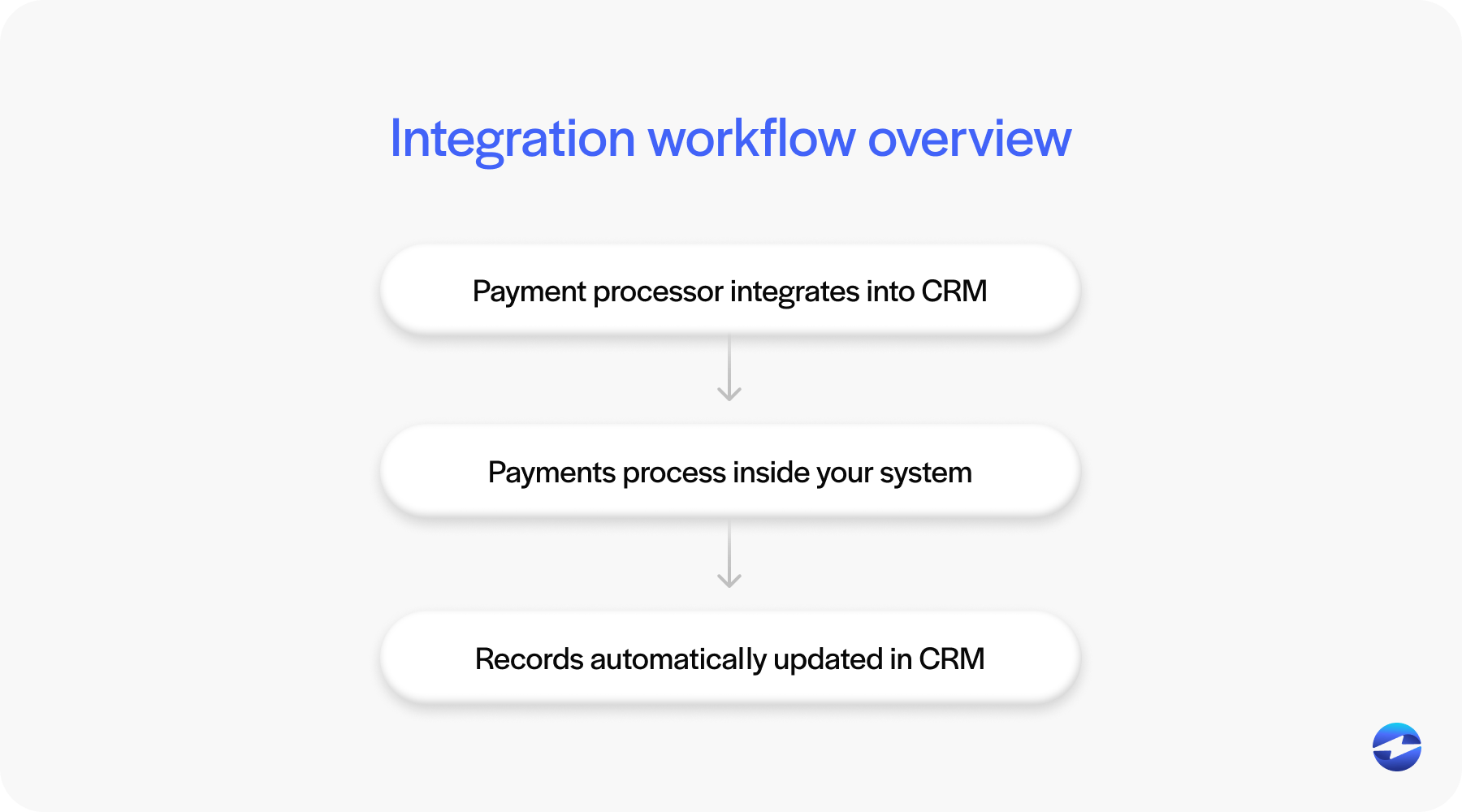
This approach allows the CRM to manage workflows and reporting, while the payment system focuses on transaction security and compliance. It also gives firms the flexibility to choose payment tools that align with their volume and regulatory requirements.
Customer Experience and Self-Service Billing Tools
Client experience is a major driver behind CRM-based payment management.
Self-service portals allow clients to view invoices, make payments online, and manage payment methods without contacting support. This improves transparency and reduces the workload for service teams.
From the firm’s perspective, portals keep payment activity tied directly to the client record inside the financial CRM. Updates flow automatically, reducing manual work and improving accuracy.
Supporting multiple payment methods is also important. Some clients prefer cards, others prefer bank transfers, and many want automated payment options. A thoughtful CRM finance strategy supports these preferences while keeping records consistent.
Security, Compliance, and Data Protection Considerations
Security and compliance are critical considerations in financial services. CRM systems must support strong access controls, audit trails, and governance. Payment data adds another layer of sensitivity.
Most firms avoid storing raw payment information directly in CRM platforms. Instead, secure integrations rely on tokenization and encryption to limit exposure.
A PCI-compliant payment processing solution helps protect sensitive data while still allowing CRM systems to track payment activity. This separation reduces risk and simplifies compliance efforts.
Key Features to Look for in a Financial CRM Payment Strategy
Not all CRM payment strategies are the same. Automation should be a priority. Billing, reminders, and payment updates should run consistently without manual intervention.
Integration depth also matters, especially for firms using Salesforce CRM as their primary client platform. Strong Salesforce integration ensures payment activity stays aligned with client records across Salesforce software, which is one of the reasons Salesforce is so widely used in financial services.
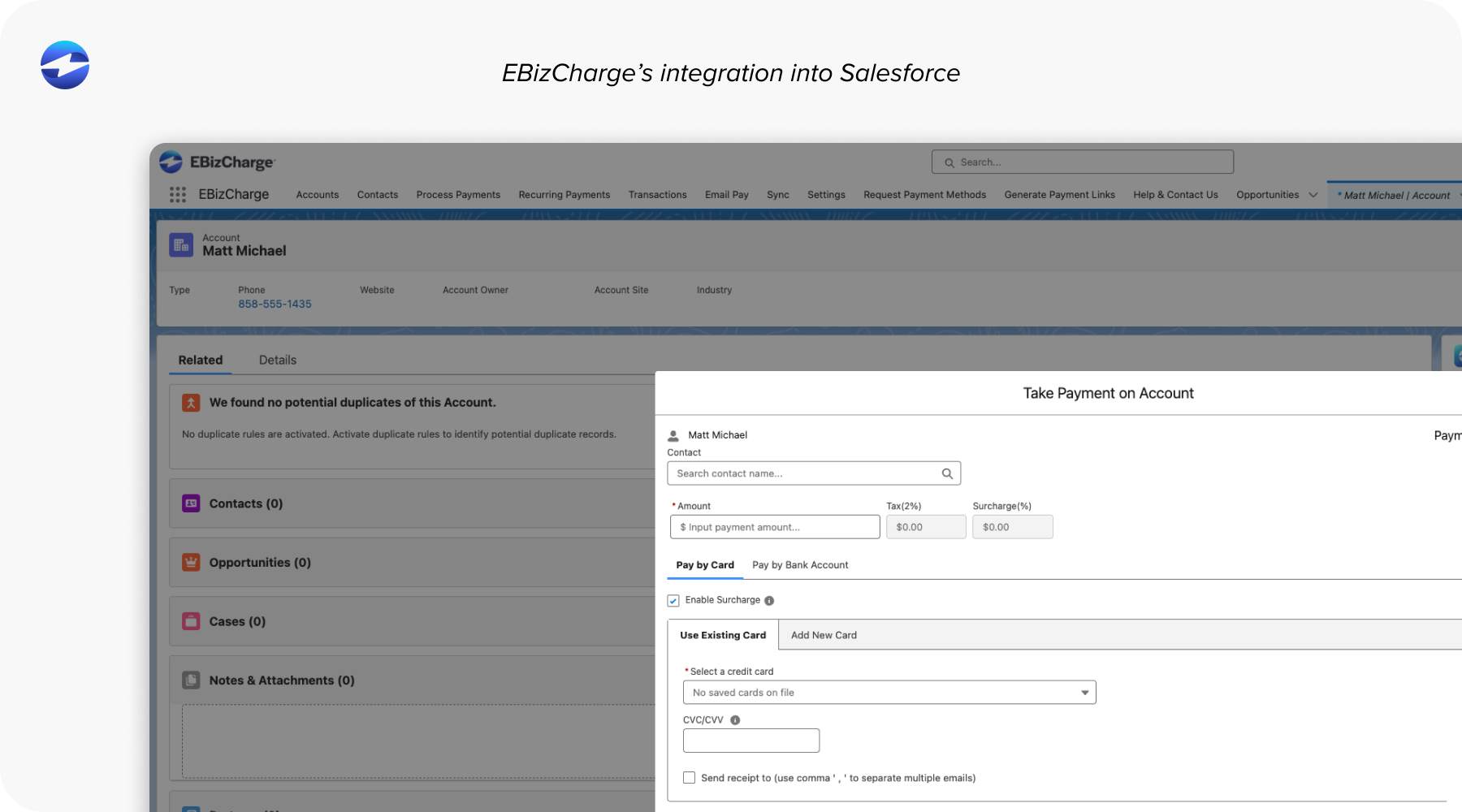
When a finance CRM is properly connected, teams can manage relationship data and payment workflows in one consistent environment, rather than jumping between disconnected tools.
Reporting visibility is another important factor. Teams need clear insight into billing status, collections, and revenue trends.
Scalability is another feature that shouldn’t be overlooked. As transaction volume grows, the finance CRM and payment setup must continue to perform without creating bottlenecks.
Bringing Payments Closer to the Client Relationship
A financial CRM plays an important role in how financial services firms manage client payments and billing.
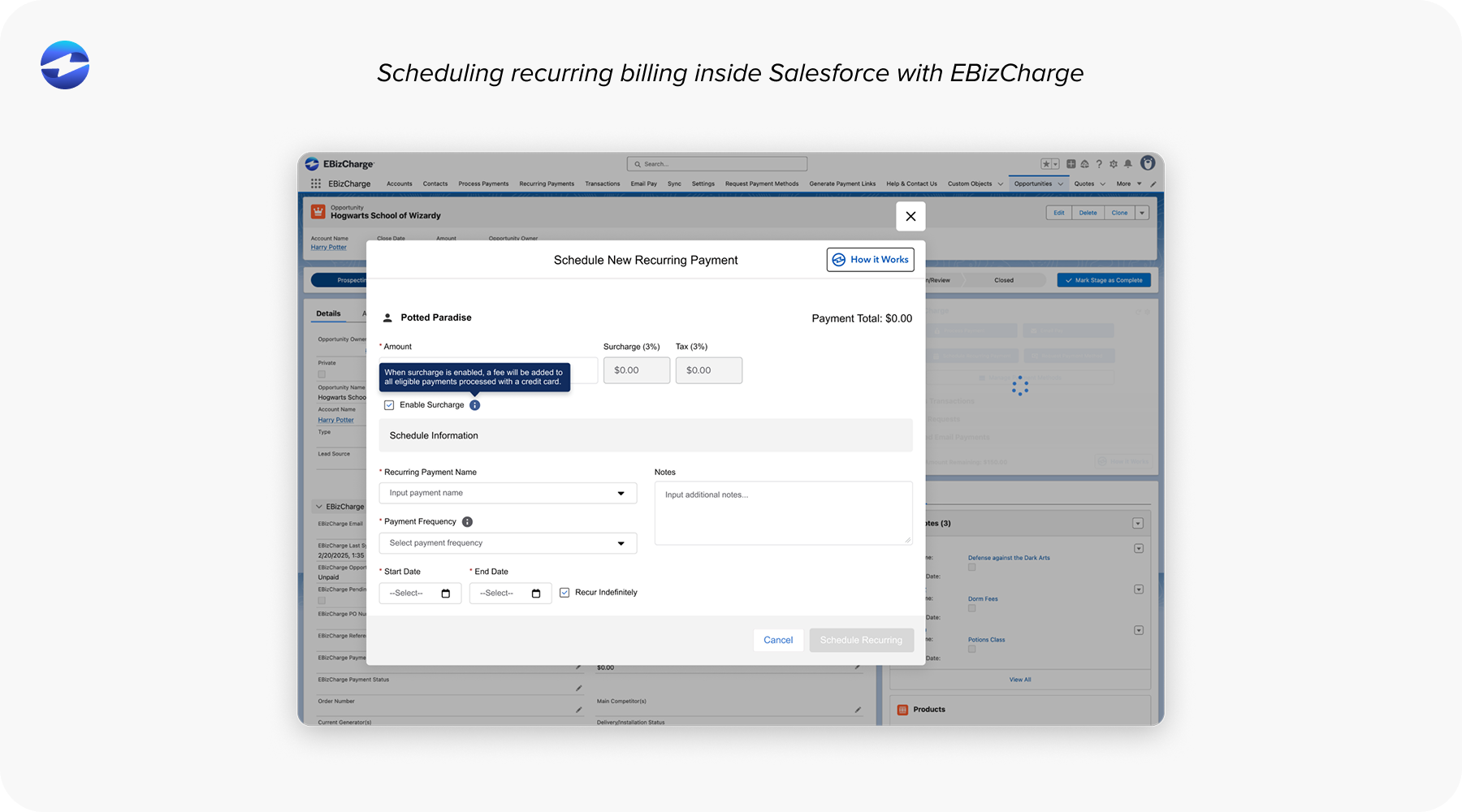
By connecting relationship data with billing workflows and payment activity, CRM platforms support more consistent service and clearer financial visibility.
When paired with the right payment processor and a thoughtful integration strategy, a CRM financial approach reduces manual work, improves the client experience, and supports compliance requirements.
For financial services firms looking to modernize billing and payments, CRM is no longer just a relationship tool, especially when paired with platforms like Salesforce software that support deeper client and payment visibility. It has become a practical foundation for managing revenue, trust, and long-term client relationships.