
Blog > Credit Card Surcharge Laws by State: What’s Legal and What’s Not in 2026
Credit Card Surcharge Laws by State: What’s Legal and What’s Not in 2026

As businesses strive to maintain profitability in the competitive commerce environment, surcharging is one strategy that’s garnered attention and controversy.
This article will dive into the legality of surcharging on state and federal levels to help merchants gain more insight into best practices and their impact on their businesses and consumers. It will also answer common questions, such as are credit card surcharges legal and is it illegal to surcharge debit cards.
What is credit card surcharging?
When you purchase with a credit card, the merchant’s financial institution processes the transaction and charges an interchange fee to the merchant for these services. However, the merchant isn’t always obligated to pay it. In some cases, merchants can pass these fees on to their customers as surcharges.
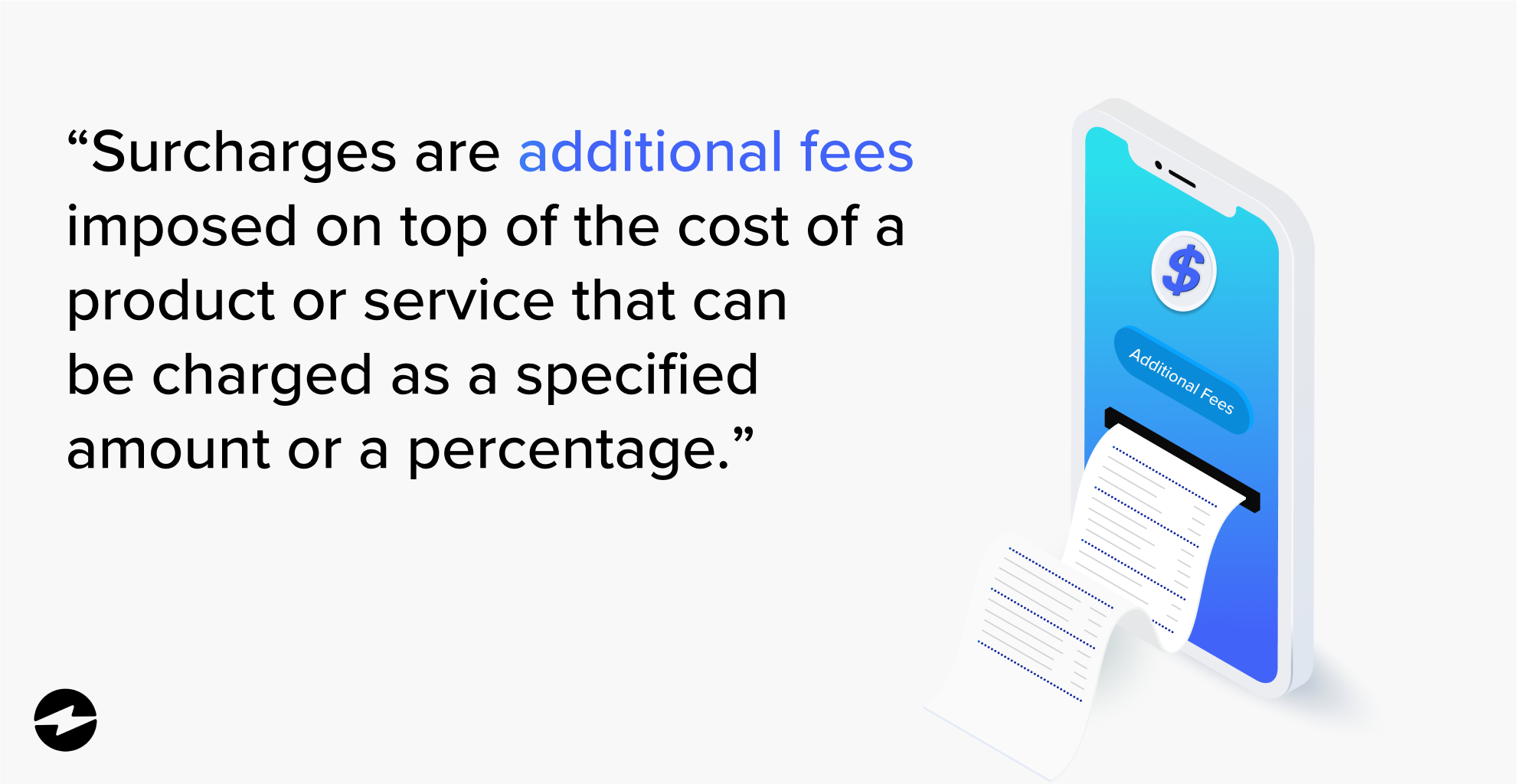
Surcharges are additional fees imposed on top of the cost of a product or service that can be charged as a specified amount or a percentage. Surcharges are commonly added to credit card transactions, utility bills, or transactions where the merchant is charged an interchange fee.
Merchants are prohibited from profiting from surcharges and can only charge the necessary amount to cover the cost of the interchange fee.
Surcharges are often confused with convenience fees since both can be applied to certain transactions, but there are some critical differences between the two.
What are the differences between convenience fees and surcharges?
Despite convenience fees and surcharges sharing several similarities, they differ in their purpose.
Convenience fees are added to the total amount of a transaction to provide convenient payment options to customers, often covering administrative costs, technological expenses, or third-party service fees.
For example, when customers order food online through a third-party delivery service, they’ll likely be charged a convenience fee for the convenience of browsing through menus, placing orders, and having meals delivered to their location. In this case, the convenience fee would cover the costs of delivery logistics and maintaining the platform.
Convenience fees are typically flat fees, meaning they won’t change based on a percentage of the transaction. Instead, they remain a set price added whenever alternative payment methods are used.
In contrast, surcharges can differ in price depending on the cost of the transaction. They can be fixed amounts but are often calculated as a percentage of the transaction value.
Surcharges are also associated with credit cards, whereas convenience fees tend to be associated with less traditional payment methods, including online payment platforms like Venmo and mobile wallets such as Apple Pay and Google Pay.
Surcharges are a topic of controversy since some consumers don’t feel they should have to cover processing costs. Considering this controversy, it’s important to be mindful of credit card surcharge rules and regulations.
Are credit card surcharges legal?
The permissibility of surcharging credit cards falls under the jurisdiction of individual states and card networks, as there are no federal restrictions on the practice. This means states can enact their own credit card surcharge laws as they see fit. Some states prohibit surcharging altogether, whereas others enforce various credit card surcharge regulations and restrictions.
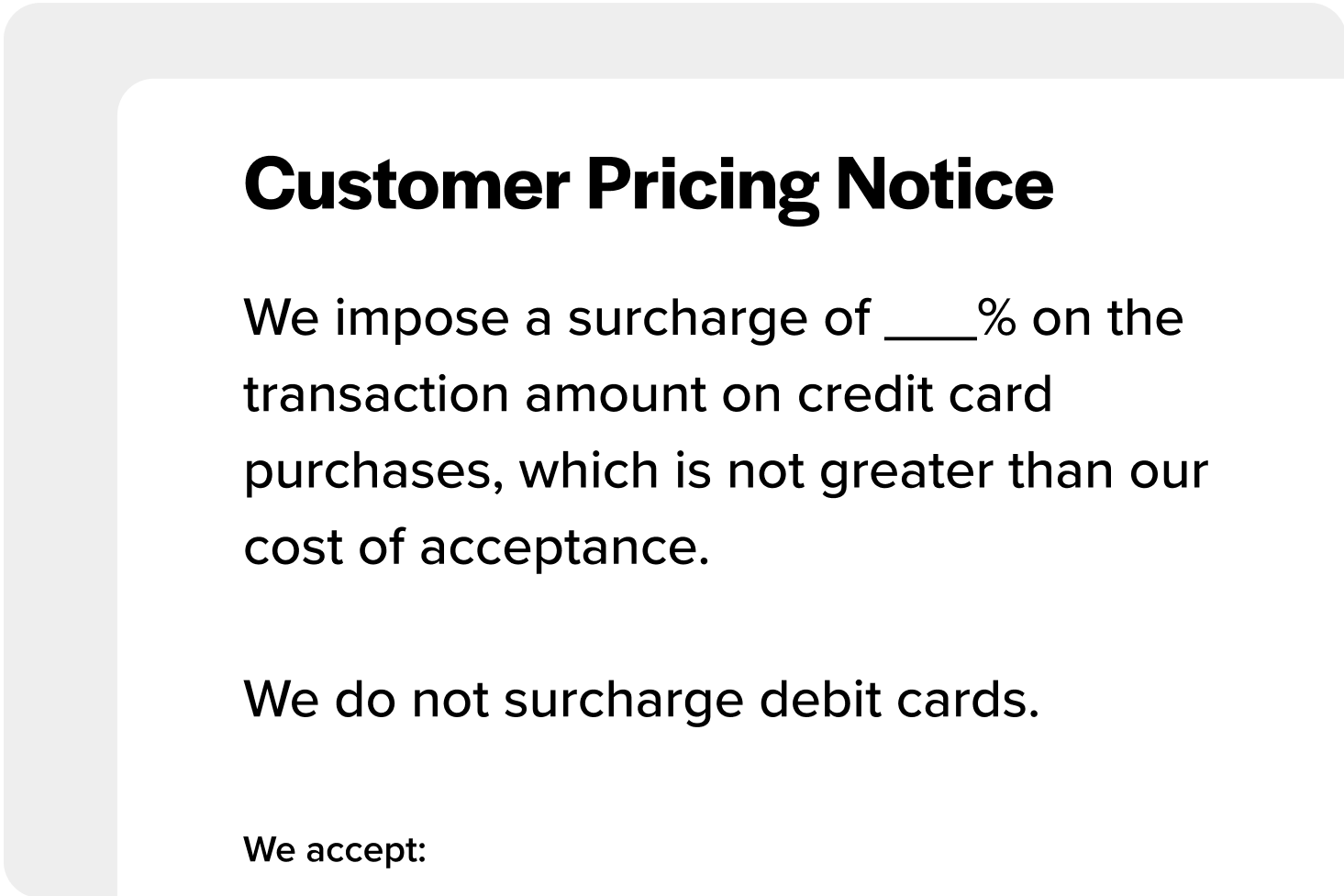
In most states where surcharging practices are permitted, merchants must disclose their surcharging policies to customers. However, no federal regulations mandate the disclosure of surcharging amounts. Under the Expressions Hair Design vs. Schneiderman case, the Supreme Court ruled that requiring disclosure of surcharging amounts violates the first amendment and will therefore be left to individual states to determine their own disclosure practices. That said, most states that permit surcharging require this disclosure.
To understand credit card surcharge laws by state, businesses should consult their state legislature to stay up-to-date on updated credit card surcharge laws and restrictions. If you also do business in Canada and are looking to add credit card surcharges in Canada, understand that they have different laws to abide by.
Federal Credit Card Surcharge Law
At the federal level, there is no law that bans credit card surcharges outright. The regulation of surcharging is left to individual states and card networks. What federal law does address is disclosure. Under the Supreme Court’s ruling in Expressions Hair Design v. Schneiderman, merchants have a First Amendment right to communicate their pricing, including the difference between cash and card prices. That ruling effectively invalidated outright surcharge bans that prohibited disclosure rather than the fee itself.
The Durbin Amendment handles the debit card side. It caps interchange fees on debit transactions for large banks and, combined with card network rules, prohibits surcharges on debit card transactions across all states regardless of local surcharge laws. A state can permit credit card surcharging and still have debit surcharges be completely off the table.
Two things to understand from a federal standpoint: credit card surcharging is not federally prohibited, and debit card surcharging is.
Credit card surcharge laws by state
Surcharging is legal in most U.S. states, with the exception of a few. Here is a complete list of states and jurisdictions that permit credit card surcharging as of 2026:
| Surcharge Legal States List | Surcharge Illegal States List |
|---|---|
| Alabama Alaska Arizona Arkansas Colorado Delaware Florida Georgia Hawaii Idaho Illinois Indiana Iowa Kansas Kentucky Louisiana Maryland Michigan Minnesota Mississippi Montana Nebraska Nevada New Hampshire New Jersey New Mexico New York North Carolina North Dakota Ohio Oklahoma Oregon Pennsylvania Rhode Island South Carolina South Dakota Tennessee Texas Utah Vermont Virginia Washington West Virginia Wisconsin Wyoming |
California Connecticut Maine Massachusetts Puerto Rico |
While most states permit credit card surcharging, several state-level governments vary in the surcharging regulations they impose.

State-Specific Credit Card Surcharge Laws
The table above covers the full legal/illegal breakdown, but several states come up frequently enough in compliance questions to warrant more detail.
New Mexico does not have a statute banning credit card surcharges. Standard card network disclosure rules apply, meaning merchants must notify customers at the point of sale before the transaction is completed. There is no state-mandated cap below the card network limits.
Oklahoma does not ban credit card surcharges. Merchants in Oklahoma can apply surcharges with proper disclosure. Oklahoma has not passed specific surcharge legislation, so the governing rules come from card network policies and general consumer protection statutes.
Hawaii permits credit card surcharges. There is no state-specific surcharge statute, meaning Visa and Mastercard network rules govern the cap and disclosure requirements.
Maryland permits credit card surcharges with disclosure. Maryland does not have a statute specifically addressing surcharges, so merchants operate under card network rules and general consumer protection laws.
Arizona and Indiana both permit credit card surcharges with no state-specific bans or caps beyond card network rules. Standard disclosure requirements apply in both states.
Maine and New York permit surcharging but impose stricter disclosure requirements than most. Merchants in these states must display the cash price and the card price side by side so customers can clearly see the difference before paying. A general surcharge notice at the register is not sufficient.
Colorado also permits surcharging but caps the fee at 2% or the actual cost of processing, whichever is lower. Merchants accustomed to charging at the card network maximum will need to adjust when operating in Colorado.
California is on the banned list but worth additional context. California Civil Code Section 1748.1 historically prohibited surcharges, but the statute has faced significant legal challenges. As of 2026, credit card surcharging with proper disclosure is generally permitted in California following federal court rulings that found the ban violated First Amendment protections on pricing communication. Merchants in California should verify current enforcement guidance before implementing.
These state-level differences are part of what makes surcharging compliance difficult to manage across multiple locations. A policy that works in one state may not hold up in another, which is why working with a processor that automates compliance by state is worth considering.
Is it legal to surcharge debit cards?
If credit card surcharging is illegal in your state, you may now find yourself asking what the debit card surcharge laws by state are. Under the Durbin Amendment of the Dodd-Frank Wall Street Reform and Consumer Protection Act, surcharges on debit cards are prohibited in the U.S.
The amendment outlines regulations related to interchange fees imposed by card networks, instituting a cap on these fees to regulate costs associated with debit card processing. In other words, this limits debit interchange rates imposed on merchants by reducing the overall costs of transaction fees on debit card transactions.
Debit Card Surcharge Laws by State
Unlike credit card surcharging, debit card surcharge rules are not determined at the state level. The prohibition is uniform and national. No U.S. state permits debit card surcharging because the restriction does not come from state law. It comes from two sources that apply everywhere: card network rules from Visa, Mastercard, American Express, and Discover, and the Durbin Amendment at the federal level.
This means that a merchant operating in a state that fully permits credit card surcharging still cannot add a surcharge to a debit card transaction. The state’s permissive surcharge laws only apply to credit cards. Debit is a separate and non-negotiable category.
There is also no “debit card surcharge states 2026” list because no such list exists. The prohibition is not state-by-state. It is nationwide.
The rise of credit card surcharging
Although some negative connotations are associated with surcharging, they can yield financial benefits for merchants, such as no-fee credit card processing.
Surcharges can offset expenses related to processing transactions, so businesses with thin profit margins can save substantial funds to generate more revenue.
Implementing surcharges for credit cards can also incentivize customers to use lower-cost payment methods, lowering the average processing costs for merchants. By mitigating the impact of credit card processing fees, surcharging carries the potential to contribute to a merchant’s overall financial stability and profitability.
Applying surcharges to your credit card payments
With consideration of the legality of surcharging credit cards, merchants should be cautious when applying them to transactions. Before surcharging, you’ll first need to verify the state you’re operating in permits its use.
To help you ensure compliance with both state and federal surcharging laws, here’s a checklist to get started:
- Understand the legal landscape. With states retaining the ability to impose their own rules and regulations on surcharging, it’s imperative to stay up to date on the latest guidelines to ensure compliance.
- Determine suitable payment methods. When deciding which payment methods to offer, you should verify that surcharges can be added to these payments. Your business also must understand and follow the specific laws and restrictions that apply to surcharging in your region or jurisdiction.
- Calculate the surcharge amount. Whether surcharging on a flat fee or a percentage, you must ensure the amount is within the legal limits to avoid any overcharging penalties.
- Be transparent. Communicate surcharging information to maintain transparency and create a more honest relationship between you and your customers. This can be done by displaying the surcharge amount or percentage at the point of sale so your customers know what they’re being charged for.
- Comply with updated policies and procedures. Before implementing surcharging, businesses should update their policies and procedures to reflect these additional charges. You should also ensure all employees are aware of the surcharging guidelines and can communicate them effectively.
- Choose a compliant payment processor. When selecting a payment processor, you’ll need to confirm they support surcharging credit cards and operate within the legal standards of surcharging laws on the state level.
- Test and monitor functionality. Merchants should test payment processing systems to verify that surcharges are being applied correctly. Monitor these transactions and customer feedback to identify any issues or concerns.
You’ll also want to work with payment processors that fit the needs of your business and can guide you through the legal framework of surcharging to avoid any penalties.
Find the best payment processor to apply surcharging in your business
When looking for a payment processor, you should seek established and reputable credit card processing providers with expertise in surcharging. Given that it’s not standard practice, you must assess providers’ surcharging capabilities to verify their compliance with federal and state laws and regulations.
It’s important to remember that not all payment processors accept all forms of payment, so you’ll want to find a processor that accepts the payment methods that work best for your business to accommodate your customers.
Businesses can effectively navigate surcharging laws to optimize the payment process
Understanding the legal landscape of credit card surcharging is crucial for businesses and consumers alike. Compliance with disclosure requirements, limitations on charge amounts, and adherence to state-specific laws are essential to consider before implementing no fee credit card processing.
By navigating the complexities of surcharging regulations and using compliant payment processors like EBizCharge, your business can offset processing costs while maintaining transparency and fairness for consumers.
Frequently Asked Questions
Why do merchants surcharge credit card transactions?
Merchants surcharge credit card transactions to recover the cost of processing. Every time a customer pays with a credit card, the merchant pays an interchange fee to the card network and issuing bank, plus any fees charged by their payment processor. For businesses with thin margins or high transaction volumes, those fees add up quickly. Surcharging passes some or all of that cost to the customer choosing to pay with a credit card rather than a lower-cost method like cash, check, or ACH.
How can consumers identify if a business applies surcharges?
Merchants who surcharge are required to disclose it before the transaction is completed. In practice, this typically means a notice at the entrance or point of sale, a disclosure on the payment terminal screen before the customer confirms payment, and a separate line item on the receipt showing the surcharge amount. If you’re paying online, the surcharge should appear in the checkout flow before you submit payment. If you see an unexplained line item added at checkout, ask the merchant to clarify before completing the transaction.
Can consumers avoid surcharges when purchasing with credit cards?
Yes. The most direct way is to use a payment method that isn’t subject to the surcharge. Cash, debit cards, checks, and ACH payments are not subject to credit card surcharges. Merchants cannot add a surcharge to debit transactions, so switching from a credit card to a debit card at the point of sale will avoid the fee in most cases. Some merchants also offer a cash discount program, which prices the surcharge into the listed price and discounts customers who pay with non-card methods.
Can businesses set their own surcharge amounts?
Within limits, yes. Merchants can set their surcharge at any amount up to the lesser of their actual processing cost or the card network cap. For Visa transactions, the cap is 3%. For Mastercard, the cap is 4%. Merchants cannot profit from surcharges — the fee can only offset the cost of processing, not exceed it. Some states impose additional caps. Colorado, for example, limits surcharges to 2% or the actual processing cost, whichever is lower. Merchants must stay within both the network cap and any applicable state limit.