

Blog > Salesforce Financial Services Cloud: Function and Features
Salesforce Financial Services Cloud: Function and Features

Financial services organizations deal with a different level of complexity than most industries: customer relationships are long-term, products are regulated, data is sensitive, and every interaction is tied to trust.
That’s why many banks, lenders, insurers, and wealth management firms look beyond a standard CRM. They need something built for the realities of financial services.
Salesforce Financial Services Cloud is designed for that purpose. It takes the foundation of Salesforce CRM and adds industry-specific tools that help financial organizations manage relationships, accounts, and service workflows in a more connected way.
If you’re evaluating Financial Services Cloud Salesforce or trying to understand what makes it different, this article is for you. It’ll walk through what Salesforce FSC is, what features matter most, and how it fits into the larger Salesforce ecosystem.
What Is Salesforce Financial Services Cloud?
Salesforce Financial Services Cloud is an industry-specific platform built on top of Salesforce.
At its core, it extends Salesforce CRM software with data models and workflows designed for financial institutions. Instead of treating customers as mere contacts, it helps organizations understand households, financial accounts, policies, loans, and relationships in one structured view.
Financial Services Cloud is commonly used by:
- Retail and commercial banks
- Lending organizations
- Insurance providers
- Wealth management and advisory firms
For these organizations, Salesforce FSC becomes the central hub for client engagement, service, and long-term relationship management.
How Financial Services Cloud Differs from Standard Salesforce CRM
Traditional customer relationship management (CRM) software is built around leads, opportunities, and customer service interactions.
Financial services organizations need more than that. Relationships are rarely one-to-one. A single household might include multiple accounts, products, and advisors. Business clients often involve layers of stakeholders.
That’s where Financial Services Cloud Salesforce stands out.
One major difference is household and relationship modeling. Teams can group individuals and businesses into structures that reflect real financial relationships.
Another difference is visibility into financial accounts and policies. Instead of storing data in disconnected systems, Financial Services Cloud provides a clearer consolidated view.
It also includes industry-focused workflows that support onboarding, servicing, and proactive engagement, which are critical in regulated environments.
Core Features of Salesforce Financial Services Cloud
The features of Salesforce Financial Services Cloud are designed to make complex financial relationships easier to manage.
Relationship Management for Households and Clients. Financial institutions often serve households, not just individuals. Financial Services Cloud helps teams clearly track these connections.

Financial Account Tracking and Consolidated Views. Advisors and service teams can see key account details in one place, improving context and reducing time spent searching across systems.
Client Onboarding and Service Automation. Automation tools help standardize onboarding steps, service requests, and follow-up workflows. This reduces manual effort and improves consistency.
Analytics, Insights, and Reporting. Financial Services Cloud includes reporting capabilities that help teams understand portfolio trends, client needs, and service performance.
Personalization and Engagement Tools. Organizations can tailor communications and experiences based on customer profiles, improving engagement without losing compliance control.
These features turn Salesforce CRM into something much more specific for financial services.
Common Use Cases for Financial Services Organizations
Salesforce FSC supports a wide range of real-world use cases.
Banks use it to manage retail and commercial client relationships across multiple products.
Wealth managers use it to track household structures, long-term goals, and advisory engagement.
Insurance providers rely on it for policy servicing, claims support, and customer communication.

Lenders use Financial Services Cloud to support borrower engagement, loan servicing workflows, and proactive outreach.
Across all of these scenarios, Salesforce Financial Services Cloud helps teams deliver more consistent service while keeping client data organized.
Data Security, Compliance, and Trust in Financial Services Cloud
Security is one of the biggest reasons financial organizations choose Salesforce.
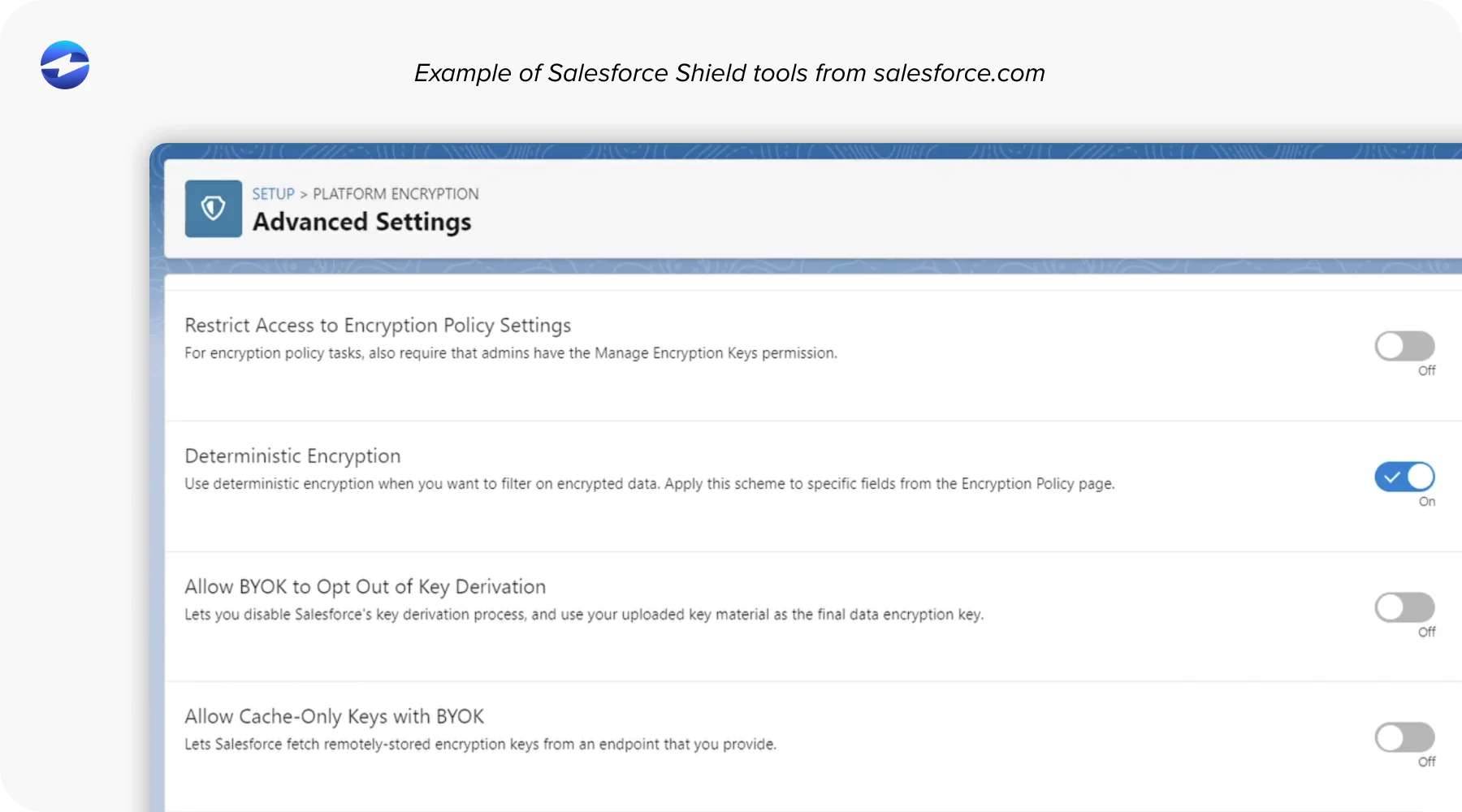
Salesforce Financial Services Cloud includes strong access controls, audit trails, and governance tools designed for regulated industries. Teams can control who sees what data, track activity, and support compliance requirements more easily.
When payments are involved, organizations often integrate with external systems rather than storing sensitive payment data directly in Salesforce.
That’s where topics like Salesforce payments, PCI compliance, and secure processing become part of the broader strategy.
A trusted payment processor and secure payment processing solution can help financial organizations extend Salesforce workflows without increasing risk.
How Financial Services Cloud Fits Into the Broader Salesforce Ecosystem
Financial Services Cloud is not meant to operate in isolation.
Most organizations connect it with other Salesforce products like Service Cloud, Marketing Cloud, and analytics tools.
It also connects with operational systems such as core banking platforms, Salesforce ERP integrations, and payment systems.
A thoughtful Salesforce integration strategy ensures data flows smoothly between customer relationship management and the operational tools that handle billing, payments, and financial reporting.
For example, while Financial Services Cloud manages client relationships, payment activity may be handled through external payment processing solution providers that integrate back into Salesforce records.
This is how many organizations approach Salesforce payments in practice.
Choosing Whether Financial Services Cloud Is Right for Your Organization
Not every organization needs Financial Services Cloud.
It’s most valuable when financial relationships are complex, compliance requirements are high, and service workflows need to be consistent.
Before adopting Salesforce FSC, it helps to ask:
- Do we manage households, policies, or multi-account relationships?
- Do we need stronger financial services workflows than standard CRM provides?
- How will this connect with our operational systems, including Salesforce ERP tools?
- What integration requirements exist for billing and payments?
A strong implementation depends on aligning Financial Services Cloud with real operational needs.
Building A Stronger Foundation for Financial Relationships
Salesforce Financial Services Cloud is a purpose-built platform for managing financial relationships.
It extends Salesforce CRM software with features designed for banks, lenders, insurers, and advisors. Household modeling, financial account visibility, automation, and analytics all help teams deliver better service while staying organized.
When paired with the right Salesforce integration approach, Financial Services Cloud becomes part of a broader ecosystem that may include ERP tools, billing systems, and secure payment providers.
For financial organizations evaluating Financial Services Cloud Salesforce, the key takeaway is simple: it is built to support the complexity of financial services, not just generic customer management.
Used well, Salesforce FSC can strengthen client trust, improve service consistency, and provide a clearer foundation for long-term growth.